

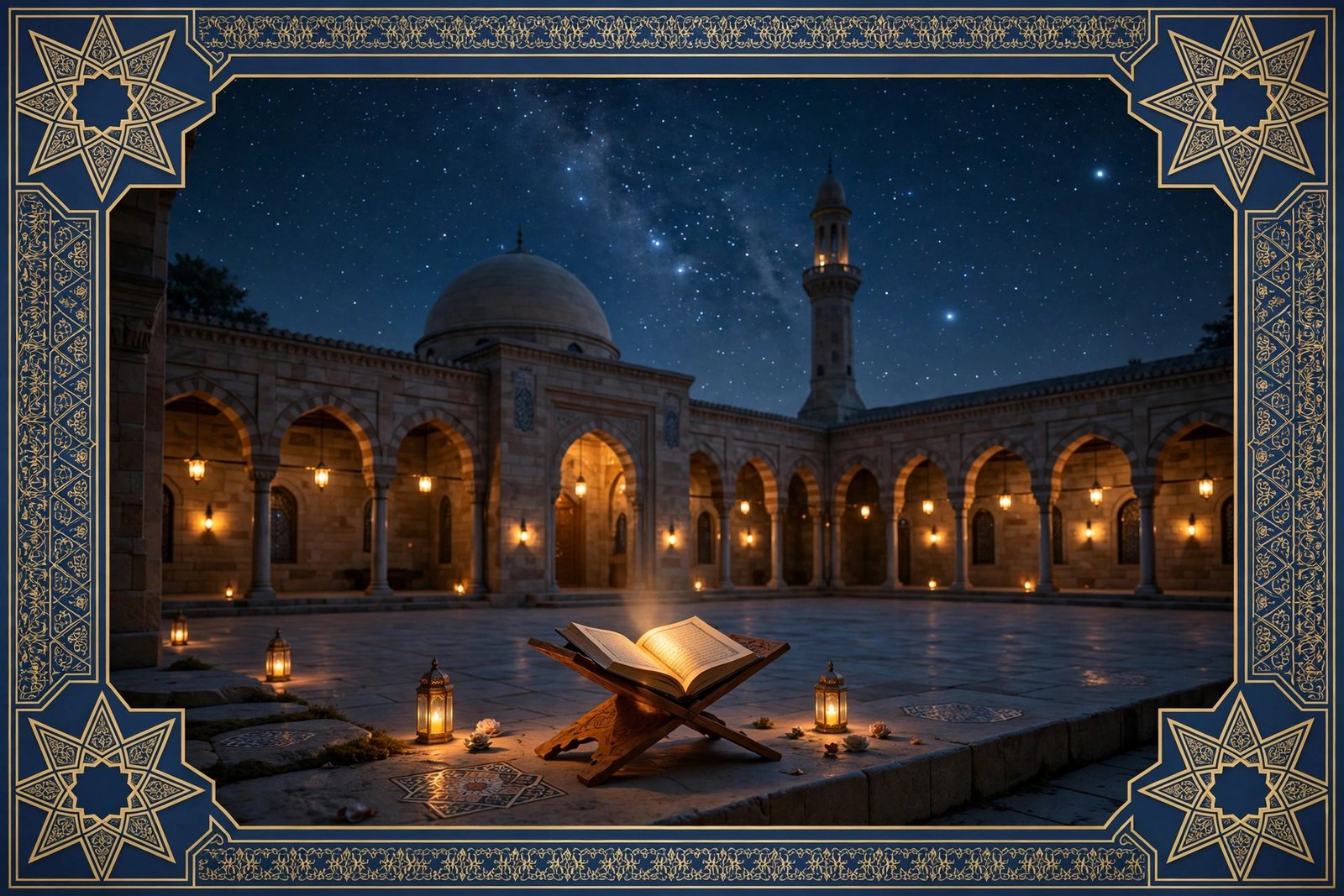
The virtues of Laylatul Qadr — the Night of Decree — are beyond human imagination. Hidden within the last ten nights of Ramadan is a single night that Allah Almighty has declared better than a thousand months of worship. One night of sincere prayer, Quran recitation, dua, and repentance on Laylatul Qadr can outweigh more than eighty-three years of devotion. In this complete guide, we explore what Laylatul Qadr truly is, why it is so precious, how the Holy Prophet Muhammad ﷺ sought it, the signs mentioned in the narrations, and a practical plan for spending its blessed hours — all in the light of the Quran and the Hadith, according to the creed of Ahl al-Sunnah wa al-Jama’ah.
Table of Contents
- What Is Laylatul Qadr?
- The Night the Quran Descended
- Better Than a Thousand Months
- Which Night Is Laylatul Qadr?
- How the Holy Prophet Muhammad ﷺ Spent the Last Ten Nights
- The Descent of Angels and Peace Until Dawn
- Signs of Laylatul Qadr
- How to Spend Laylatul Qadr: A Practical Plan
- The Special Dua of Laylatul Qadr
- Mistakes to Avoid on Laylatul Qadr
- Frequently Asked Questions
What Is Laylatul Qadr?
“Laylatul Qadr” means the Night of Decree, the Night of Power, or the Night of Honour. “Qadr” carries all three meanings at once: it is a night of immense honour, a night in which the decrees of the coming year are decided, and a night whose spiritual power has no equal in the entire year. Allah Almighty dedicated an entire Surah of the Holy Quran to it — Surah Al-Qadr — and described it in words that should make every believer’s heart tremble with longing: “Indeed, We sent the Quran down during the Night of Decree. And what can make you know what is the Night of Decree? The Night of Decree is better than a thousand months” (Surah Al-Qadr 97:1-3).
The scholars of Ahl al-Sunnah explain that this night is called the Night of Decree because the divine decrees for the coming year — provisions, lifespans, and events — are handed down in it, as Allah Almighty says: “Indeed, We sent it down during a blessed night. Indeed, We were to warn mankind. On that night is made distinct every precise matter” (Surah Ad-Dukhan 44:3-4). It is a night when destinies are written, when mercy pours down like rain, and when a believer’s sincere repentance can rewrite the story of his life. That is why the righteous believers of every age have waited for this night all year long, counting the days of Ramadan with longing, and spending its nights awake in worship while the rest of the world sleeps.
Laylatul Qadr falls in the blessed month of Ramadan, the month in which the Quran was revealed: “The month of Ramadan in which was revealed the Quran, a guidance for the people and clear proofs of guidance and criterion” (Surah Al-Baqarah 2:185). Just as Ramadan is the best of months, Laylatul Qadr is the best of nights. Missing it through laziness or distraction is a loss no wealth can repay, while finding it even once in a lifetime is a treasure that changes a person’s eternal fate.
The Night the Quran Descended
The greatest honour of Laylatul Qadr is that it is the night on which the Holy Quran began to descend to the heart of the Holy Prophet Muhammad ﷺ. The first revelation — “Read, in the name of your Lord who created” (Surah Al-Alaq 96:1) — came down in the cave of Hira on this blessed night, and with it began the light that would guide humanity until the Day of Judgement. Every letter of the Quran we recite today, every verse that comforts us in hardship, every command that sets our lives straight — all of it began on Laylatul Qadr.
This connection between the night and the Quran teaches us how to spend it. The best worship on Laylatul Qadr is the worship connected to the Quran: reciting it slowly with reflection, listening to it with a present heart, and studying its meanings. A believer who spends the night with the Quran is not merely performing a ritual; he is returning to the very source that was revealed on that night. Families that recite together, that teach their children the Quran with love, and that keep the Quran as a daily companion throughout the year will find Laylatul Qadr a natural crown of their year. For a fuller path to living with the Quran, readers can explore the virtues of Surah Al-Kahf on Friday and build a weekly habit of recitation that makes the nights of Ramadan even more fruitful.
The revelation of the Quran on this night is also a reminder of Allah Almighty’s immense mercy. He did not leave humanity in darkness; He sent down light, guidance, and healing. On Laylatul Qadr, the believer thanks Allah Almighty for the gift of the Quran and renews his commitment to live by it — not only in Ramadan, but for the rest of his life. The night is a new beginning, a chance to start again with a clean heart and a firm resolve.
Better Than a Thousand Months
“Better than a thousand months” (Surah Al-Qadr 97:3) — pause and reflect on these words. A thousand months is more than eighty-three years, longer than most human lives. One night of worship on Laylatul Qadr is worth more than an entire lifetime of worship without it. A single prayer prayed with sincerity on this night can outweigh decades of prayers. A single tear shed in repentance can wash away sins that a lifetime of effort could not. A single dua whispered in the darkness can open doors that years of striving could not open.
This is not an exaggeration or a poetic metaphor; it is the promise of Allah Almighty, whose generosity has no limit. The scholars explain that the reward is not merely equal to a thousand months but better — greater, more blessed, and more weighty in the scale of deeds. This is why the wise believer treats the last ten nights of Ramadan as the most valuable nights of his year. He protects them from useless gatherings, from endless scrolling, from arguments and distractions, and from anything that steals his time with Allah Almighty. He knows that what he does in these few nights can decide his rank in Paradise.
Consider the mercy in this gift. Most people cannot worship for eighty-three years; life is short, health is uncertain, and time slips away. But Allah Almighty, in His infinite kindness, placed a night in every year that can compensate for a lifetime. Even the elderly, the sick, and the busy can seize it — for even a short, sincere prayer on this night carries a reward beyond measure. The one who prays Isha and Fajr in congregation, who recites a few verses, who makes a heartfelt dua, has already taken a share of this treasure. As with the virtues of Fajr prayer, the reward of Laylatul Qadr is open to every believer, not only to scholars and saints.
Which Night Is Laylatul Qadr?
Allah Almighty, in His wisdom, did not fix Laylatul Qadr to one known date. The Holy Prophet Muhammad ﷺ instructed us to seek it in the last ten nights of Ramadan, and especially in the odd nights. He ﷺ said: “Seek Laylatul Qadr in the odd nights of the last ten days of Ramadan” (Sahih al-Bukhari 2017). The odd nights are the 21st, 23rd, 25th, 27th, and 29th nights of Ramadan — and the believer who worships on all of them is certain to find the blessed night, by the permission of Allah Almighty.
Why is the exact night hidden? The scholars give beautiful reasons. If the night were known, most people would worship on that one night alone and neglect the rest, while the hidden night encourages worship on many nights and multiplies the reward. The search itself becomes worship: every night spent seeking Laylatul Qadr is a night of prayer, tears, and closeness to Allah Almighty, and none of it is wasted. The uncertainty is itself a mercy, drawing the believer to spend the whole last part of Ramadan in devotion rather than in a single night of effort.
Many narrations and the practice of the Companions رضی اللہ عنہم point strongly to the 27th night. Sayyiduna Ubayy ibn Ka’b رضی اللہ عنہ used to swear that Laylatul Qadr was the 27th night (Sahih Muslim 762). Yet the scholars of Ahl al-Sunnah caution that the night can fall on any of the odd nights, and it may even move from year to year. The safest and most rewarding path is therefore clear: treat every odd night of the last ten as if it were Laylatul Qadr, and honour all of the last ten nights with worship. The believer who does this never loses, for even the nights that are not Laylatul Qadr are among the most blessed nights of the year.
The night begins at Maghrib and ends at Fajr, so the whole night is the field of worship — not only the hours after Taraweeh, and not only the last third of the night. The one who spends the evening in worship, the midnight in prayer, and the pre-dawn hours in dua and seeking forgiveness has spent the night in the best possible way. Those who rise for the importance of Tahajjud prayer throughout the year will find the night prayers of Ramadan a familiar and beloved habit, not a sudden burden.
How the Holy Prophet Muhammad ﷺ Spent the Last Ten Nights
No one loved Laylatul Qadr more, or sought it harder, than the Holy Prophet Muhammad ﷺ. Sayyidah Aisha رضی اللہ عنہا narrated: “With the start of the last ten days of Ramadan, the Holy Prophet Muhammad ﷺ used to tighten his waist belt, pray all night, and keep his family awake for prayer” (Sahih al-Bukhari 2024). “Tightening his waist belt” is an expression of complete dedication — he ﷺ set aside worldly comforts, withdrew from ordinary routines, and gave himself entirely to worship. He ﷺ also observed I’tikaf in the masjid during the last ten days, cutting himself off from the world to devote himself to Allah Almighty, and he ﷺ never abandoned this practice in any Ramadan of his blessed life.
Notice that the Holy Prophet Muhammad ﷺ did not worship alone on these nights; he ﷺ woke his family for prayer. This is a lesson for every household. Laylatul Qadr is a family treasure, not a private one. Wake the children gently for a short prayer, even if they only join for a few minutes. Encourage the spouse, the parents, and the elders. Make the last ten nights a household season of worship, with the masjid, the Quran, and shared duas at the centre of family life. The parents who build such a household are practising the very Islamic upbringing of children that shapes righteous generations — for children who see their parents awake in prayer on the blessed nights will remember it for the rest of their lives.
The Holy Prophet Muhammad ﷺ also increased his generosity in Ramadan beyond all measure, and especially in its last nights. He ﷺ gave charity freely, fed the poor, and showed kindness to everyone around him. Following his ﷺ example, the believer should combine worship with giving on these nights: a charity given on Laylatul Qadr carries the reward of charity given for a thousand months. Even a small, sincere donation — a meal for a fasting person, a gift to an orphan, support for a student of the Quran — becomes an immense treasure when given on this night.
The Descent of Angels and Peace Until Dawn
“The angels and the Spirit descend therein by permission of their Lord for every matter. Peace it is until the emergence of dawn” (Surah Al-Qadr 97:4-5). On Laylatul Qadr, the heavens open and angels descend to the earth in such numbers that the earth becomes crowded with them. Jibril علیہ السلام himself descends with the angels, bringing mercy, blessings, and peace. The angels greet the worshippers, say Ameen to their duas, and surround the gatherings of remembrance with their wings.
Think of the honour: while the angels descend, the believer stands in prayer below, and his dua is carried upward by the very angels who brought down the Quran. The angels witness his tears, record his repentance, and pray for his forgiveness. The one who is awake in worship on this night is not alone; he is in the company of the noblest creation of Allah Almighty. The one who is asleep, distracted, or wasting the night in idle entertainment misses a gathering that the angels themselves attend.
“Peace it is until the emergence of dawn” — the entire night is peace, safety, and protection from evil. There is no harm in it for the believer who seeks Allah Almighty’s mercy; it is a night of security from punishment and of freedom from the Fire for those who turn to Allah Almighty sincerely. This peace is felt in the heart as well: the heart that was restless all year finds stillness on Laylatul Qadr, the sins that weighed it down are lifted, and the believer rises at dawn lighter, cleaner, and closer to his Lord than ever before.
Signs of Laylatul Qadr
The narrations mention certain signs of Laylatul Qadr, and the scholars describe them so that believers can recognise the night — though they also warn against chasing signs instead of worship. Among the signs mentioned is that the sun rises on the following morning without strong rays, appearing soft and white like a plate. Another is that the night itself is calm and pleasant — neither too hot nor too cold, with a gentle breeze and a clear, peaceful sky. Some narrations mention that the night is bright and shining, and that the believer’s heart feels a special softness, humility, and sweetness in worship that it does not feel on other nights.
However, the scholars of Ahl al-Sunnah give an important caution: signs are not the goal, and no one should waste the night looking at the sky instead of praying. The signs are recognised afterwards, not chased during worship, and they vary in strength from person to person. The true sign of Laylatul Qadr is in the heart — a heart that turns to Allah Almighty with sincerity, that weeps over its sins, that feels the sweetness of the Quran, and that rises at dawn determined to live a better life. If your heart felt that softness, and your night was spent in prayer and dua, then you have taken your share of the night whether you saw any outward sign or not.
Another sign of a blessed Laylatul Qadr is its fruit: the believer who truly found the night changes after it. He prays more regularly, he guards his tongue, he gives more charity, he treats his family better, and he holds firmly to the good habits built in Ramadan. The night is not a magic ticket that leaves life unchanged; it is a turning point. The one whose Ramadan ends and whose life returns exactly to its old sins has missed the spirit of the night, even if he stayed awake. The one whose life improves has found its blessing, even if he slept part of the night out of genuine need.
How to Spend Laylatul Qadr: A Practical Plan
A practical plan helps the believer use every hour of the night well. Begin at Maghrib with a clean heart: perform wudu with care and attention, remembering the reward of how to perform wudu properly, and pray Maghrib and Isha in congregation. Attend Taraweeh in the masjid if possible, for the congregational prayer of Ramadan carries its own immense reward, and the one who prays with the Imam until he finishes is recorded as having prayed the whole night.
After Taraweeh, recite the Holy Quran slowly and with reflection. Even one Juz, or even a few pages recited with understanding, is better than rushing through much with a wandering mind. Follow recitation with Nawafil prayers — two rak’ahs at a time, prayed slowly, with long bowing and prostration, for the closest a servant is to his Lord is in prostration. Between prayers, engage in dhikr: SubhanAllah, Alhamdulillah, Allahu Akbar, La ilaha illallah, and sending blessings upon the Holy Prophet Muhammad ﷺ. A heart busy with the virtues of dhikr in Islam through the night remains alive, soft, and close to Allah Almighty even when the body grows tired.
Set aside a generous portion of the night for dua — for yourself, your parents, your family, your teachers, the whole Ummah, and the deceased. Make dua in your own language as well as in Arabic, for Allah Almighty hears every tongue. Ask for forgiveness first, then for guidance, then for your needs of this world and the next. Remember the power of dua in Islam: on this night especially, dua is not a formality but a direct conversation with the Lord of the worlds, carried upward by angels. And observe the etiquette of making dua — begin with praise of Allah Almighty and blessings upon the Holy Prophet Muhammad ﷺ, raise your hands with humility, and ask with certainty that you will be answered.
Give charity during the night, even a small amount, and intend it for the sake of Allah Almighty. Read or listen to a short explanation of the Quran, or a brief reminder about the Seerah, to keep the heart awake. Avoid the traps of the night: endless phone scrolling, idle talk, arguments, and the television. If tiredness overtakes you, rest briefly with the intention of rising again, for even sleep taken with the intention of worship carries reward. Finally, rise for Tahajjud in the last third of the night, pray Witr, and end with the pre-dawn meal and Fajr prayer in congregation — the dawn that closes the night of peace should find you in prayer, not in sleep.
For those who wish to deepen their learning beyond Ramadan, the Jamia’s courses offer structured Quran, Nazra, Hifz, and Tajweed teaching, and the duas page gathers supplications for every occasion — both valuable companions for the worshipper who wants the light of Laylatul Qadr to last all year. The institution جامعہ سعیدیہ دارالقرآن continues to serve students of the Quran in this blessed mission, and its teachers guide seekers in recitation, understanding, and practice.
The Special Dua of Laylatul Qadr
Sayyidah Aisha رضی اللہ عنہا asked the Holy Prophet Muhammad ﷺ: “O Messenger of Allah, if I know which night is Laylatul Qadr, what should I say in it?” He ﷺ replied: “Say: Allahumma innaka ‘afuwwun tuhibbul ‘afwa fa’fu ‘anni — O Allah, You are Pardoning, You love pardon, so pardon me” (Jami’ at-Tirmidhi 3513). This short dua is the treasure of the night, and the believer should repeat it again and again, with full attention to its meaning.
Notice what the Holy Prophet Muhammad ﷺ taught: not a dua for wealth, health, or worldly success first, but a dua for pardon. Forgiveness is the greatest need of every human being, for sins are the heaviest burden we carry, and pardon on Laylatul Qadr erases them entirely. The one who is pardoned on this night leaves Ramadan as pure as a newborn, with a clean record and a fresh start. After asking for pardon, the believer may ask for everything else — but pardon comes first, for it is the key that opens every other door.
Repeat this dua in prostration, after every prayer, during the quiet hours of the night, and in the last moments before dawn. Teach it to your family, especially to children, so that the whole household shares in the treasure. Write it where you will see it during the last ten nights, and let it be the most repeated sentence of your Ramadan. A night spent repeating “pardon me” with a sincere heart is a night that can change eternity.
Mistakes to Avoid on Laylatul Qadr
The first mistake is limiting the search to the 27th night alone. Many people worship only on the 27th and sleep through the other odd nights, risking the loss of the blessed night entirely. The Sunnah is to seek it in all the odd nights of the last ten, and the safest path is to honour all ten nights with worship. The second mistake is turning the night into a social event — gatherings full of food, talk, and laughter, with little prayer. Visiting and celebration have their place, but not at the cost of the worship that the night was made for.
The third mistake is arguing about the exact date, the signs, or which night “must” be Laylatul Qadr, while neglecting prayer itself. Debates do not earn the reward of the night; prayer does. The fourth mistake is staying awake all night but with a heedless heart — praying quickly without reflection, reciting without understanding, and making dua without attention. Quality outweighs quantity: a short prayer prayed with presence is worth more than a long night spent in distraction.
The fifth mistake is sinning on the very night of mercy — backbiting, watching forbidden content, or quarrelling with family — which darkens the heart that the night was meant to purify. The sixth mistake is despair: the one who spent the early nights of Ramadan poorly sometimes gives up entirely, thinking the chance is lost. Never despair of Allah Almighty’s mercy. Even one night, even one hour, even one sincere dua on Laylatul Qadr can transform a whole year of neglect. The door of mercy stays open until dawn, and it opens widest on this night.
Finally, do not let Laylatul Qadr be the end of your worship. The believer who prays all night on the 27th and then abandons prayer after Ramadan has misunderstood the night completely. Laylatul Qadr is meant to be a beginning — the night that launches a life of regular prayer, daily Quran, constant dhikr, and steady charity. Carry its light into the whole year, and the reward of the night will keep growing long after dawn.
Frequently Asked Questions
Is Laylatul Qadr always on the 27th night of Ramadan?
Not necessarily. Many Companions رضی اللہ عنہم and scholars held that it is often the 27th night, and Sayyiduna Ubayy ibn Ka’b رضی اللہ عنہ swore by it, but the Holy Prophet Muhammad ﷺ instructed us to seek it in all the odd nights of the last ten days (Sahih al-Bukhari 2017). The safest practice is to worship on all the odd nights — and ideally all ten nights — so that you certainly find it.
What if I cannot stay awake the whole night?
Allah Almighty does not burden a soul beyond its capacity. Pray Isha and Fajr in congregation, pray what you can of Taraweeh and Tahajjud, recite some Quran, repeat the dua of pardon, and sleep with the intention of rising again. Even a small portion of the night spent sincerely carries immense reward, for the night is better than a thousand months.
Can women in menstruation benefit from Laylatul Qadr?
Yes, certainly. A woman who cannot pray or fast may still recite dhikr, send blessings upon the Holy Prophet Muhammad ﷺ, make dua, give charity, listen to the Quran, and seek Allah Almighty’s pardon. The mercy of Laylatul Qadr is not limited to ritual prayer; every form of sincere remembrance and supplication is rewarded on this night.
What is the best dua to recite on Laylatul Qadr?
The dua taught by the Holy Prophet Muhammad ﷺ to Sayyidah Aisha رضی اللہ عنہا: “Allahumma innaka ‘afuwwun tuhibbul ‘afwa fa’fu ‘anni — O Allah, You are Pardoning, You love pardon, so pardon me” (Jami’ at-Tirmidhi 3513). Repeat it often throughout the night, with full attention to its meaning.
Do the rewards of Laylatul Qadr apply to deeds other than prayer?
Yes. Every good deed on this night — Quran recitation, dhikr, dua, charity, seeking knowledge, and serving others — carries multiplied reward, for the night itself is better than a thousand months. The scholars explain that the multiplication covers all righteous deeds performed with sincerity on this blessed night.
Related Articles
اردو میں مکمل مضمون
شب قدر کی فضیلت انسانی عقل سے بالاتر ہے۔ رمضان المبارک کی آخری دس راتوں میں چھپی ہوئی ایک رات ایسی ہے جسے اللہ تعالیٰ نے ہزار مہینوں سے بہتر قرار دیا ہے۔ شب قدر میں اخلاص کے ساتھ کی گئی ایک رات کی عبادت، قرآن کی تلاوت، دعا اور توبہ، تراسی سال سے زیادہ کی عبادت پر بھاری ہو سکتی ہے۔ اس مکمل مضمون میں ہم جانیں گے کہ شب قدر کیا ہے، یہ اتنی قیمتی کیوں ہے، نبی اکرم ﷺ اسے کیسے تلاش کرتے تھے، اس کی نشانیاں کیا ہیں، اور اس کی مبارک گھڑیوں کو گزارنے کا عملی طریقہ کیا ہے — قرآن و حدیث کی روشنی میں، عقیدہ اہل سنت کے مطابق۔
فہرست
- شب قدر کیا ہے؟
- وہ رات جس میں قرآن نازل ہوا
- ہزار مہینوں سے بہتر
- شب قدر کون سی رات ہے؟
- نبی اکرم ﷺ کا آخری عشرے میں معمول
- فرشتوں کا نزول اور طلوع فجر تک سلامتی
- شب قدر کی نشانیاں
- شب قدر گزارنے کا عملی منصوبہ
- شب قدر کی خاص دعا
- شب قدر میں کن غلطیوں سے بچیں
- عمومی سوالات
شب قدر کیا ہے؟
شب قدر کا مطلب ہے تقدیر کی رات، عظمت کی رات، قدرت و شان والی رات۔ اللہ تعالیٰ نے اس رات کے لیے قرآن مجید میں پوری سورت نازل فرمائی — سورۃ القدر — اور ارشاد فرمایا: “بے شک ہم نے اس (قرآن) کو شب قدر میں نازل کیا۔ اور تم کیا جانو کہ شب قدر کیا ہے؟ شب قدر ہزار مہینوں سے بہتر ہے” (سورۃ القدر 97:1-3)۔
اہل سنت کے علماء فرماتے ہیں کہ اس رات کو شب قدر اس لیے کہتے ہیں کہ اس میں آنے والے سال کے فیصلے — رزق، عمریں اور واقعات — لکھے جاتے ہیں، جیسا کہ اللہ تعالیٰ کا ارشاد ہے: “بے شک ہم نے اسے ایک بابرکت رات میں نازل کیا۔ بے شک ہم ڈرانے والے ہیں۔ اس رات میں ہر حکمت والے کام کا فیصلہ کیا جاتا ہے” (سورۃ الدخان 44:3-4)۔ یہ وہ رات ہے جس میں تقدیریں لکھی جاتی ہیں، رحمت بارش کی طرح برستی ہے، اور بندے کی سچی توبہ اس کی زندگی کی کہانی بدل سکتی ہے۔ اسی لیے ہر زمانے کے نیک لوگ سارا سال اس رات کا انتظار کرتے ہیں، رمضان کے دن گنتے ہیں، اور اس کی راتیں عبادت میں جاگ کر گزارتے ہیں جب دنیا سو رہی ہوتی ہے۔
شب قدر رمضان المبارک میں آتی ہے، وہ مہینہ جس میں قرآن نازل ہوا: “رمضان کا مہینہ جس میں قرآن نازل کیا گیا، لوگوں کے لیے ہدایت اور ہدایت کی واضح دلیلیں اور حق و باطل میں فرق کرنے والا” (سورۃ البقرۃ 2:185)۔ جس طرح رمضان سب مہینوں سے بہتر ہے، اسی طرح شب قدر سب راتوں سے بہتر ہے۔ سستی یا غفلت سے اسے کھو دینا ایسا نقصان ہے جس کی تلافی کوئی دولت نہیں کر سکتی، اور زندگی میں ایک بار بھی اسے پا لینا ایسا خزانہ ہے جو انسان کی ابدی تقدیر بدل دیتا ہے۔
وہ رات جس میں قرآن نازل ہوا
شب قدر کی سب سے بڑی عظمت یہ ہے کہ اسی رات نبی اکرم ﷺ کے قلب اطہر پر قرآن مجید کا نزول شروع ہوا۔ غار حرا میں پہلی وحی — “پڑھ اپنے رب کے نام سے جس نے پیدا کیا” (سورۃ العلق 96:1) — اسی مبارک رات میں نازل ہوئی، اور اس کے ساتھ وہ نور شروع ہوا جو قیامت تک انسانیت کی رہنمائی کرے گا۔ آج ہم قرآن کا جو حرف پڑھتے ہیں، جو آیت مشکل میں تسلی دیتی ہے، جو حکم ہماری زندگی کو سیدھا کرتا ہے — سب کچھ شب قدر سے شروع ہوا۔
رات اور قرآن کا یہ تعلق ہمیں بتاتا ہے کہ اس رات کو کیسے گزارنا ہے۔ شب قدر کی بہترین عبادت وہی ہے جو قرآن سے جڑی ہو: اس کی تلاوت آہستہ آہستہ اور غور و فکر کے ساتھ، اسے حاضر دل سے سننا، اور اس کے معانی کو سمجھنا۔ جو بندہ رات قرآن کے ساتھ گزارتا ہے وہ محض ایک رسم ادا نہیں کر رہا؛ وہ اسی سرچشمے کی طرف لوٹ رہا ہے جو اسی رات نازل ہوا تھا۔ جو گھرانے قرآن کی تلاوت کرتے ہیں، بچوں کو محبت سے قرآن سکھاتے ہیں، اور قرآن کو روزانہ کا ساتھی بناتے ہیں، ان کے لیے شب قدر سال کا قدرتی تاج بن جاتی ہے۔ تلاوت کی ہفتہ وار عادت بنانے کے لیے قارئین جمعہ کے دن سورۃ الکہف کی فضیلت کے بارے میں پڑھ سکتے ہیں، تاکہ رمضان کی راتیں اور بھی بابرکت ہو جائیں۔
اس رات قرآن کا نزول اللہ تعالیٰ کی بے پناہ رحمت کی یاد دہانی بھی ہے۔ اس نے انسانیت کو اندھیروں میں نہیں چھوڑا؛ اس نے نور، ہدایت اور شفا نازل فرمائی۔ شب قدر میں بندہ قرآن کی نعمت پر اللہ تعالیٰ کا شکر ادا کرتا ہے اور اس پر عمل کرنے کا عہد تازہ کرتا ہے — صرف رمضان میں نہیں، بلکہ ساری زندگی کے لیے۔ یہ رات ایک نئی شروعات ہے، صاف دل اور پختہ ارادے کے ساتھ دوبارہ شروع کرنے کا موقع۔
ہزار مہینوں سے بہتر
“ہزار مہینوں سے بہتر” (سورۃ القدر 97:3) — ان الفاظ پر غور کیجیے۔ ہزار مہینے تراسی سال سے زیادہ ہوتے ہیں، جو اکثر انسانی عمروں سے لمبا عرصہ ہے۔ شب قدر میں ایک رات کی عبادت اس کے بغیر کی گئی پوری زندگی کی عبادت سے زیادہ قیمتی ہے۔ اس رات اخلاص سے پڑھی گئی ایک نماز کئی دہائیوں کی نمازوں پر بھاری ہو سکتی ہے۔ توبہ میں بہایا گیا ایک آنسو ان گناہوں کو دھو سکتا ہے جنہیں زندگی بھر کی کوشش نہ دھو سکی۔ اندھیرے میں کی گئی ایک دعا وہ دروازے کھول سکتی ہے جنہیں سالوں کی محنت نہ کھول سکی۔
یہ مبالغہ یا شاعرانہ تعبیر نہیں؛ یہ اللہ تعالیٰ کا وعدہ ہے، جس کی سخاوت کی کوئی حد نہیں۔ علماء فرماتے ہیں کہ ثواب صرف ہزار مہینوں کے برابر نہیں بلکہ اس سے بہتر ہے — زیادہ، زیادہ بابرکت، اور اعمال کے ترازو میں زیادہ وزنی۔ اسی لیے عقل مند مومن رمضان کی آخری دس راتوں کو اپنے سال کی قیمتی ترین راتیں سمجھتا ہے۔ وہ انہیں بے کار محفلوں، موبائل کی بے مقصد گردی، جھگڑوں اور غفلت سے بچاتا ہے، اور ہر اس چیز سے دور رہتا ہے جو اللہ تعالیٰ کے ساتھ اس کا وقت چرائے۔ وہ جانتا ہے کہ ان چند راتوں میں کیا گیا عمل جنت میں اس کا درجہ طے کر سکتا ہے۔
اس عطا میں رحمت پر غور کیجیے۔ اکثر لوگ تراسی سال عبادت نہیں کر سکتے؛ زندگی مختصر ہے، صحت غیر یقینی ہے، اور وقت ہاتھ سے نکل جاتا ہے۔ لیکن اللہ تعالیٰ نے اپنی بے پایاں مہربانی سے ہر سال میں ایک ایسی رات رکھ دی جو پوری زندگی کی تلافی کر سکتی ہے۔ بوڑھے، بیمار اور مصروف لوگ بھی اسے پا سکتے ہیں — کیونکہ اس رات کی تھوڑی سی سچی نماز بھی بے حساب ثواب رکھتی ہے۔ جو شخص باجماعت عشاء اور فجر پڑھ لے، چند آیات پڑھ لے، دل سے دعا کر لے، وہ اس خزانے میں اپنا حصہ لے چکا ہے۔ جس طرح فجر کی نماز کی فضیلت ہر مومن کے لیے کھلی ہے، اسی طرح شب قدر کا ثواب بھی صرف علماء اور اولیاء تک محدود نہیں، بلکہ ہر مومن کے لیے ہے۔
شب قدر کون سی رات ہے؟
اللہ تعالیٰ نے اپنی حکمت سے شب قدر کو کسی ایک معلوم تاریخ سے منسلک نہیں کیا۔ نبی اکرم ﷺ نے ہمیں حکم دیا کہ اسے رمضان کی آخری دس راتوں میں، اور خاص طور پر طاق راتوں میں تلاش کریں۔ آپ ﷺ نے فرمایا: “شب قدر کو رمضان کے آخری عشرے کی طاق راتوں میں تلاش کرو” (صحیح البخاری 2017)۔ طاق راتیں 21ویں، 23ویں، 25ویں، 27ویں اور 29ویں راتیں ہیں — اور جو مومن ان سب میں عبادت کرے وہ اللہ تعالیٰ کے فضل سے یقیناً مبارک رات کو پا لے گا۔
رات کو پوشیدہ کیوں رکھا گیا؟ علماء خوبصورت وجوہات بیان کرتے ہیں۔ اگر رات معلوم ہوتی تو اکثر لوگ صرف اسی ایک رات عبادت کرتے اور باقی کو چھوڑ دیتے، جبکہ پوشیدہ رات کئی راتوں کی عبادت کی ترغیب دیتی ہے اور ثواب کو کئی گنا کر دیتی ہے۔ تلاش خود عبادت بن جاتی ہے: شب قدر کی تلاش میں گزاری گئی ہر رات نماز، آنسوؤں اور اللہ تعالیٰ سے قربت کی رات ہے، اور اس میں سے کچھ بھی ضائع نہیں ہوتا۔ یہ بے یقینی خود ایک رحمت ہے، جو مومن کو رمضان کے آخری حصے کی ساری راتیں عبادت میں گزارنے کی طرف کھینچتی ہے، نہ کہ صرف ایک رات کی محنت کی طرف۔
بہت سی روایات اور صحابہ کرام رضی اللہ عنہم کا عمل 27ویں رات کی طرف مضبوط اشارہ کرتے ہیں۔ حضرت ابی بن کعب رضی اللہ عنہ قسم کھا کر کہتے تھے کہ شب قدر 27ویں رات ہے (صحیح مسلم 762)۔ لیکن اہل سنت کے علماء خبردار کرتے ہیں کہ یہ رات کسی بھی طاق رات میں ہو سکتی ہے، اور سال بہ سال بدل بھی سکتی ہے۔ اس لیے سب سے محفوظ اور زیادہ ثواب والا طریقہ واضح ہے: ہر طاق رات کو اس طرح سمجھیں جیسے وہی شب قدر ہو، اور آخری دس راتوں کی سب کی عزت عبادت سے کریں۔ جو مومن ایسا کرتا ہے وہ کبھی نہیں ہارتا، کیونکہ جو راتیں شب قدر نہیں بھی ہوتیں وہ بھی سال کی مبارک ترین راتوں میں سے ہوتی ہیں۔
رات مغرب سے شروع ہوتی ہے اور فجر تک رہتی ہے، اس لیے پوری رات عبادت کا میدان ہے — نہ صرف تراویح کے بعد کے گھنٹے، اور نہ صرف رات کا آخری تہائی حصہ۔ جو شخص شام کو عبادت میں گزارے، آدھی رات کو نماز میں، اور سحری سے پہلے کے اوقات دعا اور استغفار میں، اس نے رات بہترین طریقے سے گزاری ہے۔ جو لوگ سارا سال تہجد کی نماز کی اہمیت پر عمل کرتے ہیں، ان کے لیے رمضان کی رات کی نمازیں ایک مانوس اور محبوب عادت ہوتی ہیں، نہ کہ اچانک بوجھ۔
نبی اکرم ﷺ کا آخری عشرے میں معمول
نبی اکرم ﷺ سے زیادہ شب قدر سے محبت کرنے والا اور اسے زیادہ تلاش کرنے والا کوئی نہیں تھا۔ حضرت عائشہ صدیقہ رضی اللہ عنہا نے روایت کیا: “جب رمضان کا آخری عشرہ شروع ہوتا تو نبی اکرم ﷺ کمر کس لیتے، ساری رات نماز پڑھتے، اور اپنے گھر والوں کو نماز کے لیے جگاتے” (صحیح البخاری 2024)۔ کمر کسنا مکمل یکسوئی کی تعبیر ہے — آپ ﷺ دنیاوی آرام کو چھوڑ دیتے، معمول کی مصروفیات سے الگ ہو جاتے، اور خود کو مکمل طور پر عبادت کے لیے وقف کر دیتے۔ آپ ﷺ آخری عشرے میں مسجد میں اعتکاف بھی فرماتے، دنیا سے کٹ کر اللہ تعالیٰ کی عبادت میں مشغول ہو جاتے، اور اپنی مبارک زندگی کے کسی رمضان میں بھی یہ معمول نہیں چھوڑا۔
غور کیجیے کہ نبی اکرم ﷺ ان راتوں میں اکیلے عبادت نہیں کرتے تھے؛ آپ ﷺ اپنے گھر والوں کو نماز کے لیے جگاتے تھے۔ یہ ہر گھرانے کے لیے سبق ہے۔ شب قدر خاندان کا خزانہ ہے، نہ کہ صرف ذاتی۔ بچوں کو نرمی سے تھوڑی نماز کے لیے جگائیں، چاہے وہ چند منٹ کے لیے ہی شامل ہوں۔ بیوی، والدین اور بزرگوں کی حوصلہ افزائی کریں۔ آخری دس راتوں کو گھر میں عبادت کا موسم بنائیں، جس کے مرکز میں مسجد، قرآن اور مشترکہ دعائیں ہوں۔ جو والدین ایسا گھرانہ بناتے ہیں وہی بچوں کی اسلامی تربیت کر رہے ہیں جو نیک نسلیں بناتی ہے — کیونکہ جو بچے اپنے والدین کو مبارک راتوں میں نماز میں جاگتے دیکھتے ہیں، وہ اسے ساری زندگی یاد رکھتے ہیں۔
نبی اکرم ﷺ رمضان میں، اور خاص طور پر اس کی آخری راتوں میں، اپنی سخاوت کو بھی بے حد بڑھا دیتے تھے۔ آپ ﷺ صدقہ دیتے، غریبوں کو کھانا کھلاتے، اور ہر ایک کے ساتھ مہربانی فرماتے۔ آپ ﷺ کی پیروی میں مومن کو ان راتوں میں عبادت کے ساتھ صدقہ بھی جوڑنا چاہیے: شب قدر میں دیا گیا صدقہ ہزار مہینوں تک دیے گئے صدقے کے ثواب کے برابر ہے۔ ایک چھوٹا سا سچا عطیہ بھی — روزہ دار کو کھانا، یتیم کو تحفہ، قرآن کے طالب علم کی مدد — اس رات میں بے پناہ خزانہ بن جاتا ہے۔
فرشتوں کا نزول اور طلوع فجر تک سلامتی
“اس میں فرشتے اور روح (جبرائیل علیہ السلام) اپنے رب کے حکم سے ہر کام کے لیے اترتے ہیں۔ وہ رات طلوع فجر تک سراسر سلامتی ہے” (سورۃ القدر 97:4-5)۔ شب قدر میں آسمان کھل جاتے ہیں اور فرشتے زمین پر اس کثرت سے اترتے ہیں کہ زمین ان سے بھر جاتی ہے۔ جبرائیل علیہ السلام خود فرشتوں کے ساتھ اترتے ہیں، رحمت، برکتیں اور سلامتی لے کر۔ فرشتے عبادت گزاروں کو سلام کرتے ہیں، ان کی دعاؤں پر آمین کہتے ہیں، اور ذکر کی محفلوں کو اپنے پروں سے گھیر لیتے ہیں۔
اس عزت پر غور کیجیے: جب فرشتے اترتے ہیں، نیچے مومن نماز میں کھڑا ہوتا ہے، اور اس کی دعا انہی فرشتوں کے ذریعے اوپر پہنچتی ہے جو قرآن لے کر آئے تھے۔ فرشتے اس کے آنسو دیکھتے ہیں، اس کی توبہ لکھتے ہیں، اور اس کی مغفرت کی دعا کرتے ہیں۔ اس رات عبادت میں جاگنے والا تنہا نہیں ہے؛ وہ اللہ تعالیٰ کی افضل ترین مخلوق کی صحبت میں ہے۔ جو شخص سویا ہوا ہے، غافل ہے، یا رات بے کار تفریح میں ضائع کر رہا ہے، وہ ایسی محفل سے محروم رہتا ہے جس میں فرشتے خود شریک ہوتے ہیں۔
“طلوع فجر تک سراسر سلامتی” — پوری رات سلامتی، امن اور شر سے حفاظت ہے۔ اللہ تعالیٰ کی رحمت چاہنے والے مومن کے لیے اس میں کوئی نقصان نہیں؛ یہ عذاب سے سلامتی اور آگ سے آزادی کی رات ہے ان لوگوں کے لیے جو سچے دل سے اللہ تعالیٰ کی طرف لوٹتے ہیں۔ یہ سلامتی دل میں بھی محسوس ہوتی ہے: جو دل سارا سال بے چین تھا وہ شب قدر میں سکون پاتا ہے، گناہوں کا بوجھ اتر جاتا ہے، اور مومن فجر کو پہلے سے زیادہ ہلکا، صاف اور اپنے رب سے قریب ہو کر اٹھتا ہے۔
شب قدر کی نشانیاں
روایات میں شب قدر کی کچھ نشانیاں بیان ہوئی ہیں، اور علماء انہیں اس لیے بیان کرتے ہیں تاکہ مومن رات کو پہچان سکے — لیکن وہ یہ بھی خبردار کرتے ہیں کہ نشانیوں کے پیچھے بھاگنے کے بجائے عبادت کی جائے۔ نشانیوں میں سے ایک یہ ہے کہ اگلی صبح سورج بغیر تیز شعاعوں کے طلوع ہوتا ہے، نرم اور سفید تھالی کی طرح دکھائی دیتا ہے۔ دوسری یہ کہ رات خود پرسکون اور خوشگوار ہوتی ہے — نہ زیادہ گرم، نہ زیادہ سرد، ہلکی ہوا اور صاف پرسکون آسمان کے ساتھ۔ بعض روایات میں ہے کہ رات روشن اور چمکدار ہوتی ہے، اور مومن کے دل میں عبادت میں ایک خاص نرمی، عاجزی اور مٹھاس محسوس ہوتی ہے جو دوسری راتوں میں نہیں ہوتی۔
لیکن اہل سنت کے علماء ایک اہم تنبیہ کرتے ہیں: نشانیاں مقصد نہیں ہیں، اور کوئی شخص رات نماز کے بجائے آسمان دیکھنے میں ضائع نہ کرے۔ نشانیاں بعد میں پہچانی جاتی ہیں، عبادت کے دوران ان کا پیچھا نہیں کیا جاتا، اور وہ ہر شخص کے لیے یکساں شدت سے ظاہر نہیں ہوتیں۔ شب قدر کی اصل نشانی دل میں ہے — وہ دل جو اخلاص سے اللہ تعالیٰ کی طرف لوٹے، اپنے گناہوں پر روئے، قرآن کی مٹھاس محسوس کرے، اور فجر کو بہتر زندگی گزارنے کے عزم کے ساتھ اٹھے۔ اگر آپ کے دل نے وہ نرمی محسوس کی، اور آپ کی رات نماز اور دعا میں گزری، تو آپ نے رات کا اپنا حصہ لے لیا ہے، چاہے آپ نے کوئی ظاہری نشانی دیکھی ہو یا نہیں۔
مبارک شب قدر کی ایک اور نشانی اس کا پھل ہے: جو مومن واقعی اس رات کو پا لیتا ہے وہ اس کے بعد بدل جاتا ہے۔ وہ زیادہ باقاعدگی سے نماز پڑھتا ہے، اپنی زبان کی حفاظت کرتا ہے، زیادہ صدقہ دیتا ہے، اپنے گھر والوں سے بہتر سلوک کرتا ہے، اور رمضان میں بنائی گئی اچھی عادتوں پر مضبوطی سے قائم رہتا ہے۔ رات کوئی جادوئی ٹکٹ نہیں ہے جو زندگی کو بدلے بغیر چھوڑ دے؛ یہ ایک موڑ ہے۔ جس کا رمضان ختم ہو اور زندگی بالکل پرانے گناہوں پر لوٹ آئے، اس نے رات کی روح کو کھو دیا ہے، چاہے وہ جاگتا رہا ہو۔ جس کی زندگی بہتر ہو گئی، اس نے اس کی برکت پا لی ہے، چاہے وہ حقیقی ضرورت سے رات کا کچھ حصہ سویا بھی ہو۔
شب قدر گزارنے کا عملی منصوبہ
عملی منصوبہ مومن کو رات کے ہر گھنٹے کو اچھی طرح استعمال کرنے میں مدد دیتا ہے۔ مغرب سے صاف دل کے ساتھ شروع کریں: توجہ اور اہتمام سے وضو کریں، وضو کا صحیح طریقہ کا ثواب یاد رکھیں، اور مغرب و عشاء باجماعت پڑھیں۔ اگر ممکن ہو تو مسجد میں تراویح میں شریک ہوں، کیونکہ رمضان کی باجماعت نماز کا اپنا بے پناہ ثواب ہے، اور جو شخص امام کے ساتھ نماز مکمل کرے اس کے لیے پوری رات کی نماز لکھی جاتی ہے۔
تراویح کے بعد قرآن مجید کی تلاوت آہستہ آہستہ اور غور و فکر کے ساتھ کریں۔ ایک پارہ، یا سمجھ کر پڑھی گئی چند صفحات بھی، بے دھیانی سے جلدی پڑھی گئی زیادہ تلاوت سے بہتر ہیں۔ تلاوت کے بعد نوافل پڑھیں — دو دو رکعتیں، آہستہ آہستہ، لمبے رکوع اور سجدوں کے ساتھ، کیونکہ بندہ سجدے میں اپنے رب سے سب سے زیادہ قریب ہوتا ہے۔ نمازوں کے درمیان ذکر میں مشغول رہیں: سبحان اللہ، الحمدللہ، اللہ اکبر، لا الہ الا اللہ، اور نبی اکرم ﷺ پر درود۔ ذکر الٰہی کی فضیلت سے بھرا ہوا دل رات بھر زندہ، نرم اور اللہ تعالیٰ سے قریب رہتا ہے، چاہے جسم تھک جائے۔
رات کا ایک بڑا حصہ دعا کے لیے مختص کریں — اپنے لیے، والدین کے لیے، گھر والوں کے لیے، اساتذہ کے لیے، پوری امت کے لیے، اور مرحومین کے لیے۔ اپنی زبان میں بھی دعا کریں اور عربی میں بھی، کیونکہ اللہ تعالیٰ ہر زبان سنتا ہے۔ پہلے مغفرت مانگیں، پھر ہدایت، پھر دنیا و آخرت کی حاجتیں۔ اسلام میں دعا کی طاقت کو یاد رکھیں: خاص طور پر اس رات دعا کوئی رسم نہیں بلکہ رب العالمین سے براہ راست گفتگو ہے، جو فرشتوں کے ذریعے اوپر پہنچتی ہے۔ اور دعا مانگنے کے آداب کا خیال رکھیں — اللہ تعالیٰ کی حمد اور نبی اکرم ﷺ پر درود سے شروع کریں، عاجزی سے ہاتھ اٹھائیں، اور یقین کے ساتھ مانگیں کہ آپ کی دعا قبول ہوگی۔
رات میں صدقہ دیں، چاہے تھوڑا ہی ہو، اور اللہ تعالیٰ کی رضا کی نیت کریں۔ قرآن کی مختصر تفسیر پڑھیں یا سنیں، یا سیرت کے بارے میں مختصر نصیحت، تاکہ دل جاگتا رہے۔ رات کے جالوں سے بچیں: موبائل کی لامتناہی گردی، بے کار باتیں، جھگڑے اور ٹیلی ویژن۔ اگر تھکاوٹ غالب آ جائے تو تھوڑا آرام کریں، دوبارہ اٹھنے کی نیت سے، کیونکہ عبادت کی نیت سے لی گئی نیند بھی ثواب رکھتی ہے۔ آخر میں رات کے آخری تہائی حصے میں تہجد کے لیے اٹھیں، وتر پڑھیں، اور سحری و فجر کی باجماعت نماز کے ساتھ رات کا اختتام کریں — سلامتی کی رات کی فجر آپ کو نماز میں پائے، نیند میں نہیں۔
رمضان سے آگے اپنی تعلیم کو گہرا کرنے کے خواہشمندوں کے لیے جامعہ کے کورسز میں قرآن، ناظرہ، حفظ اور تجوید کی منظم تعلیم موجود ہے، اور دعاؤں کے صفحے پر ہر موقع کی دعائیں جمع ہیں — دونوں اس عبادت گزار کے لیے قیمتی ساتھی ہیں جو چاہتا ہے کہ شب قدر کی روشنی سارا سال قائم رہے۔ ادارہ جامعہ سعیدیہ دارالقرآن قرآن کے طلبہ کی خدمت کے اس مبارک مشن میں مصروف ہے، اور اس کے اساتذہ تلاوت، فہم اور عمل میں رہنمائی کرتے ہیں۔
شب قدر کی خاص دعا
حضرت عائشہ صدیقہ رضی اللہ عنہا نے نبی اکرم ﷺ سے پوچھا: “یا رسول اللہ، اگر مجھے معلوم ہو جائے کہ کون سی رات شب قدر ہے، تو میں اس میں کیا کہوں؟” آپ ﷺ نے فرمایا: “کہو: اللھم انک عفو تحب العفو فاعف عنی — اے اللہ، تو معاف کرنے والا ہے، معافی کو پسند کرتا ہے، پس مجھے معاف فرما” (جامع ترمذی 3513)۔ یہ مختصر دعا رات کا خزانہ ہے، اور مومن کو اسے بار بار، پورے معنی پر توجہ کے ساتھ دہرانا چاہیے۔
غور کیجیے کہ نبی اکرم ﷺ نے کیا سکھایا: پہلے دولت، صحت یا دنیاوی کامیابی کی دعا نہیں، بلکہ معافی کی دعا۔ معافی ہر انسان کی سب سے بڑی ضرورت ہے، کیونکہ گناہ سب سے بھاری بوجھ ہیں جو ہم اٹھاتے ہیں، اور شب قدر میں معافی انہیں مکمل طور پر مٹا دیتی ہے۔ جسے اس رات معاف کر دیا جائے وہ رمضان سے نومولود کی طرح پاک ہو کر نکلتا ہے، صاف ریکارڈ اور نئی شروعات کے ساتھ۔ معافی مانگنے کے بعد مومن باقی سب کچھ مانگ سکتا ہے — لیکن معافی پہلے آتی ہے، کیونکہ یہی وہ کنجی ہے جو ہر دوسرا دروازہ کھولتی ہے۔
یہ دعا سجدوں میں، ہر نماز کے بعد، رات کے پرسکون اوقات میں، اور فجر سے پہلے کے آخری لمحات میں دہرائیں۔ اسے اپنے گھر والوں کو، خاص طور پر بچوں کو سکھائیں، تاکہ پورا گھرانہ اس خزانے میں شریک ہو۔ اسے آخری عشرے میں ایسی جگہ لکھ کر رکھیں جہاں آپ کی نظر پڑے، اور اسے اپنے رمضان کا سب سے زیادہ دہرایا جانے والا جملہ بنائیں۔ “مجھے معاف فرما” سچے دل سے دہراتے ہوئے گزاری گئی رات ایک ایسی رات ہے جو ابدیت بدل سکتی ہے۔
شب قدر میں کن غلطیوں سے بچیں
پہلی غلطی یہ ہے کہ تلاش کو صرف 27ویں رات تک محدود کر دیا جائے۔ بہت سے لوگ صرف 27ویں رات عبادت کرتے ہیں اور دوسری طاق راتوں میں سو جاتے ہیں، اور یوں مبارک رات کو مکمل طور پر کھو دینے کا خطرہ مول لیتے ہیں۔ سنت یہ ہے کہ اسے آخری عشرے کی تمام طاق راتوں میں تلاش کیا جائے، اور سب سے محفوظ طریقہ یہ ہے کہ دسوں راتوں کو عبادت سے نوازا جائے۔ دوسری غلطی یہ ہے کہ رات کو سماجی تقریب بنا دیا جائے — کھانے، باتوں اور ہنسی سے بھری محفلیں، جن میں نماز کم ہو۔ ملاقات اور جشن کی اپنی جگہ ہے، لیکن اس عبادت کی قیمت پر نہیں جس کے لیے رات بنائی گئی تھی۔
تیسری غلطی یہ ہے کہ صحیح تاریخ، نشانیوں، یا کس رات کے شب قدر ہونے پر بحث کی جائے، جبکہ نماز کو چھوڑ دیا جائے۔ بحثیں رات کا ثواب نہیں دلاتیں؛ نماز دلاتی ہے۔ چوتھی غلطی یہ ہے کہ ساری رات جاگا جائے لیکن غافل دل کے ساتھ — جلدی نماز پڑھنا بغیر غور کے، بغیر سمجھے تلاوت کرنا، اور بغیر توجہ کے دعا کرنا۔ معیار مقدار سے زیادہ قیمتی ہے: حضور قلب سے پڑھی گئی مختصر نماز غفلت میں گزاری گئی لمبی رات سے زیادہ قیمتی ہے۔
پانچویں غلطی یہ ہے کہ رحمت کی رات میں ہی گناہ کیا جائے — غیبت، حرام مواد دیکھنا، یا گھر والوں سے جھگڑا — جو اس دل کو تاریک کر دیتا ہے جسے رات پاک کرنے آئی تھی۔ چھٹی غلطی مایوسی ہے: جو شخص رمضان کی ابتدائی راتوں میں کمزور رہا وہ کبھی کبھی مکمل طور پر ہار مان لیتا ہے، یہ سوچ کر کہ موقع ہاتھ سے نکل گیا۔ اللہ تعالیٰ کی رحمت سے کبھی مایوس نہ ہوں۔ ایک رات، ایک گھنٹہ، شب قدر میں ایک سچی دعا بھی غفلت کے پورے سال کو بدل سکتی ہے۔ رحمت کا دروازہ فجر تک کھلا رہتا ہے، اور اس رات سب سے زیادہ کھلتا ہے۔
آخر میں، شب قدر کو اپنی عبادت کا اختتام نہ بنائیں۔ جو مومن 27ویں رات ساری رات نماز پڑھے اور پھر رمضان کے بعد نماز چھوڑ دے، اس نے رات کو مکمل طور پر غلط سمجھا ہے۔ شب قدر ایک آغاز ہونا چاہیے — وہ رات جو باقاعدہ نماز، روزانہ قرآن، مسلسل ذکر اور مستقل صدقے کی زندگی کا آغاز کرے۔ اس کی روشنی کو پورے سال میں لے جائیں، اور رات کا ثواب فجر کے بہت بعد تک بڑھتا رہے گا۔
عمومی سوالات
کیا شب قدر ہمیشہ رمضان کی 27ویں رات ہوتی ہے؟
ضروری نہیں۔ بہت سے صحابہ کرام رضی اللہ عنہم اور علماء کا خیال ہے کہ یہ اکثر 27ویں رات ہوتی ہے، اور حضرت ابی بن کعب رضی اللہ عنہ نے اس پر قسم کھائی تھی، لیکن نبی اکرم ﷺ نے ہمیں حکم دیا کہ اسے آخری عشرے کی تمام طاق راتوں میں تلاش کریں (صحیح البخاری 2017)۔ سب سے محفوظ عمل یہ ہے کہ تمام طاق راتوں میں — اور بہتر یہ کہ دسوں راتوں میں — عبادت کی جائے، تاکہ آپ یقیناً اسے پا لیں۔
اگر میں ساری رات جاگ نہ سکوں تو کیا کروں؟
اللہ تعالیٰ کسی جان پر اس کی طاقت سے زیادہ بوجھ نہیں ڈالتا۔ عشاء اور فجر باجماعت پڑھیں، جتنی تراویح اور تہجد پڑھ سکیں پڑھیں، کچھ قرآن پڑھیں، معافی کی دعا دہرائیں، اور دوبارہ اٹھنے کی نیت سے سو جائیں۔ رات کا تھوڑا سا حصہ بھی اخلاص سے گزارا جائے تو بے پناہ ثواب رکھتا ہے، کیونکہ یہ رات ہزار مہینوں سے بہتر ہے۔
کیا حیض والی خواتین شب قدر سے فائدہ اٹھا سکتی ہیں؟
جی ہاں، یقیناً۔ جو خاتون نماز یا روزہ نہیں رکھ سکتی وہ پھر بھی ذکر کر سکتی ہے، نبی اکرم ﷺ پر درود بھیج سکتی ہے، دعا کر سکتی ہے، صدقہ دے سکتی ہے، قرآن سن سکتی ہے، اور اللہ تعالیٰ سے معافی مانگ سکتی ہے۔ شب قدر کی رحمت صرف رسمی نماز تک محدود نہیں؛ اس رات ہر سچی یاد اور دعا کا ثواب ہے۔
شب قدر میں پڑھنے کی بہترین دعا کون سی ہے؟
وہ دعا جو نبی اکرم ﷺ نے حضرت عائشہ صدیقہ رضی اللہ عنہا کو سکھائی: “اللھم انک عفو تحب العفو فاعف عنی — اے اللہ، تو معاف کرنے والا ہے، معافی کو پسند کرتا ہے، پس مجھے معاف فرما” (جامع ترمذی 3513)۔ اسے رات بھر بار بار، پورے معنی پر توجہ کے ساتھ دہرائیں۔
کیا شب قدر کا ثواب نماز کے علاوہ دوسرے اعمال پر بھی ہے؟
جی ہاں۔ اس رات ہر نیک عمل — قرآن کی تلاوت، ذکر، دعا، صدقہ، علم حاصل کرنا، اور دوسروں کی خدمت — کئی گنا ثواب رکھتا ہے، کیونکہ رات خود ہزار مہینوں سے بہتر ہے۔ علماء فرماتے ہیں کہ یہ کئی گنا ثواب اس مبارک رات میں اخلاص سے کیے گئے تمام نیک اعمال پر محیط ہے۔


Leave A Comment