

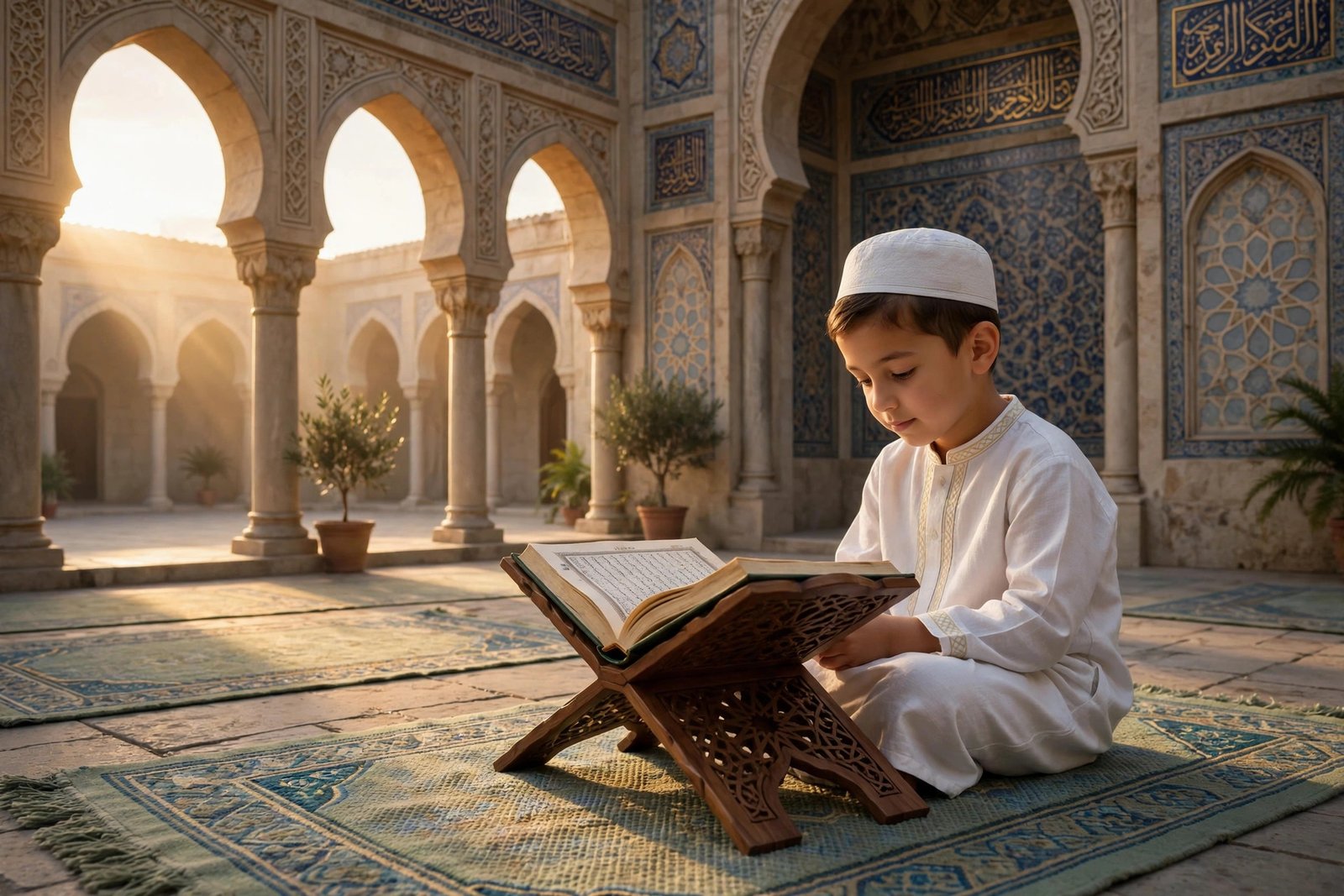
Prophet Muhammad love for children was one of the most beautiful expressions of his mercy, and it remains a perfect guide for every parent, teacher and elder today. The Prophet Muhammad ﷺ — the final Messenger of Allah, the Mercy to the Worlds — did not treat children as small and unimportant. He kissed them, carried them, played with them, prayed with them in his arms, greeted them in the streets, and shortened his own prayer when he heard a child cry. In this article, we explore the Prophet Muhammad love for children through the Quran and authentic Hadith, the beautiful incidents from his blessed life, and the practical lessons that parents and teachers can follow today to raise children with love, gentleness and faith.
Table of Contents
- The Mercy of the Prophet ﷺ — A Mercy to All the Worlds
- Why Children Held a Special Place in His Heart
- Kissing and Embracing Children: The Sunnah of Affection
- Carrying a Child in Prayer
- Shortening the Prayer for a Crying Child
- Playing with Children: Hasan and Husayn رضی اللہ عنہما
- Greeting Children and Making Them Feel Valued
- Raising Daughters: A Path to Jannah
- The Prophet’s ﷺ Guidance for Parents and Teachers
- Lessons for Parents Today
- Frequently Asked Questions
The Mercy of the Prophet ﷺ — A Mercy to All the Worlds
Allah Almighty describes the mission of the Prophet Muhammad ﷺ in one blessed verse that covers every living being: “And We have not sent you, [O Muhammad], except as a mercy to the worlds.” (Al-Anbiya 21:107). The mercy of the Prophet Muhammad ﷺ was not limited to his Companions, his family, or the adults of his time — it reached the smallest child, the weakest person, and even the animals. His mercy was the mercy of a heart that Allah Himself had softened. Allah says: “So by mercy from Allah, [O Muhammad], you were lenient with them. And if you had been rude and harsh in heart, they would have disbanded from about you.” (Aal-e-Imran 3:159). This gentle character is the foundation of the Prophet Muhammad love for children: a child never met harshness from him, only softness, patience and a smiling face.
Those who wish to understand the character of the Prophet Muhammad ﷺ in full should also read about the Prophet Muhammad mercy to the worlds, where his compassion for all creation is explained in detail. The same mercy that embraced the whole world embraced children first and most tenderly, because children are the most delicate and most deserving of gentle treatment. The Islamic upbringing of children begins with this very understanding: that a child is an amanah — a trust from Allah — and that raising a child with love is itself an act of worship.
Why Children Held a Special Place in His Heart
Children are the adornment of this worldly life, as Allah says: “Wealth and children are [but] adornment of the worldly life.” (Al-Kahf 18:46). The Prophet Muhammad ﷺ understood the hearts of children better than anyone. He knew that a child’s heart is pure, soft, and full of trust — and that whatever is planted in it in childhood grows for a lifetime. That is why he never dismissed a child, never ignored a child’s question, and never made a child feel small. His love for children was not an occasional kindness; it was a constant part of his daily life, witnessed by his wives, his Companions رضی اللہ عنہم, and the children of Madinah themselves.
The Prophet Muhammad ﷺ also taught that every person is a shepherd over those in his care: “Each of you is a shepherd, and each of you is responsible for his flock.” (Sahih al-Bukhari 893). For parents, this means the child is their flock — and love, not fear, is the way to lead it. A parent who studies the rights of parents in Islam learns that the bond between parent and child is built on mutual love and respect, and the child who is loved at home learns to love Allah and His Messenger ﷺ. This is also why the Jamia’s Quran courses for children begin with love and encouragement — a child who loves the Quran will never leave it.
Kissing and Embracing Children: The Sunnah of Affection
One of the most famous incidents of the Prophet Muhammad love for children is narrated by Sayyiduna Abu Hurayrah رضی اللہ عنہ. He reported that the Prophet Muhammad ﷺ kissed his grandson Al-Hasan ibn Ali رضی اللہ عنہما while Al-Aqra ibn Habis was sitting with him. Al-Aqra said: “I have ten children, and I have never kissed any of them.” The Prophet Muhammad ﷺ looked at him and said: “Whoever does not show mercy will not be shown mercy.” (Sahih al-Bukhari 5997). This single Hadith teaches two lessons at once: that kissing and embracing one’s children is the Sunnah, and that withholding affection is a hardness of heart that distances a person from Allah’s mercy.
The Prophet Muhammad ﷺ embraced his children and grandchildren openly, in front of people, so that the whole Ummah would learn that affection is not a weakness but a strength. The kindness to neighbors in Islam begins at home: the one who is gentle with his own children will be gentle with the children of others, and the child who grows up in a loving home spreads love in the whole neighbourhood. The Prophet Muhammad ﷺ also taught: “He is not one of us who does not show mercy to our young ones and respect our elders.” (Sunan al-Tirmidhi 1919). Mercy to the young is therefore a mark of belonging to this Ummah — not an optional extra, but a part of faith itself. Parents who want their children to grow up with the patience and sabr in Islam must first model patience themselves, for children copy what they see far more than what they hear.
Carrying a Child in Prayer
Perhaps no incident shows the Prophet Muhammad love for children more beautifully than his prayer. Sayyiduna Abu Qatadah رضی اللہ عنہ narrated that the Prophet Muhammad ﷺ would pray while carrying Umamah, the daughter of his beloved daughter Sayyidah Zaynab رضی اللہ عنہا. When he bowed, he would put her down, and when he stood up, he would pick her up again. (Sahih al-Bukhari 516). Think about this: the greatest act of worship, the prayer in which the Prophet Muhammad ﷺ stood before Allah, was not interrupted by the presence of a child — the child was welcomed into it. He did not send the child away, did not scold her, and did not consider her a disturbance. The prayer of the Prophet Muhammad ﷺ had room for a little girl in his arms.
This is a powerful lesson for every mosque and every home today. Children should be welcomed in the masjid, not pushed away, for the masjid is where their love for Allah is born. The power of dua in Islam is something children should learn early: a child who sees his father raise his hands in dua, and who is taught to make dua himself, carries that habit for life. Likewise, the virtues of dhikr in Islam are best taught when a child is young, through gentle repetition and loving encouragement rather than force. The Jamia’s daily duas for children are a beautiful starting point for any parent who wants to begin this journey.
Shortening the Prayer for a Crying Child
On another occasion, the Prophet Muhammad ﷺ said: “I stand in prayer and I intend to prolong it, but when I hear the crying of a child, I shorten my prayer, for I know the distress that his crying causes his mother.” (Sahih al-Bukhari 707). The Imam of all the Prophets, leading the prayer in the Prophet’s Mosque, shortened his prayer because a child was crying — because he felt the anxiety of the child’s mother. This is the height of mercy: the Prophet Muhammad ﷺ changed his own worship out of compassion for a mother and her child.
What a lesson for our communities! If the Prophet Muhammad ﷺ shortened his prayer for a crying child, how can we justify harsh words or angry looks toward children in our mosques? A crying child in the masjid is not a problem to be solved — he is a future worshipper to be welcomed. The honesty in Islam teaches us to be truthful about our own shortcomings too: many of us are quick to correct a child’s mistake and slow to show him love, while the Prophet Muhammad ﷺ did the opposite. He corrected with gentleness and loved without conditions, and his Companions رضی اللہ عنہم followed him in this. The gratitude and shukr in Islam includes gratitude for our children — for Allah has given us these precious trusts, and thanking Allah for them means treating them with the love they deserve.
Playing with Children: Hasan and Husayn رضی اللہ عنہما
The Prophet Muhammad ﷺ played with children, and his play was full of love and honour. He would let his beloved grandsons, Al-Hasan and Al-Husayn رضی اللہ عنہما, climb on his back while he prayed, and he would carry them on his shoulders through the streets of Madinah. He said about Al-Husayn رضی اللہ عنہ: “Husayn is from me, and I am from Husayn. May Allah love whoever loves Husayn.” (Sunan al-Tirmidhi 3775). The people of Madinah saw the Messenger of Allah playing with children, and they understood that play is not a waste of time — it is how a child’s heart is won.
He would also race and joke with children, make them laugh, and give them his full attention. Once, when a child was ill, the Prophet Muhammad ﷺ visited him. When a child was sad, he comforted him — he even comforted a small boy whose pet bird had died, asking him gently about his bird and sharing his sorrow. This is the Sunnah of empathy: a child’s sadness is real sadness, and the Prophet Muhammad ﷺ treated it as such. Parents today can follow this Sunnah by playing with their children every day, even for a few minutes, for those few minutes build a bond that lasts a lifetime. The Islamic upbringing of children is not only about teaching rules — it is about building a loving relationship in which the child feels safe, valued and heard. And the importance of seeking knowledge in Islam begins in the same way: the child who is loved at home will love to learn, and the child who is forced will only learn to fear.
Greeting Children and Making Them Feel Valued
Sayyiduna Anas ibn Malik رضی اللہ عنہ, who served the Prophet Muhammad ﷺ for ten years from his childhood, narrated that the Prophet Muhammad ﷺ used to pass by a group of children and greet them with Salam. (Sahih al-Bukhari 6247). The Messenger of Allah — the leader of the Ummah, the busiest man in Madinah — stopped to greet children. He did not walk past them as if they did not matter. He gave them Salam first, teaching them by example that greeting is the key to hearts, and teaching the adults around him that children deserve the same respect as anyone else.
Sayyiduna Anas رضی اللہ عنہ also said: “I served the Prophet Muhammad ﷺ for ten years, and he never once said to me ‘Uff’ — never once did he say ‘Why did you do this?’ or ‘Why did you not do this?'” This is the character every parent should strive for: ten years of service, and not one word of harshness. The Prophet Muhammad ﷺ was the best of teachers, and his teaching method was love, patience and beautiful example. The Prophet Muhammad mercy to the worlds shows itself in these small, daily acts — a greeting, a smile, a hand on a child’s head — and those small acts are the ones children remember for the rest of their lives. Those who wish to teach their children the daily duas and the words of the Quran should remember this method: teach with a smile, correct with gentleness, and praise the child often, for the child’s heart opens with love and closes with harshness.
Raising Daughters: A Path to Jannah
In a society where daughters were once considered a burden, the Prophet Muhammad ﷺ honoured them and promised Jannah to those who raised them with love. He said: “Whoever cares for two girls until they reach maturity, he and I will come on the Day of Resurrection like this” — and he held his two fingers together. (Sahih Muslim 2631). The one who raises his daughters with love, teaches them, and marries them honourably will be so close to the Prophet Muhammad ﷺ on the Day of Judgment that no distance will remain between them.
The Prophet Muhammad ﷺ also taught: “The best of you are those who are best to their families, and I am the best of you to my family.” (Sunan al-Tirmidhi 3895). His own family life was the proof: he would stand up for his beloved daughter Sayyidah Fatimah رضی اللہ عنہا when she entered, kiss her, and seat her in his own place. This is how a father should treat his daughter — with honour, tenderness and pride. A daughter raised with such love grows into a confident Muslim woman, and a son who sees his father honour his sisters learns to honour all women. The rights of parents in Islam and the rights of children go together: the child who receives love and respect grows up to give love and respect. And the patience and sabr in Islam is never needed more than in raising children — the patient parent raises the patient child.
The Prophet’s ﷺ Guidance for Parents and Teachers
The teachings of the Prophet Muhammad ﷺ about children can be gathered into a few golden principles. First, love them openly: kiss them, hug them, tell them you love them — for he said, “Whoever does not show mercy will not be shown mercy.” (Sahih al-Bukhari 5997). Second, be just between them: he forbade favouring one child over another in gifts and treatment, for favouritism plants jealousy that can last a lifetime. Third, teach them gently: the best teaching is by example, and the child learns more from watching his parents pray than from a hundred lectures. Fourth, make dua for them: the power of dua in Islam includes the dua of a parent for a child, which is among the duas that Allah accepts without a veil. Fifth, choose good company and good teachers for them, for the company a child keeps shapes his character.
The Quran itself gives the model of a father’s advice in the words of Luqman to his son: “O my son, do not associate anything with Allah. Indeed, association with Allah is great injustice.” (Luqman 31:13). Luqman’s advice continued with prayer, patience, humility and good character (Luqman 31:17-19) — the same qualities the Prophet Muhammad ﷺ planted in the children around him. Parents who want to follow this model will find the Quran courses at Jamia Saeedia Darul Quran a blessed help, for the child who learns the Quran with love carries its light into every part of his life. The beautiful names of Allah are also a wonderful way to teach a child about Allah’s mercy — a child who knows that Allah is Ar-Rahman, the Most Merciful, grows up loving Allah, not fearing Him alone.
Lessons for Parents Today
What does the Prophet Muhammad love for children mean for us today, in a world of screens, busy schedules and constant pressure? It means, first, that our children need our time more than our money — a few minutes of undivided attention each day is worth more than any gift. It means that discipline must be built on love, never on anger: the Prophet Muhammad ﷺ never struck a child, never shouted at a child, and never humiliated a child. It means welcoming children in our mosques, teaching them the Quran with a smile, and making the masjid a place they love to visit. It means greeting children with Salam, asking about their day, listening to their small stories, and taking their feelings seriously.
It also means making dua for our children every day — especially in the blessed hours of the night, when Allah descends to the lowest heaven and answers the call of His servants. The importance of Tahajjud prayer includes this beautiful secret: the parent who wakes for Tahajjud and makes dua for his children plants a protection over them that no wealth can buy. And it means remembering that our children are watching us always — the child who sees his father treat his own mother with respect, the child who sees her mother give sadaqah charity in Islam with a smiling face, learns Islam not from books but from life. The kindness to neighbors in Islam begins with the kindness our children see at home. May Allah grant us all the ability to love our children as the Prophet Muhammad ﷺ loved them, and to raise them as he raised the children of his Ummah — with mercy, wisdom and love.
Frequently Asked Questions
How did the Prophet Muhammad ﷺ treat children?
The Prophet Muhammad ﷺ treated children with extraordinary love and gentleness. He kissed them, carried them in prayer, played with them, greeted them with Salam, shortened his prayer when a child cried, and never once spoke harshly to a child. His love for children was a living example of his mercy to the worlds (Al-Anbiya 21:107).
What did the Prophet ﷺ say about showing mercy to children?
He said: “He is not one of us who does not show mercy to our young ones and respect our elders.” (Sunan al-Tirmidhi 1919). He also said: “Whoever does not show mercy will not be shown mercy.” (Sahih al-Bukhari 5997). Showing mercy to children is therefore a sign of true faith.
Did the Prophet Muhammad ﷺ pray while carrying a child?
Yes. He would pray while carrying Umamah, the daughter of Sayyidah Zaynab رضی اللہ عنہا, putting her down when he bowed and picking her up again when he stood. (Sahih al-Bukhari 516). This teaches us that children are welcome in prayer and in the masjid.
What is the reward for raising daughters in Islam?
The Prophet Muhammad ﷺ promised that whoever cares for two daughters until they reach maturity will be with him on the Day of Resurrection, as close as two fingers held together. (Sahih Muslim 2631). Raising daughters with love and good teaching is a direct path to Jannah.
How can parents follow the Prophet’s ﷺ example with children today?
By loving them openly, being just between them, teaching them gently through example, greeting them with Salam, playing with them, welcoming them in the masjid, teaching them the Quran and duas with a smile, and making dua for them every day — especially in Tahajjud.
Related Articles
اردو میں مکمل مضمون
نبی اکرم صلی اللہ علیہ وآلہ وسلم کی بچوں سے محبت آپ ﷺ کی رحمت کی سب سے خوبصورت جھلک تھی، اور یہ آج ہر والدین، ہر استاد اور ہر بزرگ کے لیے کامل رہنمائی ہے۔ نبی اکرم صلی اللہ علیہ وآلہ وسلم — اللہ کے آخری رسول، رحمت للعالمین — بچوں کو چھوٹا اور غیر اہم نہیں سمجھتے تھے۔ آپ ﷺ بچوں کو بوسہ دیتے، انہیں گود میں اٹھاتے، ان کے ساتھ کھیلتے، نماز میں انہیں اپنے ساتھ رکھتے، گلیوں میں انہیں سلام کرتے، اور جب کسی بچے کے رونے کی آواز سنتے تو اپنی نماز مختصر کر دیتے۔ اس مضمون میں ہم قرآن و حدیث کی روشنی میں نبی اکرم صلی اللہ علیہ وآلہ وسلم کی بچوں سے محبت، آپ ﷺ کی مبارک زندگی کے خوبصورت واقعات، اور ان عملی سبقوں کو بیان کریں گے جن پر عمل کر کے والدین اور اساتذہ آج اپنے بچوں کی تربیت محبت، نرمی اور ایمان کے ساتھ کر سکتے ہیں۔
فہرست مضامین
- نبی اکرم ﷺ کی رحمت — تمام جہانوں کے لیے رحمت
- بچے آپ ﷺ کے دل میں کیوں خاص مقام رکھتے تھے؟
- بچوں کو بوسہ دینا اور گلے لگانا: محبت کی سنت
- نماز میں بچے کو اٹھانا
- بچے کے رونے پر نماز مختصر کرنا
- بچوں کے ساتھ کھیلنا: حسن و حسین رضی اللہ عنہما
- بچوں کو سلام کرنا اور انہیں اہمیت دینا
- بیٹیوں کی پرورش: جنت کا راستہ
- والدین اور اساتذہ کے لیے نبی اکرم ﷺ کی رہنمائی
- آج کے والدین کے لیے سبق
- اکثر پوچھے جانے والے سوالات
نبی اکرم ﷺ کی رحمت — تمام جہانوں کے لیے رحمت
اللہ تعالیٰ نے نبی اکرم صلی اللہ علیہ وآلہ وسلم کے مشن کو ایک مبارک آیت میں بیان فرمایا ہے جو ہر جاندار کو شامل ہے: “وَمَا أَرْسَلْنَاكَ إِلَّا رَحْمَةً لِلْعَالَمِينَ” — “اور ہم نے آپ کو تمام جہانوں کے لیے رحمت بنا کر بھیجا ہے۔” (الأنبیاء 21:107)۔ نبی اکرم صلی اللہ علیہ وآلہ وسلم کی رحمت صرف آپ کے صحابہ کرام رضی اللہ عنہم، آپ کے اہل بیت یا اپنے زمانے کے بڑوں تک محدود نہیں تھی — یہ سب سے چھوٹے بچے، سب سے کمزور انسان، حتیٰ کہ جانوروں تک پہنچی۔ آپ ﷺ کی رحمت اس دل کی رحمت تھی جسے اللہ تعالیٰ نے خود نرم فرمایا تھا۔ اللہ تعالیٰ فرماتا ہے: “فَبِمَا رَحْمَةٍ مِنَ اللَّهِ لِنْتَ لَهُمْ ۖ وَلَوْ كُنْتَ فَظًّا غَلِيظَ الْقَلْبِ لَانْفَضُّوا مِنْ حَوْلِكَ” — “پس اللہ کی رحمت سے آپ ان کے لیے نرم ہو گئے، اور اگر آپ سخت دل اور تند خو ہوتے تو وہ آپ کے آس پاس سے چھٹ جاتے۔” (آل عمران 3:159)۔ یہ نرم مزاجی نبی اکرم صلی اللہ علیہ وآلہ وسلم کی بچوں سے محبت کی بنیاد ہے: کسی بچے کو آپ ﷺ سے کبھی سختی نہیں ملی، صرف نرمی، صبر اور مسکراتا چہرہ ملا۔
جو لوگ نبی اکرم صلی اللہ علیہ وآلہ وسلم کے اخلاق کو مکمل طور پر سمجھنا چاہتے ہیں، وہ نبی اکرم ﷺ کی رحمت للعالمینی کے بارے میں بھی پڑھیں، جہاں تمام مخلوق کے لیے آپ کی شفقت تفصیل سے بیان کی گئی ہے۔ وہی رحمت جو سارے جہان کو گھیرے ہوئے تھی، بچوں کو سب سے پہلے اور سب سے زیادہ نرمی سے گھیرے ہوئے تھی، کیونکہ بچے سب سے زیادہ نازک اور نرم سلوک کے سب سے زیادہ مستحق ہوتے ہیں۔ بچوں کی اسلامی تربیت اسی سمجھ سے شروع ہوتی ہے: بچہ اللہ کی طرف سے امانت ہے، اور بچے کی تربیت محبت کے ساتھ کرنا خود ایک عبادت ہے۔
بچے آپ ﷺ کے دل میں کیوں خاص مقام رکھتے تھے؟
بچے دنیاوی زندگی کی زینت ہیں، جیسا کہ اللہ تعالیٰ فرماتا ہے: “الْمَالُ وَالْبَنُونَ زِينَةُ الْحَيَاةِ الدُّنْيَا” — “مال اور اولاد دنیاوی زندگی کی زینت ہیں۔” (الکہف 18:46)۔ نبی اکرم صلی اللہ علیہ وآلہ وسلم بچوں کے دلوں کو سب سے بہتر سمجھتے تھے۔ آپ ﷺ جانتے تھے کہ بچے کا دل پاک، نرم اور بھروسے سے بھرا ہوتا ہے — اور بچپن میں اس میں جو کچھ بویا جائے، وہ ساری زندگی بڑھتا ہے۔ اسی لیے آپ ﷺ نے کبھی کسی بچے کو نظر انداز نہیں کیا، کبھی کسی بچے کے سوال کو رد نہیں کیا، اور کبھی کسی بچے کو چھوٹا محسوس نہیں ہونے دیا۔ آپ ﷺ کی بچوں سے محبت کبھی کبھار کی مہربانی نہیں تھی؛ یہ آپ کی روزمرہ زندگی کا مستقل حصہ تھی، جسے آپ کی ازواج مطہرات رضی اللہ عنہا، آپ کے صحابہ کرام رضی اللہ عنہم، اور مدینہ کے بچوں نے خود دیکھا تھا۔
نبی اکرم صلی اللہ علیہ وآلہ وسلم نے یہ بھی فرمایا کہ ہر شخص اپنے ماتحتوں کا نگہبان ہے: “تم میں سے ہر ایک نگہبان ہے، اور ہر ایک سے اس کی رعیت کے بارے میں پوچھا جائے گا۔” (صحیح البخاری 893)۔ والدین کے لیے اس کا مطلب یہ ہے کہ بچہ ان کی رعیت ہے — اور محبت، نہ کہ خوف، اس کی رہنمائی کا طریقہ ہے۔ جو والدین اسلام میں والدین کے حقوق کا مطالعہ کرتے ہیں، وہ سیکھتے ہیں کہ والدین اور بچے کے درمیان رشتہ باہمی محبت اور احترام پر قائم ہوتا ہے، اور جو بچہ گھر میں محبت پاتا ہے، وہ اللہ اور اس کے رسول ﷺ سے محبت کرنا سیکھتا ہے۔ اسی لیے جامعہ کے بچوں کے لیے قرآن کورسز محبت اور حوصلہ افزائی سے شروع ہوتے ہیں — جو بچہ قرآن سے محبت کرتا ہے، وہ اسے کبھی نہیں چھوڑتا۔
بچوں کو بوسہ دینا اور گلے لگانا: محبت کی سنت
نبی اکرم صلی اللہ علیہ وآلہ وسلم کی بچوں سے محبت کا سب سے مشہور واقعہ حضرت ابو ہریرہ رضی اللہ عنہ نے روایت کیا ہے۔ انہوں نے بیان کیا کہ نبی اکرم صلی اللہ علیہ وآلہ وسلم نے اپنے نواسے حضرت حسن بن علی رضی اللہ عنہما کو بوسہ دیا، جبکہ اقرع بن حابس آپ کے پاس بیٹھے تھے۔ اقرع نے کہا: “میرے دس بچے ہیں، اور میں نے کبھی کسی کو بوسہ نہیں دیا۔” نبی اکرم صلی اللہ علیہ وآلہ وسلم نے ان کی طرف دیکھا اور فرمایا: “جو رحم نہیں کرتا، اس پر رحم نہیں کیا جائے گا۔” (صحیح البخاری 5997)۔ یہ ایک حدیث دو سبق ایک ساتھ سکھاتی ہے: اپنے بچوں کو بوسہ دینا اور گلے لگانا سنت ہے، اور محبت سے محروم رکھنا دل کی سختی ہے جو انسان کو اللہ کی رحمت سے دور کر دیتی ہے۔
نبی اکرم صلی اللہ علیہ وآلہ وسلم نے اپنے بچوں اور نواسوں کو لوگوں کے سامنے کھلے عام گلے لگایا، تاکہ پوری امت سیکھے کہ محبت کمزوری نہیں بلکہ طاقت ہے۔ پڑوسیوں کے حقوق اسلام میں گھر سے شروع ہوتے ہیں: جو اپنے بچوں کے ساتھ نرم ہے، وہ دوسروں کے بچوں کے ساتھ بھی نرم ہوگا، اور جو بچہ محبت والے گھر میں بڑا ہوتا ہے، وہ پورے محلے میں محبت پھیلاتا ہے۔ نبی اکرم صلی اللہ علیہ وآلہ وسلم نے یہ بھی فرمایا: “وہ ہم میں سے نہیں جو ہمارے چھوٹوں پر رحم نہ کرے اور ہمارے بڑوں کا احترام نہ کرے۔” (سنن الترمذی 1919)۔ چھوٹوں پر رحم کرنا اس امت سے تعلق کی علامت ہے — یہ کوئی اضافی خوبی نہیں، بلکہ ایمان کا حصہ ہے۔ جو والدین چاہتے ہیں کہ ان کے بچے مشکل وقت میں صبر سیکھیں، انہیں پہلے خود صبر کا نمونہ بننا چاہیے، کیونکہ بچے سنی ہوئی باتوں سے زیادہ دیکھی ہوئی چیزوں کی نقل کرتے ہیں۔
نماز میں بچے کو اٹھانا
شاید نبی اکرم صلی اللہ علیہ وآلہ وسلم کی بچوں سے محبت کا سب سے خوبصورت واقعہ آپ کی نماز سے متعلق ہے۔ حضرت ابو قتادہ رضی اللہ عنہ نے روایت کیا کہ نبی اکرم صلی اللہ علیہ وآلہ وسلم نماز پڑھتے ہوئے اپنی پیاری بیٹی حضرت زینب رضی اللہ عنہا کی بیٹی امامہ کو اٹھائے ہوئے ہوتے تھے۔ جب آپ رکوع کرتے تو اسے نیچے رکھ دیتے، اور جب کھڑے ہوتے تو اسے پھر اٹھا لیتے۔ (صحیح البخاری 516)۔ غور کیجیے: عبادت کا سب سے بڑا عمل، وہ نماز جس میں نبی اکرم صلی اللہ علیہ وآلہ وسلم اللہ کے سامنے کھڑے ہوتے تھے، بچے کی موجودگی سے متاثر نہیں ہوئی — بچے کو اس میں خوش آمدید کہا گیا۔ آپ نے بچے کو دور نہیں بھیجا، اسے ڈانٹا نہیں، اور اسے خلل نہیں سمجھا۔ نبی اکرم صلی اللہ علیہ وآلہ وسلم کی نماز میں ایک چھوٹی بچی کے لیے جگہ تھی۔
یہ آج کی ہر مسجد اور ہر گھر کے لیے ایک طاقتور سبق ہے۔ بچوں کو مسجد میں خوش آمدید کہنا چاہیے، انہیں دور نہیں دھکیلنا چاہیے، کیونکہ مسجد وہ جگہ ہے جہاں ان کی اللہ سے محبت پیدا ہوتی ہے۔ اسلام میں دعا کی طاقت ایسی چیز ہے جو بچوں کو جلد سیکھنی چاہیے: جو بچہ اپنے والد کو دعا میں ہاتھ اٹھاتے دیکھتا ہے، اور جسے خود دعا کرنا سکھایا جاتا ہے، وہ یہ عادت ساری زندگی ساتھ رکھتا ہے۔ اسی طرح ذکر الٰہی کی فضیلت بچپن میں ہی نرم دہرائی اور محبت بھری حوصلہ افزائی سے سکھانی چاہیے، نہ کہ زبردستی سے۔ جامعہ کی بچوں کے لیے روزمرہ دعائیں ہر والدین کے لیے اس سفر کی شروعات کا خوبصورت ذریعہ ہیں۔
بچے کے رونے پر نماز مختصر کرنا
ایک اور موقع پر نبی اکرم صلی اللہ علیہ وآلہ وسلم نے فرمایا: “میں نماز میں کھڑا ہوتا ہوں اور اسے لمبا کرنے کا ارادہ کرتا ہوں، لیکن جب کسی بچے کے رونے کی آواز سنتا ہوں تو اپنی نماز مختصر کر دیتا ہوں، کیونکہ میں جانتا ہوں کہ اس کے رونے سے اس کی ماں کو کتنی تکلیف ہوتی ہے۔” (صحیح البخاری 707)۔ تمام انبیاء کے امام، مسجد نبوی میں نماز پڑھاتے ہوئے، اپنی نماز اس لیے مختصر کر دیتے تھے کہ ایک بچہ رو رہا تھا — کیونکہ آپ کو اس بچے کی ماں کی پریشانی کا احساس تھا۔ یہ رحمت کی انتہا ہے: نبی اکرم صلی اللہ علیہ وآلہ وسلم نے ایک ماں اور اس کے بچے کی شفقت میں اپنی عبادت بدل دی۔
ہماری جماعتوں کے لیے کیا سبق ہے! اگر نبی اکرم صلی اللہ علیہ وآلہ وسلم نے روتے ہوئے بچے کے لیے اپنی نماز مختصر کر دی، تو ہم مسجدوں میں بچوں کے لیے سخت الفاظ یا غصے والی نظریں کیسے جائز ٹھہرا سکتے ہیں؟ مسجد میں روتا ہوا بچہ کوئی مسئلہ نہیں ہے — وہ مستقبل کا نمازی ہے جسے خوش آمدید کہنا چاہیے۔ اسلام میں سچائی اور امانت ہمیں اپنی کوتاہیوں کے بارے میں بھی سچا ہونا سکھاتی ہے: ہم میں سے بہت سے لوگ بچے کی غلطی پر فوراً تنبیہ کرتے ہیں اور محبت دکھانے میں سست ہوتے ہیں، جبکہ نبی اکرم صلی اللہ علیہ وآلہ وسلم اس کے برعکس کرتے تھے۔ آپ نرمی سے اصلاح فرماتے اور بغیر شرط محبت فرماتے تھے، اور آپ کے صحابہ کرام رضی اللہ عنہم نے اسی میں آپ کی پیروی کی۔ اسلام میں شکر گزاری میں اپنے بچوں کے لیے شکر بھی شامل ہے — اللہ نے ہمیں یہ قیمتی امانتیں دی ہیں، اور ان کا شکر یہ ہے کہ ہم ان کے ساتھ وہ محبت کریں جس کے وہ مستحق ہیں۔
بچوں کے ساتھ کھیلنا: حسن و حسین رضی اللہ عنہما
نبی اکرم صلی اللہ علیہ وآلہ وسلم بچوں کے ساتھ کھیلتے تھے، اور آپ کا کھیل محبت اور عزت سے بھرا ہوتا تھا۔ آپ اپنے پیارے نواسوں، حضرت حسن اور حضرت حسین رضی اللہ عنہما، کو نماز میں اپنی پیٹھ پر چڑھنے دیتے تھے، اور انہیں مدینہ کی گلیوں میں اپنے کندھوں پر اٹھا کر چلتے تھے۔ آپ نے حضرت حسین رضی اللہ عنہ کے بارے میں فرمایا: “حسین مجھ سے ہے اور میں حسین سے ہوں۔ اللہ اس سے محبت کرے جو حسین سے محبت کرے۔” (سنن الترمذی 3775)۔ مدینہ کے لوگ رسول اللہ ﷺ کو بچوں کے ساتھ کھیلتے دیکھتے تھے، اور سمجھتے تھے کہ کھیل وقت کا ضیاع نہیں ہے — یہ بچے کا دل جیتنے کا طریقہ ہے۔
آپ بچوں کے ساتھ دوڑ بھی لگاتے، ان سے مذاق کرتے، انہیں ہنساتے، اور انہیں اپنی پوری توجہ دیتے تھے۔ ایک بار جب ایک بچہ بیمار تھا تو نبی اکرم صلی اللہ علیہ وآلہ وسلم اس کی عیادت کے لیے تشریف لے گئے۔ جب کوئی بچہ اداس ہوتا تو آپ اسے تسلی دیتے تھے — آپ نے ایک چھوٹے بچے کو بھی تسلی دی تھی جس کی پالتو چڑیا مر گئی تھی، اس سے نرمی سے اس کی چڑیا کے بارے میں پوچھا اور اس کے غم میں شریک ہوئے۔ یہ ہمدردی کی سنت ہے: بچے کا غم حقیقی غم ہے، اور نبی اکرم صلی اللہ علیہ وآلہ وسلم نے اسے اسی طرح سمجھا۔ آج کے والدین اس سنت پر عمل کر سکتے ہیں کہ وہ روزانہ چند منٹ اپنے بچوں کے ساتھ کھیلیں، کیونکہ یہ چند منٹ ایک ایسا رشتہ بناتے ہیں جو ساری زندگی قائم رہتا ہے۔ بچوں کی اسلامی تربیت صرف قواعد سکھانے کا نام نہیں ہے — یہ ایک محبت بھرا رشتہ بنانے کا نام ہے جس میں بچہ خود کو محفوظ، قیمتی اور سنا ہوا محسوس کرے۔ اور اسلام میں علم کی اہمیت اسی طرح شروع ہوتی ہے: جو بچہ گھر میں محبت پاتا ہے، وہ سیکھنے سے محبت کرتا ہے، اور جسے زبردستی سکھایا جاتا ہے، وہ صرف خوف سیکھتا ہے۔
بچوں کو سلام کرنا اور انہیں اہمیت دینا
حضرت انس بن مالک رضی اللہ عنہ، جنہوں نے بچپن سے دس سال تک نبی اکرم صلی اللہ علیہ وآلہ وسلم کی خدمت کی، نے روایت کیا کہ نبی اکرم صلی اللہ علیہ وآلہ وسلم بچوں کے ایک گروہ کے پاس سے گزرتے تو انہیں سلام کرتے تھے۔ (صحیح البخاری 6247)۔ اللہ کے رسول — امت کے رہنما، مدینہ کے مصروف ترین انسان — بچوں کو سلام کرنے کے لیے رک جاتے تھے۔ آپ ان کے پاس سے ایسے نہیں گزرتے تھے جیسے وہ موجود ہی نہ ہوں۔ آپ انہیں پہلے سلام کرتے تھے، انہیں مثال سے سکھاتے تھے کہ سلام دلوں کی کنجی ہے، اور ارد گرد کے بڑوں کو سکھاتے تھے کہ بچے بھی اتنے ہی احترام کے مستحق ہیں جتنے کوئی اور۔
حضرت انس رضی اللہ عنہ نے یہ بھی فرمایا: “میں نے دس سال تک نبی اکرم صلی اللہ علیہ وآلہ وسلم کی خدمت کی، اور آپ نے مجھے کبھی ‘اف’ تک نہیں کہا — کبھی یہ نہیں فرمایا کہ ‘تم نے یہ کیوں کیا؟’ یا ‘تم نے یہ کیوں نہیں کیا؟'” یہ وہ اخلاق ہے جس کی ہر والدین کو کوشش کرنی چاہیے: دس سال کی خدمت، اور سختی کا ایک لفظ بھی نہیں۔ نبی اکرم صلی اللہ علیہ وآلہ وسلم بہترین معلم تھے، اور آپ کا طریقہ تعلیم محبت، صبر اور خوبصورت مثال تھی۔ نبی اکرم ﷺ کی رحمت للعالمینی ان چھوٹے، روزمرہ اعمال میں ظاہر ہوتی ہے — ایک سلام، ایک مسکراہٹ، بچے کے سر پر ہاتھ — اور یہ چھوٹے اعمال وہ ہیں جو بچے ساری زندگی یاد رکھتے ہیں۔ جو لوگ اپنے بچوں کو روزمرہ دعائیں اور قرآن کے الفاظ سکھانا چاہتے ہیں، انہیں یہ طریقہ یاد رکھنا چاہیے: مسکراہٹ کے ساتھ سکھائیں، نرمی سے اصلاح کریں، اور بچے کی اکثر تعریف کریں، کیونکہ بچے کا دل محبت سے کھلتا ہے اور سختی سے بند ہو جاتا ہے۔
بیٹیوں کی پرورش: جنت کا راستہ
ایک ایسے معاشرے میں جہاں بیٹیوں کو کبھی بوجھ سمجھا جاتا تھا، نبی اکرم صلی اللہ علیہ وآلہ وسلم نے انہیں عزت دی اور ان کی پرورش کرنے والوں کو جنت کی بشارت دی۔ آپ نے فرمایا: “جو شخص دو بیٹیوں کی پرورش کرے یہاں تک کہ وہ بالغ ہو جائیں، وہ اور میں قیامت کے دن اس طرح آئیں گے” — اور آپ نے اپنی دو انگلیاں ملا کر دکھائیں۔ (صحیح مسلم 2631)۔ جو شخص اپنی بیٹیوں کی پرورش محبت سے کرے، انہیں تعلیم دے، اور عزت کے ساتھ ان کی شادی کرے، وہ قیامت کے دن نبی اکرم صلی اللہ علیہ وآلہ وسلم کے اتنے قریب ہوگا کہ ان کے درمیان کوئی فاصلہ نہیں رہے گا۔
نبی اکرم صلی اللہ علیہ وآلہ وسلم نے یہ بھی فرمایا: “تم میں سے بہترین وہ ہیں جو اپنے اہل و عیال کے ساتھ بہترین ہیں، اور میں تم میں سے اپنے اہل و عیال کے ساتھ بہترین ہوں۔” (سنن الترمذی 3895)۔ آپ کی اپنی خاندانی زندگی اس کی دلیل تھی: آپ اپنی پیاری بیٹی حضرت فاطمہ رضی اللہ عنہا کے آنے پر کھڑے ہو جاتے، ان کا بوسہ لیتے، اور انہیں اپنی جگہ بٹھاتے تھے۔ باپ کو اپنی بیٹی کے ساتھ ایسا ہی سلوک کرنا چاہیے — عزت، نرمی اور فخر کے ساتھ۔ محبت سے پالی گئی بیٹی ایک پراعتماد مسلمان خاتون بنتی ہے، اور جو بیٹا اپنے باپ کو اپنی بہنوں کی عزت کرتے دیکھتا ہے، وہ تمام عورتوں کی عزت کرنا سیکھتا ہے۔ اسلام میں والدین کے حقوق اور بچوں کے حقوق ساتھ ساتھ چلتے ہیں: جو بچہ محبت اور احترام پاتا ہے، وہ بڑا ہو کر محبت اور احترام دیتا ہے۔ اور مشکل وقت میں صبر کی سب سے زیادہ ضرورت بچوں کی پرورش میں ہوتی ہے — صبر کرنے والا والدین صبر کرنے والا بچہ پالتا ہے۔
والدین اور اساتذہ کے لیے نبی اکرم ﷺ کی رہنمائی
بچوں کے بارے میں نبی اکرم صلی اللہ علیہ وآلہ وسلم کی تعلیمات کو چند سنہرے اصولوں میں سمیٹا جا سکتا ہے۔ پہلا، ان سے کھلے عام محبت کریں: انہیں بوسہ دیں، گلے لگائیں، انہیں بتائیں کہ آپ ان سے محبت کرتے ہیں — کیونکہ آپ نے فرمایا: “جو رحم نہیں کرتا، اس پر رحم نہیں کیا جائے گا۔” (صحیح البخاری 5997)۔ دوسرا، ان کے درمیان انصاف کریں: آپ نے تحفوں اور سلوک میں ایک بچے کو دوسرے پر ترجیح دینے سے منع فرمایا، کیونکہ طرفداری حسد پیدا کرتی ہے جو ساری زندگی رہ سکتا ہے۔ تیسرا، انہیں نرمی سے سکھائیں: بہترین تعلیم مثال سے ہوتی ہے، اور بچہ سو لیکچروں سے زیادہ اپنے والدین کو نماز پڑھتے دیکھ کر سیکھتا ہے۔ چوتھا، ان کے لیے دعا کریں: اسلام میں دعا کی طاقت میں والدین کی اولاد کے لیے دعا بھی شامل ہے، جو ان دعاؤں میں سے ہے جنہیں اللہ بغیر کسی حجاب کے قبول فرماتا ہے۔ پانچواں، ان کے لیے اچھی صحبت اور اچھے اساتذہ کا انتخاب کریں، کیونکہ بچے کی صحبت اس کے اخلاق کو بناتی ہے۔
قرآن کریم نے خود باپ کی نصیحت کا نمونہ حضرت لقمان کے اپنے بیٹے کو کہے گئے الفاظ میں دیا ہے: “یَا بُنَیَّ لَا تُشْرِکْ بِاللَّهِ ۖ إِنَّ الشِّرْکَ لَظُلْمٌ عَظِیمٌ” — “اے میرے بیٹے! اللہ کے ساتھ کسی کو شریک نہ ٹھہراؤ۔ بے شک شرک بہت بڑا ظلم ہے۔” (لقمان 31:13)۔ حضرت لقمان کی نصیحت نماز، صبر، عاجزی اور اچھے اخلاق کے ساتھ جاری رہی (لقمان 31:17-19) — وہی خوبیاں جو نبی اکرم صلی اللہ علیہ وآلہ وسلم نے اپنے ارد گرد کے بچوں میں پیدا کیں۔ جو والدین اس نمونے پر عمل کرنا چاہتے ہیں، انہیں جامعہ سعیدیہ دارالقرآن کے قرآن کورسز ایک مبارک مدد ملیں گے، کیونکہ جو بچہ محبت کے ساتھ قرآن سیکھتا ہے، وہ اس کی روشنی اپنی زندگی کے ہر حصے میں لے جاتا ہے۔ اللہ کے خوبصورت نام بھی بچے کو اللہ کی رحمت سکھانے کا بہترین طریقہ ہیں — جو بچہ جانتا ہے کہ اللہ الرحمن ہے، سب سے زیادہ رحم کرنے والا، وہ اللہ سے محبت کرتے ہوئے بڑا ہوتا ہے، صرف ڈرتے ہوئے نہیں۔
آج کے والدین کے لیے سبق
آج کی دنیا میں، جہاں اسکرینیں، مصروف شیڈول اور مسلسل دباؤ ہے، نبی اکرم صلی اللہ علیہ وآلہ وسلم کی بچوں سے محبت کا ہمارے لیے کیا مطلب ہے؟ اس کا مطلب یہ ہے کہ ہمارے بچوں کو ہمارے پیسے سے زیادہ ہمارے وقت کی ضرورت ہے — روزانہ چند منٹ کی مکمل توجہ کسی بھی تحفے سے زیادہ قیمتی ہے۔ اس کا مطلب یہ ہے کہ تربیت محبت پر قائم ہونی چاہیے، غصے پر کبھی نہیں: نبی اکرم صلی اللہ علیہ وآلہ وسلم نے کبھی کسی بچے کو مارا نہیں، کبھی کسی بچے پر چلائے نہیں، اور کبھی کسی بچے کی تذلیل نہیں کی۔ اس کا مطلب یہ ہے کہ بچوں کو ہماری مسجدوں میں خوش آمدید کہیں، انہیں مسکراہٹ کے ساتھ قرآن سکھائیں، اور مسجد کو ایسی جگہ بنائیں جہاں جانا انہیں پسند ہو۔ اس کا مطلب یہ ہے کہ بچوں کو سلام کریں، ان کے دن کے بارے میں پوچھیں، ان کی چھوٹی چھوٹی کہانیاں سنیں، اور ان کے جذبات کو سنجیدگی سے لیں۔
اس کا مطلب یہ بھی ہے کہ ہر روز اپنے بچوں کے لیے دعا کریں — خاص طور پر رات کے مبارک اوقات میں، جب اللہ آسمان دنیا پر نازل ہوتا ہے اور اپنے بندوں کی پکار کا جواب دیتا ہے۔ تہجد کی نماز کی اہمیت میں یہ خوبصورت راز بھی شامل ہے: جو والدین تہجد کے لیے اٹھتے ہیں اور اپنے بچوں کے لیے دعا کرتے ہیں، وہ ان پر ایسی حفاظت ڈالتے ہیں جو کوئی دولت نہیں خرید سکتی۔ اور اس کا مطلب یہ یاد رکھنا ہے کہ ہمارے بچے ہمیں ہمیشہ دیکھ رہے ہیں — جو بچہ اپنے باپ کو اپنی ماں کے ساتھ احترام سے پیش آتے دیکھتا ہے، جو بچہ اپنی ماں کو صدقہ کی فضیلت پر عمل کرتے ہوئے مسکراتے چہرے کے ساتھ صدقہ دیتے دیکھتا ہے، وہ اسلام کتابوں سے نہیں بلکہ زندگی سے سیکھتا ہے۔ پڑوسیوں کے حقوق اسلام میں گھر میں دیکھی گئی مہربانی سے شروع ہوتے ہیں۔ اللہ تعالیٰ ہم سب کو توفیق دے کہ ہم اپنے بچوں سے اسی طرح محبت کریں جیسے نبی اکرم صلی اللہ علیہ وآلہ وسلم ان سے محبت کرتے تھے، اور ان کی تربیت اسی طرح کریں جیسے آپ نے اپنی امت کے بچوں کی تربیت کی — رحمت، حکمت اور محبت کے ساتھ۔
اکثر پوچھے جانے والے سوالات
نبی اکرم ﷺ بچوں کے ساتھ کیسا سلوک فرماتے تھے؟
نبی اکرم صلی اللہ علیہ وآلہ وسلم بچوں کے ساتھ غیر معمولی محبت اور نرمی سے پیش آتے تھے۔ آپ انہیں بوسہ دیتے، نماز میں انہیں اٹھائے رکھتے، ان کے ساتھ کھیلتے، انہیں سلام کرتے، بچے کے رونے پر اپنی نماز مختصر کر دیتے، اور کبھی کسی بچے سے سختی سے بات نہیں کرتے تھے۔ آپ کی بچوں سے محبت آپ کی رحمت للعالمینی کی زندہ مثال تھی (الأنبیاء 21:107)۔
نبی اکرم ﷺ نے بچوں پر رحم کرنے کے بارے میں کیا فرمایا؟
آپ نے فرمایا: “وہ ہم میں سے نہیں جو ہمارے چھوٹوں پر رحم نہ کرے اور ہمارے بڑوں کا احترام نہ کرے۔” (سنن الترمذی 1919)۔ آپ نے یہ بھی فرمایا: “جو رحم نہیں کرتا، اس پر رحم نہیں کیا جائے گا۔” (صحیح البخاری 5997)۔ بچوں پر رحم کرنا سچے ایمان کی علامت ہے۔
کیا نبی اکرم ﷺ نے بچے کو اٹھا کر نماز پڑھی؟
جی ہاں۔ آپ حضرت زینب رضی اللہ عنہا کی بیٹی امامہ کو اٹھا کر نماز پڑھتے تھے، رکوع کے وقت اسے نیچے رکھ دیتے اور کھڑے ہوتے وقت پھر اٹھا لیتے تھے۔ (صحیح البخاری 516)۔ یہ ہمیں سکھاتا ہے کہ بچے نماز اور مسجد میں خوش آمدید ہیں۔
اسلام میں بیٹیوں کی پرورش کا کیا اجر ہے؟
نبی اکرم صلی اللہ علیہ وآلہ وسلم نے بشارت دی کہ جو شخص دو بیٹیوں کی پرورش کرے یہاں تک کہ وہ بالغ ہو جائیں، وہ قیامت کے دن آپ کے ساتھ ہوگا، اتنے قریب جتنی دو انگلیاں ملی ہوئی ہوتی ہیں۔ (صحیح مسلم 2631)۔ بیٹیوں کی پرورش محبت اور اچھی تعلیم کے ساتھ کرنا جنت کا سیدھا راستہ ہے۔
آج کے والدین نبی اکرم ﷺ کی مثال پر بچوں کے ساتھ کیسے عمل کر سکتے ہیں؟
ان سے کھلے عام محبت کر کے، ان کے درمیان انصاف کر کے، مثال کے ذریعے نرمی سے سکھا کر، انہیں سلام کر کے، ان کے ساتھ کھیل کر، انہیں مسجد میں خوش آمدید کہہ کر، انہیں مسکراہٹ کے ساتھ قرآن اور دعائیں سکھا کر، اور ہر روز ان کے لیے دعا کر کے — خاص طور پر تہجد میں۔


Leave A Comment