

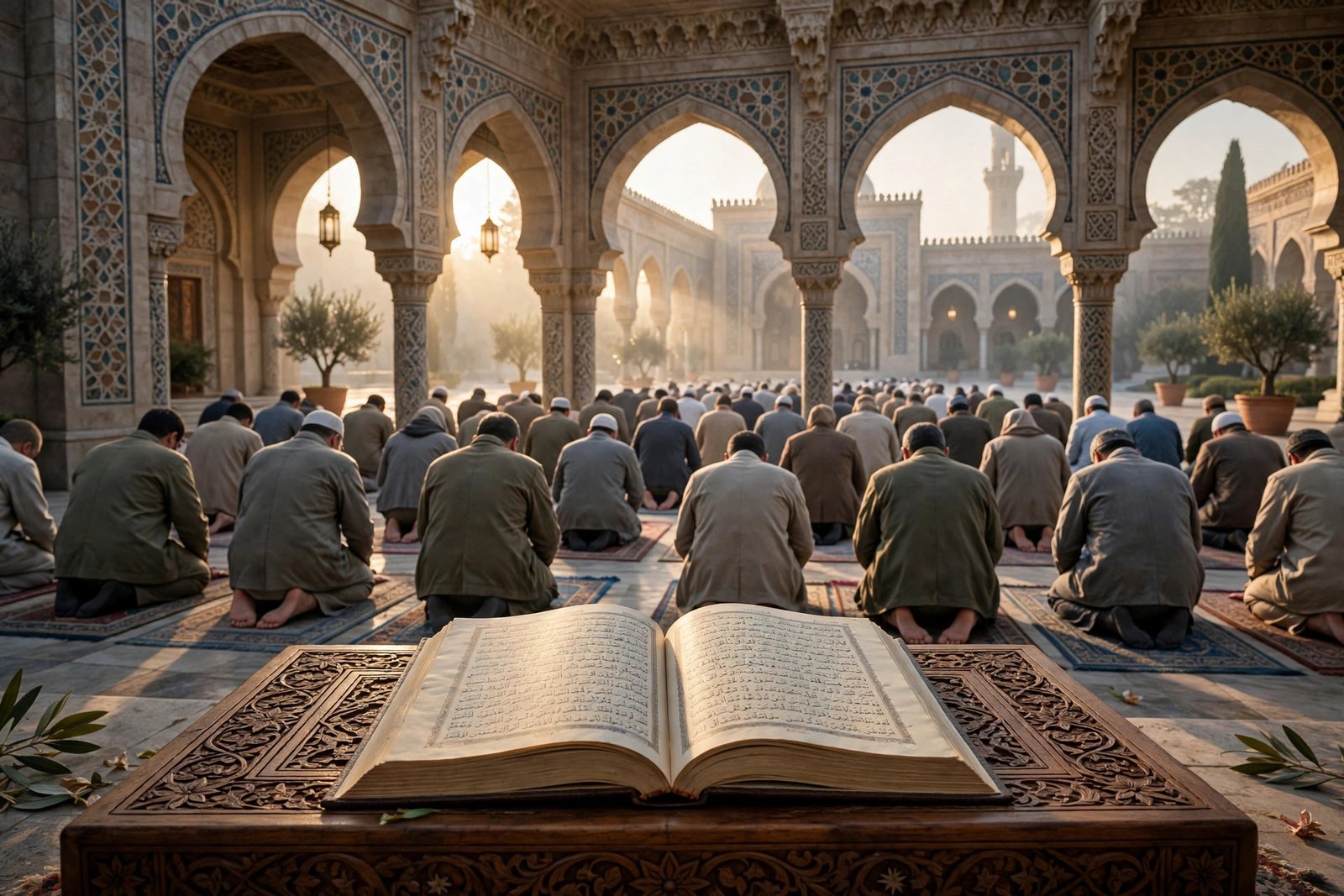
Salah — the five daily prayers — is the heartbeat of a Muslim’s day. From the quiet darkness before dawn to the stillness of the night, prayer returns a believer to Allah five times, washing the heart, steadying the soul and keeping faith alive. In this complete guide to the importance of five daily prayers in Islam, we will look at what the Quran and the authentic Sunnah say about prayer, why it is the second pillar of our deen, what it does for the believer in this world, and what it will mean on the Day of Judgement — all in the light of the Quran and the Sunnah, according to the creed of Ahl-e-Sunnat.
For fourteen centuries, the call to prayer has risen five times a day from every corner of the Muslim world, and it still rises today — in great cities and small villages, in the Haramain Sharifain and in the little mosque at the end of a street in Multan. The believer who answers that call finds something no wealth, no comfort and no entertainment can give: a direct meeting with His Lord, five times every single day. The Prophet Muhammad ﷺ called prayer the coolness of his eyes, and the one who tastes its sweetness never wants to leave it. This article is an invitation to understand prayer, to love it, and — for those who have drifted away from it — to return to it today.
Table of Contents
- What Are the Five Daily Prayers?
- Prayer in the Holy Quran
- The Second Pillar of Islam
- The First Deed We Will Be Asked About
- Five Prayers Wash Away Sins
- Prayer Protects the Believer from Evil
- The Danger of Abandoning Prayer
- The Reward of Praying in Congregation
- The Five Prayers Through the Day
- Practical Ways to Never Miss a Prayer
- Teaching Children to Pray
- Prayer in the Life of the Prophet ﷺ
- Frequently Asked Questions
What Are the Five Daily Prayers?
The five daily prayers are Fajr, Dhuhr, Asr, Maghrib and Isha. They were made obligatory upon the Ummah of the Prophet Muhammad ﷺ on the night of Mi’raj, when the Beloved Prophet ﷺ ascended to the heavens and Allah Himself prescribed fifty prayers, which were then reduced — through the intercession of the Prophet Musa عليه السلام and the mercy of Allah — to five, with the reward of fifty. That is why the five prayers carry such weight: they are a gift that came directly from Allah, without any intermediary, and they were given to this Ummah as a special honour.
| Prayer | Time | Obligatory Rak’ahs |
|---|---|---|
| Fajr | Before sunrise, at dawn | 2 |
| Dhuhr | After the sun passes its zenith, midday | 4 |
| Asr | Late afternoon | 4 |
| Maghrib | Just after sunset | 3 |
| Isha | Night, after twilight has disappeared | 4 |
Each prayer has its own time, fixed by Allah, and each time has its own blessing. Fajr is prayed when the world is still asleep, and the one who rises for it begins his day with Allah’s protection. Dhuhr breaks the busyness of the working day with remembrance. Asr comes when the day is slipping away and energy is fading. Maghrib is prayed in the golden moments after sunset, when the family gathers. And Isha closes the day in the darkness of the night, with the heart at peace. Together, the five prayers divide the day into portions that all belong to Allah. The one who prays all five has given his whole day to Allah — and Allah fills such a day with light.
Before prayer comes wudu, the beautiful ablution that cleanses the body and the soul together. The Prophet Muhammad ﷺ taught that when a believer washes his face, his hands and his feet, his sins fall away with the water. If you would like to learn the correct method, read our step-by-step guide on how to perform wudu. And every prayer begins with Surah Al-Fatiha — the greatest surah of the Quran — whose virtues of Surah Al-Fatiha show why no prayer is complete without it.
Prayer in the Holy Quran
Allah commands prayer again and again in the Holy Quran — more than seventy times He says “establish prayer”. The command is never casual; it is always joined with the greatest promises and the gravest warnings. Allah says: “And establish prayer and give Zakat and bow with those who bow [in worship and obedience]” (Surah Al-Baqarah 2:43). In another verse He fixes prayer to its appointed times: “Indeed, prayer has been decreed upon the believers at specified times” (Surah An-Nisa 4:103). Prayer is not something a believer does when he feels like it, or when he has spare time; it is a duty written upon him at times appointed by Allah Himself.
The Quran also tells us the purpose of prayer. Allah says: “And establish prayer. Indeed, prayer prohibits immorality and wrongdoing, and the remembrance of Allah is greater. And Allah knows that which you do” (Surah Al-Ankabut 29:45). This is a promise: the prayer that is offered with presence of heart becomes a shield. It pulls the believer back every time he drifts towards sin. And in Surah Hud, Allah says: “And establish prayer at the two ends of the day and at the approach of the night. Indeed, good deeds do away with misdeeds. That is a reminder for those who remember” (Surah Hud 11:114). The five prayers are spread across the day precisely so that between one prayer and the next, the small slips of the believer are wiped away.
Allah also describes the people of Paradise by their prayer. He says of the believers: “And those who are steadfast in their prayer” (Surah Al-Ma’arij 70:23). And He commands: “And establish prayer for My remembrance” (Surah Ta-Ha 20:14). The whole purpose of the prayer is the remembrance of Allah — to stand before Him, to speak to Him, to hear His words in the recitation, and to bow and prostrate before His greatness. A person who prays five times a day remembers Allah five times a day; and the one who remembers Allah, Allah remembers him. Those who wish to learn the Quran that is recited in prayer may join the Quran courses at Jamia Saeedia Darul Quran, where Nazra, Hifz and Tajweed are taught with care.
The Second Pillar of Islam
Islam stands upon five pillars, and prayer is the second of them — standing immediately after the testimony of faith itself. The Prophet Muhammad ﷺ said: “Islam is built upon five [things]: testifying that there is no god but Allah and that Muhammad is the Messenger of Allah, establishing prayer, giving Zakat, Hajj, and fasting Ramadan” (Sahih al-Bukhari 8; Sahih Muslim 16). Notice the order: after the Shahadah, the very next pillar is prayer. It is the first practical act of Islam, the first thing a new Muslim is taught, and the one act that is never lifted from a believer — not in travel, not in sickness, not even on the battlefield.
The Prophet Muhammad ﷺ gave prayer an even more striking description. He said to the great Companion, Sayyiduna Mu’adh ibn Jabal رضی اللہ عنہ: “Shall I not tell you of the head of the matter, and its pillar and its pinnacle? … The head of the matter is Islam, its pillar is prayer, and its pinnacle is Jihad” (Jami` at-Tirmidhi 2616, graded Hasan Sahih by Imam Tirmidhi and Sahih by Imam al-Albani). Just as a building cannot stand without its pillar, the religion cannot stand in a person’s life without prayer. A person may claim faith, but if prayer is missing from his life, his Islam has no pillar to rest upon. That is why the scholars of Ahl-e-Sunnat have always said: the sign of a living faith is a living prayer.
Prayer is also the most frequent act of worship in a Muslim’s life. Zakat is given once a year, fasting is one month a year, Hajj is once in a lifetime for those who can afford it — but prayer returns five times every single day, in every condition, in every place. The believer meets his Lord in the morning, at noon, in the afternoon, at sunset and at night. No other act of worship keeps a person so constantly connected to Allah. This is the importance of five daily prayers in Islam: they are not an occasional ritual, they are the daily structure of a believer’s entire life. For those who want to strengthen their connection with the Quran they recite in prayer, our article on the virtues of reciting the Quran explains the reward of every letter.
The First Deed We Will Be Asked About
On the Day of Judgement, when every person will stand before Allah and be asked about his whole life, the very first question will be about prayer. The Prophet Muhammad ﷺ said: “Indeed, the first deed by which a servant will be called to account on the Day of Resurrection is his Salat. If it is complete, he is successful and saved, but if it is defective, he has failed and lost. So if something is deficient in his obligatory prayers, then the Lord, Mighty and Sublime, says: ‘Look! Are there any voluntary prayers for My servant?’ So with them, what was deficient in his obligatory prayers will be completed. Then the rest of his deeds will be treated like that” (Jami` at-Tirmidhi 413, graded Sahih by Imam al-Albani).
Think about what this means. The first thing Allah will look at is not our wealth, not our charity, not our fasting — it is our prayer. If the prayer is sound, everything after it becomes easy; if the prayer is ruined, everything after it becomes difficult. And see the mercy of Allah in this same hadith: if something is missing from the obligatory prayers, Allah Himself will ask the angels to look for the voluntary prayers — the Sunnah and Nafl prayers — and complete the obligatory ones with them. This is why the Sunnah prayers before and after the Fard are so precious: they are not extra, they are the repair and the completion of the obligatory prayers on the Day when we will need them most. The night prayer, in particular, is a treasure of voluntary worship; read about the importance of Tahajjud prayer and how it completes a believer’s night.
The scholars explain that prayer is the first thing asked about because it is the foundation of all other deeds. Prayer is the deed that contains all the others within it: it has the remembrance of Allah, the recitation of the Quran, the glorification, the supplication, and the humility of the heart. When a person’s prayer is right, his heart is right; and when his heart is right, his whole life follows. This is why the one who guards his five prayers has guarded his whole religion, and the one who loses them has lost everything.
Five Prayers Wash Away Sins
One of the most beautiful promises about prayer is that it wipes away sins. The Prophet Muhammad ﷺ once asked his Companions رضی اللہ عنہم a question they could never forget. He said: “If there was a river at the door of anyone of you and he took a bath in it five times a day, would you notice any dirt on him?” They said: “Not a trace of dirt would be left.” The Prophet ﷺ added: “That is the example of the five prayers, with which Allah blots out evil deeds” (Sahih al-Bukhari 528). Imagine a river flowing at your door, and imagine bathing in it five times a day — could any dirt survive? In the same way, the five prayers wash the believer’s sins away, five times a day, every single day of his life.
The Prophet Muhammad ﷺ also said: “The five daily prayers, and one Friday prayer to the next, and one Ramadan to the next, are expiations for what comes between them, so long as major sins are avoided” (Sahih Muslim 233). The minor sins of the day — the careless word, the glance that should not have been cast, the small wrong — are forgiven between one prayer and the next. The believer never has to carry his sins for long: Fajr wipes away the sins of the night, Dhuhr wipes away the sins of the morning, Asr wipes away the sins of the midday, Maghrib wipes away the sins of the afternoon, and Isha wipes away the sins of the evening. The condition is that major sins are avoided, and that the prayer is offered with sincerity and presence of heart.
This is why the one who prays regularly finds his heart becoming lighter over time. The sins do not pile up; they are washed away daily. And with every prayer, the believer also turns to Allah in supplication — for the prayer itself is full of dua, from the opening Takbir to the final Salam. If you want to deepen your supplications, read our article on the power of dua in Islam, and the collection of duas taught by the Prophet Muhammad ﷺ for every occasion of life.
Prayer Protects the Believer from Evil
Prayer does not only forgive the past — it protects the future. Allah says: “Indeed, prayer prohibits immorality and wrongdoing” (Surah Al-Ankabut 29:45). The scholars explain that the prayer which is offered with attention and humility plants the fear and love of Allah in the heart, and that fear and love then hold the believer back from sin. A person who has just stood before Allah, bowed before Him and placed his forehead on the ground in prostration, finds it hard to rise from that prayer and immediately disobey the One before whom he just stood. The prayer becomes a guard, posted at the door of the heart five times a day.
This is also why prayer is the greatest medicine for anxiety and restlessness. Allah says: “O you who have believed, seek help through patience and prayer. Indeed, Allah is with the patient” (Surah Al-Baqarah 2:153). Whenever the Prophet Muhammad ﷺ was troubled by any matter, he would turn to prayer. The prayer gives the believer a place to put his worries: he stands before the One who controls all affairs, and he leaves his burdens there. Many people today search for peace in entertainment, in wealth, in travel — but the peace they are looking for is waiting for them in the prayer mat, five times a day, free of cost, and always open.
Prayer also protects the family and the home. When the parents pray, the children see prayer. When prayer is established in a house, the house is filled with the remembrance of Allah, and Shaytan flees from a house in which Allah is remembered. The Prophet Muhammad ﷺ said that the house in which the Quran is recited is not like the house in which it is not recited. And the heart of the prayer is the recitation of the Quran — Surah Al-Fatiha in every rak’ah, and other surahs after it. The virtues of Surah Al-Ikhlas, equal to a third of the Quran, show how much reward is hidden in even the shortest surah we recite in prayer.
The Danger of Abandoning Prayer
Just as the reward of prayer is immense, the danger of abandoning it is terrifying. The Prophet Muhammad ﷺ said: “Verily, between a man and between polytheism and unbelief is the negligence of prayer” (Sahih Muslim 82). And he ﷺ said: “The covenant between us and them is the prayer, so whoever abandons it has disbelieved” (Jami` at-Tirmidhi 2621, graded Sahih). These are among the sternest warnings in the whole Sunnah, and the scholars of Ahl-e-Sunnat have always taught them with the care they deserve.
What do these narrations mean for the ordinary believer? The scholars explain that whoever denies that prayer is obligatory has left Islam by consensus. As for the one who believes prayer is obligatory but abandons it out of laziness or negligence, the scholars differ in their ruling — but all of them agree on one thing: such a person is in the gravest danger, has committed a major sin, and is standing at the edge of destruction. The Companions of the Prophet Muhammad ﷺ, as Abdullah ibn Shaqiq رحمة اللہ علیہ reported, did not consider the abandonment of any deed to be disbelief except prayer. No believer who loves his faith can hear these warnings and remain careless about prayer.
But the door of return is always open. Allah says: “Say, O My servants who have transgressed against themselves, do not despair of the mercy of Allah. Indeed, Allah forgives all sins” (Surah Az-Zumar 39:53). The one who has missed prayers for years can return today — with sincere repentance, with regret in the heart, and with a firm resolve to never miss a prayer again. The scholars advise such a person to make up the missed prayers as he is able, and to begin with the prayer whose time has come right now. Today is the day. The next prayer is the beginning of a new life. Our article on Tawbah — repentance in Islam explains how to turn back to Allah with a repentance that He accepts.
The Reward of Praying in Congregation
Prayer is even more rewarding when it is offered together with other believers in the mosque. The Prophet Muhammad ﷺ said: “Prayer in congregation is twenty-seven times more rewarding than prayer offered alone” (Sahih al-Bukhari 645; Sahih Muslim 650). Twenty-seven times! The same prayer, the same words, the same few minutes — but offered with the congregation, it carries twenty-seven times the reward. This is one of the easiest multiplications of reward in all of Islam, and it is available five times a day in every mosque.
The reward of the congregation is even greater for Fajr and Isha. The Prophet Muhammad ﷺ said: “Whoever prays Isha in congregation, it is as if he prayed half the night, and whoever prays Fajr in congregation, it is as if he prayed the whole night” (Sahih Muslim 656). The one who prays Fajr in the mosque with the congregation has prayed, in reward, the entire night — while he was sleeping in his bed. And the one who prays Fajr in congregation is under the protection of Allah for the whole day. For the full story of this blessed prayer, read our article on the virtues of Fajr prayer.
Congregation also builds the Ummah. When believers stand shoulder to shoulder in the same row, the rich beside the poor, the old beside the young, the scholar beside the labourer — all equal before Allah — the bonds of brotherhood are strengthened in a way no meeting or gathering can match. The mosque becomes the heart of the community, and the five daily congregations become the heartbeat of the neighbourhood. This is why the Prophet Muhammad ﷺ loved the congregation so much, and why he ﷺ said that the prayer of a man with another man is better than his prayer alone, and his prayer with two men is better than his prayer with one — and the more, the more beloved it is to Allah.
The Five Prayers Through the Day
Each of the five prayers has its own time and its own special virtue. Fajr is the prayer of the dawn, and the Prophet Muhammad ﷺ said: “Whoever prays the two cool prayers (Fajr and Asr) will enter Paradise” (Sahih al-Bukhari 574; Sahih Muslim 635). Fajr is prayed when the world sleeps, and the one who rises for it is given light on the Day of Judgement and the protection of Allah through the day. The two Sunnah rak’ahs before Fajr are better than the world and everything in it.
Dhuhr is the prayer of the middle of the day, when the sun has passed its highest point and the gates of heaven are opened — a time when supplications are answered. Asr is the middle prayer, the one Allah mentioned by name in the Quran: “Guard strictly the prayers, and the middle prayer” (Surah Al-Baqarah 2:238). The scholars say the middle prayer is Asr, and the Prophet Muhammad ﷺ warned that whoever misses Asr has lost his family and his wealth. Maghrib is prayed as the sun sets, a short prayer with a great reward, and the time after it — before Isha — is a blessed time for recitation and remembrance. Isha is the prayer of the night, after which the believer rests, having completed his five meetings with Allah. And after Isha comes the Witr, the odd prayer with which the day of worship is sealed. Those who want to add the prayer of the night should also read about the importance of Tahajjud prayer, the prayer of the righteous in the last third of the night.
The Names of Allah are also remembered in every prayer — in the Takbir, in the Tasbih of bowing and prostration, and in the supplications after prayer. Learning the Names of Allah deepens the prayer, because the believer then knows Whom he is standing before. And when the prayer is finished, the believer does not rush away: the Prophet Muhammad ﷺ would remain seated, glorifying Allah thirty-three times, praising Him thirty-three times, and declaring His greatness thirty-four times — a dhikr that completes the prayer and fills the scale of good deeds.
Practical Ways to Never Miss a Prayer
Knowing the importance of prayer is one thing; never missing a prayer is another. Here are practical steps, tested by generations of believers, that make the five prayers a fixed part of life.
1. Fix the prayer times in your day, not the day around the prayer. Know the prayer times for your city, keep them in your phone, and plan work, meals and travel around them. When the prayer has a fixed place in your schedule, it is never “forgotten” — it is simply the next thing to do.
2. Pray at the earliest time. The Prophet Muhammad ﷺ was asked which deed is most beloved to Allah, and he ﷺ said: “Prayer at its proper time” (Sahih al-Bukhari 527; Sahih Muslim 85). The one who delays the prayer invites Shaytan to delay it further; the one who prays early has already won the battle.
3. Keep wudu as much as possible. The believer who stays in wudu is always ready for prayer. Keep wudu after every wash, renew it when it breaks, and you will find the prayer becomes easy — the hardest part of the prayer is often just getting up to make wudu.
4. Pray in the mosque whenever you can. The congregation multiplies the reward twenty-seven times, and the walk to the mosque itself is rewarded with every step. If the mosque is far, pray with your family at home in congregation — the reward of congregation is not limited to the mosque.
5. Make a prayer corner at home. A clean place, a prayer mat always laid out, a copy of the Quran nearby. When the place of prayer is ready, the heart is ready too. Keep the duas after prayer written nearby, so that the blessed supplications after each prayer are never missed.
6. Ask Allah for help. Prayer is a gift from Allah, and only Allah can make it beloved to us. The Prophet Muhammad ﷺ taught Sayyiduna Mu’adh رضی اللہ عنہ to say after every prayer: “O Allah, help me to remember You, to thank You, and to worship You in the best manner” (Sunan Abi Dawud 1522, graded Sahih by Imam al-Albani). Make this dua your own, and Allah will make the prayer easy for you.
7. Start today, with the very next prayer. Do not wait for Monday, or for Ramadan, or for a “better time”. The next prayer is the beginning. Pray it on time, with presence of heart, and then pray the one after it. One prayer at a time, the habit is built — and a habit built for Allah is never lost.
Teaching Children to Pray
Prayer is a gift we must pass to our children before the world teaches them to forget it. The Prophet Muhammad ﷺ said: “Command your children to pray when they are seven years old, and discipline them for it when they are ten” (Sunan Abi Dawud 495, graded Sahih by Imam al-Albani). The teaching begins gently — with love, not with harshness. The child who sees his father and mother praying will want to pray. The child who is taken to the mosque, who is given his own little prayer mat, who is praised for standing beside his father in prayer, will grow up loving the prayer.
Begin with the Fajr prayer, because the one who learns to rise for Fajr has learned the hardest lesson of all. Teach the children the short surahs — Surah Al-Ikhlas, Surah Al-Falaq, Surah An-Nas, Surah Al-Kawthar — so that they can recite them in prayer. Teach them the meaning of what they say: that “Allahu Akbar” means Allah is the Greatest, that in prostration they are closest to Allah. And never make the prayer a punishment. The prayer is the greatest gift a parent can give a child: a direct line to Allah that will stay with them for the whole of their life. For more guidance on raising children upon the deen, read our article on the Islamic upbringing of children.
Prayer in the Life of the Prophet ﷺ
No one loved prayer as the Prophet Muhammad ﷺ loved it. Sayyiduna Anas رضی اللہ عنہ reported that in his final illness, when the Prophet ﷺ could barely speak, his last advice to his Ummah was: “Prayer, prayer, and what your right hands possess” (Sunan Ibn Majah 2697, graded Sahih by Imam al-Albani). His last words were about prayer. The first thing he ﷺ worried about as he left this world was that his Ummah should never leave the prayer.
The Prophet’s ﷺ own prayer was long, beautiful and full of tears. He ﷺ would stand in the night until his blessed feet swelled, and when Sayyidah Aishah رضی اللہ عنہا asked him why he did so much when Allah had forgiven him, he ﷺ replied: “Should I not be a thankful servant?” (Sahih al-Bukhari 1130; Sahih Muslim 2819). His prayer was not a burden to him — it was his rest. He ﷺ said to Sayyiduna Bilal رضی اللہ عنہ: “Give us comfort by it (the prayer), O Bilal” (Sunan Abi Dawud 4985, graded Hasan by Imam al-Albani). For him, prayer was comfort, rest and joy — and for the believer who follows him, prayer becomes the same.
The Prophet Muhammad ﷺ also taught us that prayer is the coolness of his eyes. He ﷺ said: “The coolness of my eyes has been placed in prayer” (Sunan an-Nasa’i 3939, graded Hasan by Imam al-Albani). The eyes of the Prophet ﷺ found their coolness — their rest, their delight — in standing before Allah. When we pray, we are following the way of the best of creation. And when we pray with love, we find what he ﷺ found: that the prayer is not a duty that weighs us down, but a meeting that lifts us up. His mercy and love for his Ummah is the reason he ﷺ worried so much about our prayers; read more in our article on the Prophet’s ﷺ mercy to the worlds.
Frequently Asked Questions
Why are there five daily prayers in Islam?
Allah prescribed fifty prayers on the night of Mi’raj, and through the mercy of Allah and the intercession of the Prophet Muhammad ﷺ, they were reduced to five in number while keeping the reward of fifty. The five prayers are Fajr, Dhuhr, Asr, Maghrib and Isha, and they keep the believer connected to Allah throughout the whole day.
What happens if I miss a prayer?
A missed prayer must be made up (Qada) as soon as possible, and the believer should repent sincerely. If the prayer was missed out of laziness, sincere repentance and a firm resolve to never miss again are essential. Allah forgives all sins for the one who repents with a true heart (Surah Az-Zumar 39:53).
Is praying in congregation obligatory?
The scholars of Ahl-e-Sunnat hold that praying in congregation in the mosque is a strongly emphasised Sunnah (Sunnah Mu’akkadah) for men, with a reward twenty-seven times greater than praying alone (Sahih al-Bukhari 645). The believer should make every effort to attend the congregation, especially Fajr and Isha.
Can I pray at home if I cannot reach the mosque?
Yes. Prayer at home is valid, and praying in congregation with family at home also carries the reward of congregation. The important thing is that the prayer is offered on time, with presence of heart. The mosque remains the best place, and every step towards it is rewarded.
How do the five prayers forgive sins?
The Prophet Muhammad ﷺ compared the five prayers to bathing in a river five times a day — just as no dirt remains on the body, no minor sin remains on the believer (Sahih al-Bukhari 528). The five prayers, from one Jumu’ah to the next, and one Ramadan to the next, are expiations for what is between them, so long as major sins are avoided (Sahih Muslim 233).
Related Articles
اردو میں مکمل مضمون
نماز — پانچ وقت کی نمازیں — مسلمان کے دن کی دھڑکن ہیں۔ فجر کی خاموش تاریکی سے لے کر رات کی سکون بھری گھڑیوں تک، نماز مومن کو دن میں پانچ مرتبہ اللہ کی طرف لوٹاتی ہے، دل کو دھوتی ہے، روح کو سکون دیتی ہے اور ایمان کو زندہ رکھتی ہے۔ اسلام میں پانچ وقت کی نماز کی اہمیت پر اس مکمل مضمون میں ہم دیکھیں گے کہ قرآن و سنت نماز کے بارے میں کیا فرماتے ہیں، نماز دین کا دوسرا ستون کیوں ہے، دنیا میں مومن کے لیے اس کے کیا فوائد ہیں، اور قیامت کے دن اس کا کیا مقام ہوگا — قرآن و حدیث کی روشنی میں، عقیدہ اہل سنت کے مطابق۔
چودہ سو سال سے اذان کی آواز دن میں پانچ مرتبہ مسلم دنیا کے ہر کونے سے بلند ہوتی ہے، اور آج بھی بلند ہوتی ہے — بڑے شہروں میں اور چھوٹے گاؤں میں، حرمین شریفین میں اور ملتان کی گلی کے آخر میں بنی چھوٹی مسجد میں۔ جو مومن اس آواز کا جواب دیتا ہے، اسے وہ چیز ملتی ہے جو نہ دولت دے سکتی ہے، نہ آرام، نہ تفریح: اپنے رب سے براہِ راست ملاقات، روزانہ پانچ مرتبہ۔ نبی اکرم صلی اللہ علیہ وآلہ وسلم نے نماز کو اپنی آنکھوں کی ٹھنڈک قرار دیا، اور جس نے اس کی مٹھاس چکھ لی، وہ اسے کبھی چھوڑنا نہیں چاہتا۔ یہ مضمون نماز کو سمجھنے، اس سے محبت کرنے، اور جو اس سے دور ہو گئے ہیں، ان کے آج ہی لوٹ آنے کی دعوت ہے۔
فہرست
- پانچ وقت کی نمازیں کیا ہیں؟
- قرآن مجید میں نماز
- اسلام کا دوسرا ستون
- قیامت کے دن سب سے پہلا سوال
- پانچ نمازیں گناہوں کو دھو دیتی ہیں
- نماز مومن کو برائی سے بچاتی ہے
- نماز چھوڑنے کا خطرہ
- باجماعت نماز کا ثواب
- دن بھر کی پانچ نمازیں
- نماز کبھی نہ چھوٹنے کے عملی طریقے
- بچوں کو نماز سکھانا
- نبی اکرم ﷺ کی زندگی میں نماز
- اکثر پوچھے جانے والے سوالات
پانچ وقت کی نمازیں کیا ہیں؟
پانچ وقت کی نمازیں یہ ہیں: فجر، ظہر، عصر، مغرب اور عشاء۔ یہ امتِ محمدیہ پر شبِ معراج میں فرض کی گئیں، جب نبی اکرم صلی اللہ علیہ وآلہ وسلم آسمانوں پر تشریف لے گئے اور اللہ تعالیٰ نے پچاس نمازیں فرض فرمائیں، پھر حضرت موسیٰ علیہ السلام کی سفارش اور اللہ کی رحمت سے انہیں پانچ کر دیا گیا — ثواب پچاس کا ہی رہا۔ اسی لیے پانچ نمازوں کا اتنا بڑا مقام ہے: یہ وہ تحفہ ہے جو براہِ راست اللہ کی طرف سے ملا، بغیر کسی واسطے کے، اور اس امت کے لیے خاص اعزاز ہے۔
| نماز | وقت | فرض رکعتیں |
|---|---|---|
| فجر | طلوعِ آفتاب سے پہلے، صبح صادق کے وقت | 2 |
| ظہر | سورج کے ڈھلنے کے بعد، دوپہر | 4 |
| عصر | سہ پہر کے آخر میں | 4 |
| مغرب | غروبِ آفتاب کے فوراً بعد | 3 |
| عشاء | رات، شفق کے غائب ہونے کے بعد | 4 |
ہر نماز کا اپنا وقت ہے جو اللہ نے مقرر فرمایا ہے، اور ہر وقت کی اپنی برکت ہے۔ فجر اس وقت پڑھی جاتی ہے جب دنیا سو رہی ہوتی ہے، اور جو اس کے لیے اٹھتا ہے، وہ اپنا دن اللہ کی حفاظت میں شروع کرتا ہے۔ ظہر دن کی مصروفیت کو ذکر سے توڑ دیتی ہے۔ عصر اس وقت آتی ہے جب دن ڈھل رہا ہوتا ہے اور توانائی کم ہو رہی ہوتی ہے۔ مغرب غروبِ آفتاب کے سنہرے لمحوں میں پڑھی جاتی ہے، جب خاندان اکٹھا ہوتا ہے۔ اور عشاء رات کی تاریکی میں دن کا اختتام کرتی ہے، دل کو سکون کے ساتھ۔ یہ پانچ نمازیں مل کر دن کو ایسے حصوں میں بانٹ دیتی ہیں جو سب اللہ کے ہیں۔ جو پانچوں نمازیں پڑھتا ہے، اس نے اپنا پورا دن اللہ کو دے دیا — اور اللہ ایسے دن کو نور سے بھر دیتا ہے۔
نماز سے پہلے وضو ہے، وہ خوبصورت طہارت جو جسم اور روح دونوں کو پاک کرتی ہے۔ نبی اکرم صلی اللہ علیہ وآلہ وسلم نے فرمایا کہ جب مومن اپنا چہرہ، ہاتھ اور پاؤں دھوتا ہے تو اس کے گناہ پانی کے ساتھ گر جاتے ہیں۔ صحیح طریقہ جاننے کے لیے ہمارا مضمون وضو کا صحیح طریقہ پڑھیں۔ اور ہر نماز سورۃ الفاتحہ سے شروع ہوتی ہے — قرآن کی سب سے عظیم سورت — جس کی سورۃ الفاتحہ کی فضیلت بتاتی ہے کہ اس کے بغیر کوئی نماز مکمل نہیں ہوتی۔
قرآن مجید میں نماز
اللہ تعالیٰ نے قرآن مجید میں نماز کا حکم بار بار دیا ہے — ستر سے زیادہ مرتبہ فرمایا “نماز قائم کرو”۔ یہ حکم کبھی ہلکا نہیں ہے؛ یہ ہمیشہ عظیم وعدوں اور سخت تنبیہات کے ساتھ آیا ہے۔ اللہ تعالیٰ فرماتا ہے: “اور نماز قائم کرو اور زکوٰۃ دو اور رکوع کرنے والوں کے ساتھ رکوع کرو” (سورۃ البقرہ 2:43)۔ ایک اور آیت میں اللہ نے نماز کو مقررہ اوقات سے باندھ دیا: “بے شک نماز مومنوں پر مقررہ اوقات میں فرض کی گئی ہے” (سورۃ النساء 4:103)۔ نماز وہ چیز نہیں جو مومن جب جی چاہے پڑھ لے، یا جب فرصت ملے؛ یہ ایک فرض ہے جو اللہ نے مقررہ اوقات میں اس پر لکھ دیا ہے۔
قرآن مجید ہمیں نماز کا مقصد بھی بتاتا ہے۔ اللہ تعالیٰ فرماتا ہے: “اور نماز قائم کرو، بے شک نماز بے حیائی اور برے کاموں سے روکتی ہے، اور اللہ کا ذکر سب سے بڑا ہے، اور اللہ جانتا ہے جو تم کرتے ہو” (سورۃ العنکبوت 29:45)۔ یہ ایک وعدہ ہے: جو نماز حضورِ قلب سے پڑھی جائے، وہ ڈھال بن جاتی ہے۔ جب بھی مومن گناہ کی طرف جھکتا ہے، نماز اسے واپس کھینچ لیتی ہے۔ اور سورۃ ہود میں اللہ فرماتا ہے: “اور دن کے دونوں کناروں اور رات کے کچھ حصوں میں نماز قائم کرو، بے شک نیکیاں برائیوں کو مٹا دیتی ہیں، یہ نصیحت ہے نصیحت پکڑنے والوں کے لیے” (سورۃ ہود 11:114)۔ پانچ نمازیں دن بھر میں اسی لیے پھیلائی گئی ہیں تاکہ ایک نماز سے دوسری نماز کے درمیان مومن کی چھوٹی لغزشیں مٹ جائیں۔
اللہ تعالیٰ اہلِ جنت کی پہچان بھی نماز سے کراتا ہے۔ وہ فرماتا ہے: “اور وہ جو اپنی نماز پر ہمیشگی اختیار کرتے ہیں” (سورۃ المعارج 70:23)۔ اور فرماتا ہے: “اور میری یاد کے لیے نماز قائم کرو” (سورۃ طٰہٰ 20:14)۔ نماز کا پورا مقصد اللہ کی یاد ہے — اس کے سامنے کھڑا ہونا، اس سے بات کرنا، تلاوت میں اس کا کلام سننا، اور اس کی عظمت کے سامنے رکوع و سجود کرنا۔ جو شخص دن میں پانچ مرتبہ نماز پڑھتا ہے، وہ دن میں پانچ مرتبہ اللہ کو یاد کرتا ہے؛ اور جو اللہ کو یاد کرتا ہے، اللہ اسے یاد کرتا ہے۔ جو لوگ نماز میں پڑھے جانے والے قرآن کو سیکھنا چاہتے ہیں، وہ جامعہ سعیدیہ دارالقرآن کے قرآنی کورسز میں داخلہ لے سکتے ہیں، جہاں ناظرہ، حفظ اور تجوید محبت اور توجہ سے پڑھائے جاتے ہیں۔
اسلام کا دوسرا ستون
اسلام پانچ ستونوں پر قائم ہے، اور نماز ان میں دوسرا ستون ہے — شہادت کے فوراً بعد۔ نبی اکرم صلی اللہ علیہ وآلہ وسلم نے فرمایا: “اسلام پانچ چیزوں پر بنایا گیا ہے: اس بات کی گواہی کہ اللہ کے سوا کوئی معبود نہیں اور محمد صلی اللہ علیہ وآلہ وسلم اللہ کے رسول ہیں، نماز قائم کرنا، زکوٰۃ دینا، حج کرنا اور رمضان کے روزے رکھنا” (صحیح البخاری 8؛ صحیح مسلم 16)۔ ترتیب دیکھیں: شہادت کے بعد پہلا عملی عمل نماز ہے۔ یہ پہلی چیز ہے جو نئے مسلمان کو سکھائی جاتی ہے، اور یہ وہ عمل ہے جو مومن سے کبھی نہیں اٹھایا جاتا — نہ سفر میں، نہ بیماری میں، نہ میدانِ جنگ میں۔
نبی اکرم صلی اللہ علیہ وآلہ وسلم نے نماز کو اور بھی زبردست الفاظ میں بیان فرمایا۔ آپ صلی اللہ علیہ وآلہ وسلم نے عظیم صحابی حضرت معاذ بن جبل رضی اللہ عنہ سے فرمایا: “کیا میں تمہیں معاملے کا سر، اس کا ستون اور اس کی چوٹی نہ بتاؤں؟ … معاملے کا سر اسلام ہے، اس کا ستون نماز ہے، اور اس کی چوٹی جہاد ہے” (جامع ترمذی 2616، امام ترمذی نے حسن صحیح اور امام البانی نے صحیح قرار دیا)۔ جس طرح عمارت ستون کے بغیر کھڑی نہیں رہ سکتی، اسی طرح انسان کی زندگی میں دین نماز کے بغیر قائم نہیں رہ سکتا۔ انسان ایمان کا دعویٰ تو کر سکتا ہے، لیکن اگر اس کی زندگی میں نماز نہیں ہے تو اس کے اسلام کا کوئی ستون نہیں جس پر وہ ٹکا ہو۔ اسی لیے علمائے اہل سنت نے ہمیشہ فرمایا ہے: زندہ ایمان کی نشانی زندہ نماز ہے۔
نماز مسلمان کی زندگی کا سب سے زیادہ بار بار کیا جانے والا عمل ہے۔ زکوٰۃ سال میں ایک بار دی جاتی ہے، روزے سال میں ایک مہینے کے ہیں، حج زندگی میں ایک بار ان کے لیے جو استطاعت رکھتے ہوں — لیکن نماز ہر روز پانچ مرتبہ لوٹتی ہے، ہر حالت میں، ہر جگہ۔ مومن صبح، دوپہر، سہ پہر، غروبِ آفتاب اور رات کو اپنے رب سے ملتا ہے۔ کوئی اور عبادت انسان کو اللہ سے اتنی مسلسل جوڑے نہیں رکھتی۔ یہی اسلام میں پانچ وقت کی نماز کی اہمیت ہے: یہ کبھی کبھار کی رسم نہیں، یہ مومن کی پوری زندگی کی روزانہ کی بنیاد ہے۔ نماز میں پڑھے جانے والے قرآن کے ثواب کے لیے ہمارا مضمون تلاوتِ قرآن کی فضیلت پڑھیں، جس میں ہر حرف کا اجر بیان کیا گیا ہے۔
قیامت کے دن سب سے پہلا سوال
قیامت کے دن، جب ہر انسان اللہ کے سامنے کھڑا ہوگا اور اس کی پوری زندگی کے بارے میں پوچھا جائے گا، تو سب سے پہلا سوال نماز کے بارے میں ہوگا۔ نبی اکرم صلی اللہ علیہ وآلہ وسلم نے فرمایا: “بے شک قیامت کے دن بندے سے سب سے پہلے اس کی نماز کے بارے میں حساب لیا جائے گا۔ اگر وہ مکمل ہوئی تو وہ کامیاب اور نجات پانے والا ہوگا، اور اگر وہ خراب ہوئی تو وہ ناکام اور خسارے میں ہوگا۔ پھر اگر اس کی فرض نمازوں میں کوئی کمی ہوئی تو رب عزوجل فرمائے گا: دیکھو، کیا میرے بندے کے پاس کوئی نفل نمازیں ہیں؟ تو ان سے اس کی فرض نمازوں کی کمی پوری کر دی جائے گی۔ پھر باقی اعمال کے ساتھ بھی ایسا ہی کیا جائے گا” (جامع ترمذی 413، امام البانی نے صحیح قرار دیا)۔
اس کا مطلب سمجھیں۔ سب سے پہلے اللہ دیکھیں گے دولت نہیں، صدقہ نہیں، روزے نہیں — نماز۔ اگر نماز درست ہوئی تو اس کے بعد سب کچھ آسان ہو جائے گا؛ اگر نماز برباد ہوئی تو اس کے بعد سب کچھ مشکل ہو جائے گا۔ اور اسی حدیث میں اللہ کی رحمت دیکھیں: اگر فرض نمازوں میں کوئی کمی ہوئی تو اللہ خود فرشتوں سے فرمائیں گے کہ بندے کی نفل نمازیں تلاش کرو — سنت اور نفل نمازیں — اور ان سے فرض نمازوں کو مکمل کر دو۔ اسی لیے فرض سے پہلے اور بعد کی سنت نمازیں اتنی قیمتی ہیں: یہ اضافی نہیں ہیں، یہ اس دن فرض نمازوں کی مرمت اور تکمیل ہیں جب ہمیں ان کی سب سے زیادہ ضرورت ہوگی۔ رات کی نماز خاص طور پر نفل عبادت کا خزانہ ہے؛ تہجد کی نماز کی اہمیت پڑھیں اور جانیں کہ یہ مومن کی رات کو کیسے مکمل کرتی ہے۔
علماء فرماتے ہیں کہ نماز کے بارے میں سب سے پہلے اس لیے پوچھا جائے گا کہ یہ تمام اعمال کی بنیاد ہے۔ نماز وہ عمل ہے جس میں باقی تمام اعمال جمع ہیں: اس میں اللہ کا ذکر ہے، قرآن کی تلاوت ہے، تسبیح ہے، دعا ہے، اور دل کی عاجزی ہے۔ جب انسان کی نماز درست ہوتی ہے تو اس کا دل درست ہوتا ہے؛ اور جب دل درست ہوتا ہے تو اس کی پوری زندگی درست ہو جاتی ہے۔ اسی لیے جس نے اپنی پانچ نمازوں کی حفاظت کی، اس نے اپنے پورے دین کی حفاظت کی، اور جس نے انہیں ضائع کر دیا، اس نے سب کچھ ضائع کر دیا۔
پانچ نمازیں گناہوں کو دھو دیتی ہیں
نماز کے بارے میں سب سے خوبصورت وعدوں میں سے ایک یہ ہے کہ یہ گناہوں کو مٹا دیتی ہے۔ نبی اکرم صلی اللہ علیہ وآلہ وسلم نے ایک بار اپنے صحابہ کرام رضی اللہ عنہم سے ایک ایسا سوال پوچھا جو وہ کبھی نہ بھولے۔ آپ صلی اللہ علیہ وآلہ وسلم نے فرمایا: “اگر تم میں سے کسی کے دروازے پر ایک نہر بہتی ہو اور وہ اس میں روزانہ پانچ مرتبہ نہائے تو کیا تم کہتے ہو کہ اس پر کچھ میل باقی رہے گا؟” صحابہ نے عرض کیا: “اس پر کوئی میل باقی نہیں رہے گا۔” آپ صلی اللہ علیہ وآلہ وسلم نے فرمایا: “پانچ نمازوں کی یہی مثال ہے، اللہ ان کے ذریعے گناہوں کو مٹا دیتا ہے” (صحیح البخاری 528)۔ اپنے دروازے پر بہتی ہوئی نہر کا تصور کریں، اور اس میں دن میں پانچ مرتبہ نہانے کا — کیا کوئی میل باقی رہ سکتا ہے؟ اسی طرح پانچ نمازیں مومن کے گناہوں کو دھو دیتی ہیں، دن میں پانچ مرتبہ، اس کی زندگی کے ہر دن۔
نبی اکرم صلی اللہ علیہ وآلہ وسلم نے یہ بھی فرمایا: “پانچ وقت کی نمازیں، ایک جمعہ سے دوسرے جمعہ تک، اور ایک رمضان سے دوسرے رمضان تک، ان کے درمیان کے گناہوں کا کفارہ ہیں، جب تک کبیرہ گناہوں سے بچا جائے” (صحیح مسلم 233)۔ دن کے چھوٹے گناہ — بے دھیانی میں کہا گیا لفظ، وہ نظر جو نہیں ڈالنی چاہیے تھی، چھوٹی غلطی — ایک نماز سے دوسری نماز کے درمیان معاف ہو جاتے ہیں۔ مومن کو اپنے گناہ زیادہ دیر تک اٹھائے نہیں رکھنے پڑتے: فجر رات کے گناہ دھو دیتی ہے، ظہر صبح کے گناہ، عصر دوپہر کے گناہ، مغرب سہ پہر کے گناہ، اور عشاء شام کے گناہ۔ شرط یہ ہے کہ کبیرہ گناہوں سے بچا جائے، اور نماز اخلاص اور حضورِ قلب کے ساتھ پڑھی جائے۔
اسی لیے جو شخص باقاعدگی سے نماز پڑھتا ہے، اس کا دل وقت کے ساتھ ہلکا ہوتا جاتا ہے۔ گناہ جمع نہیں ہوتے؛ وہ روزانہ دھل جاتے ہیں۔ اور ہر نماز کے ساتھ مومن اللہ سے دعا بھی کرتا ہے — کیونکہ نماز خود تکبیرِ تحریمہ سے لے کر سلام تک دعا سے بھری ہوئی ہے۔ اپنی دعاؤں کو گہرا کرنے کے لیے ہمارا مضمون اسلام میں دعا کی طاقت پڑھیں، اور دعاؤں کا مجموعہ دیکھیں جو نبی اکرم صلی اللہ علیہ وآلہ وسلم نے زندگی کے ہر موقع کے لیے سکھائی ہیں۔
نماز مومن کو برائی سے بچاتی ہے
نماز صرف ماضی کو نہیں دھوتی — یہ مستقبل کی حفاظت بھی کرتی ہے۔ اللہ تعالیٰ فرماتا ہے: “بے شک نماز بے حیائی اور برے کاموں سے روکتی ہے” (سورۃ العنکبوت 29:45)۔ علماء فرماتے ہیں کہ جو نماز توجہ اور عاجزی سے پڑھی جائے، وہ دل میں اللہ کا خوف اور محبت پیدا کرتی ہے، اور یہ خوف اور محبت مومن کو گناہ سے روکے رکھتے ہیں۔ جو شخص ابھی اللہ کے سامنے کھڑا ہوا، اس کے سامنے رکوع کیا اور اپنی پیشانی زمین پر رکھ کر سجدہ کیا، اس کے لیے مشکل ہوتا ہے کہ وہ نماز سے اٹھ کر فوراً اسی کی نافرمانی کرے جس کے سامنے وہ ابھی کھڑا تھا۔ نماز دل کے دروازے پر دن میں پانچ مرتبہ تعینات ایک پہرہ بن جاتی ہے۔
اسی لیے نماز پریشانی اور بے چینی کی سب سے بڑی دوا بھی ہے۔ اللہ تعالیٰ فرماتا ہے: “اے ایمان والو! صبر اور نماز سے مدد مانگو، بے شک اللہ صبر کرنے والوں کے ساتھ ہے” (سورۃ البقرہ 2:153)۔ جب بھی نبی اکرم صلی اللہ علیہ وآلہ وسلم کو کوئی معاملہ پریشان کرتا، آپ نماز کی طرف لوٹ جاتے۔ نماز مومن کو اپنی پریشانیاں رکھنے کی جگہ دیتی ہے: وہ اس کے سامنے کھڑا ہوتا ہے جو تمام معاملات کا مالک ہے، اور اپنے بوجھ وہیں چھوڑ دیتا ہے۔ آج بہت سے لوگ سکون کی تلاش میں تفریح، دولت اور سفر میں بھٹک رہے ہیں — لیکن جس سکون کی وہ تلاش کر رہے ہیں، وہ جائے نماز پر ان کا انتظار کر رہا ہے، دن میں پانچ مرتبہ، بغیر کسی قیمت کے، اور ہمیشہ کھلا ہوا۔
نماز گھر اور خاندان کی بھی حفاظت کرتی ہے۔ جب والدین نماز پڑھتے ہیں تو بچے نماز دیکھتے ہیں۔ جب گھر میں نماز قائم ہوتی ہے تو گھر اللہ کے ذکر سے بھر جاتا ہے، اور شیطان اس گھر سے بھاگ جاتا ہے جس میں اللہ کو یاد کیا جاتا ہے۔ نبی اکرم صلی اللہ علیہ وآلہ وسلم نے فرمایا کہ جس گھر میں قرآن پڑھا جاتا ہے، وہ اس گھر جیسا نہیں جس میں قرآن نہیں پڑھا جاتا۔ اور نماز کا دل قرآن کی تلاوت ہے — ہر رکعت میں سورۃ الفاتحہ، اور اس کے بعد دوسری سورتیں۔ سورۃ الاخلاص کی فضیلت بتاتی ہے کہ نماز میں پڑھی جانے والی سب سے چھوٹی سورت میں بھی کتنا بڑا ثواب چھپا ہے — یہ قرآن کے تیسرے حصے کے برابر ہے۔
نماز چھوڑنے کا خطرہ
جس طرح نماز کا ثواب بے حد ہے، اسی طرح اسے چھوڑنے کا خطرہ بھی خوفناک ہے۔ نبی اکرم صلی اللہ علیہ وآلہ وسلم نے فرمایا: “بے شک آدمی کے اور شرک و کفر کے درمیان نماز چھوڑنا ہے” (صحیح مسلم 82)۔ اور آپ صلی اللہ علیہ وآلہ وسلم نے فرمایا: “ہمارے اور ان کے درمیان عہد نماز ہے، پس جس نے اسے چھوڑ دیا، اس نے کفر کیا” (جامع ترمذی 2621، صحیح)۔ یہ پوری سنت میں سخت ترین تنبیہات میں سے ہیں، اور علمائے اہل سنت نے ہمیشہ انہیں اسی احتیاط کے ساتھ پڑھایا ہے جس کے وہ مستحق ہیں۔
عام مومن کے لیے ان احادیث کا کیا مطلب ہے؟ علماء فرماتے ہیں کہ جو شخص نماز کے فرض ہونے کا انکار کرے، وہ بالاتفاق اسلام سے نکل گیا۔ رہا وہ شخص جو نماز کو فرض مانتا ہے لیکن سستی یا غفلت سے اسے چھوڑ دیتا ہے، تو اس کے حکم میں علماء کا اختلاف ہے — لیکن سب اس بات پر متفق ہیں: ایسا شخص شدید خطرے میں ہے، اس نے کبیرہ گناہ کیا ہے، اور وہ تباہی کے کنارے کھڑا ہے۔ حضرت عبداللہ بن شقیق رحمة اللہ علیہ نے فرمایا کہ نبی اکرم صلی اللہ علیہ وآلہ وسلم کے صحابہ کرام رضی اللہ عنہم نماز کے سوا کسی عمل کو چھوڑنے کو کفر نہیں سمجھتے تھے۔ کوئی مومن جو اپنے دین سے محبت کرتا ہو، ان تنبیہات کو سن کر نماز سے غافل نہیں رہ سکتا۔
لیکن لوٹنے کا دروازہ ہمیشہ کھلا ہے۔ اللہ تعالیٰ فرماتا ہے: “کہہ دو، اے میرے بندو جنہوں نے اپنی جانوں پر زیادتی کی ہے، اللہ کی رحمت سے ناامید نہ ہو، بے شک اللہ تمام گناہ معاف کر دیتا ہے” (سورۃ الزمر 39:53)۔ جس نے سالوں سے نمازیں چھوڑی ہیں، وہ آج لوٹ سکتا ہے — سچی توبہ کے ساتھ، دل میں ندامت کے ساتھ، اور دوبارہ کبھی نماز نہ چھوڑنے کے پختہ عزم کے ساتھ۔ علماء ایسے شخص کو مشورہ دیتے ہیں کہ وہ اپنی چھوٹی ہوئی نمازیں جتنی ہو سکیں قضا کرے، اور شروعات اس نماز سے کرے جس کا وقت اب آیا ہے۔ آج کا دن وہ دن ہے۔ اگلی نماز نئی زندگی کی شروعات ہے۔ سچی توبہ کا طریقہ جاننے کے لیے ہمارا مضمون اسلام میں توبہ پڑھیں۔
باجماعت نماز کا ثواب
جب نماز مسجد میں دوسرے مومنوں کے ساتھ مل کر پڑھی جائے تو اس کا ثواب اور بھی بڑھ جاتا ہے۔ نبی اکرم صلی اللہ علیہ وآلہ وسلم نے فرمایا: “باجماعت نماز اکیلے پڑھی گئی نماز سے ستائیس گنا زیادہ ثواب رکھتی ہے” (صحیح البخاری 645؛ صحیح مسلم 650)۔ ستائیس گنا! وہی نماز، وہی الفاظ، وہی چند منٹ — لیکن جماعت کے ساتھ پڑھی جائے تو ستائیس گنا ثواب۔ یہ پورے اسلام میں ثواب بڑھانے کا سب سے آسان طریقہ ہے، اور یہ ہر مسجد میں دن میں پانچ مرتبہ دستیاب ہے۔
فجر اور عشاء کے لیے جماعت کا ثواب اور بھی بڑا ہے۔ نبی اکرم صلی اللہ علیہ وآلہ وسلم نے فرمایا: “جس نے عشاء باجماعت پڑھی، گویا اس نے آدھی رات نماز پڑھی، اور جس نے فجر باجماعت پڑھی، گویا اس نے پوری رات نماز پڑھی” (صحیح مسلم 656)۔ جو شخص فجر جماعت کے ساتھ مسجد میں پڑھتا ہے، اسے ثواب میں پوری رات کی نماز مل گئی — جبکہ وہ اپنے بستر پر سو رہا تھا۔ اور جو فجر باجماعت پڑھتا ہے، وہ پورا دن اللہ کی حفاظت میں رہتا ہے۔ اس مبارک نماز کی مکمل تفصیل کے لیے ہمارا مضمون فجر کی نماز کی فضیلت پڑھیں۔
جماعت امت کو بھی جوڑتی ہے۔ جب مومن ایک صف میں کندھے سے کندھا ملا کر کھڑے ہوتے ہیں — امیر غریب کے ساتھ، بوڑھا جوان کے ساتھ، عالم مزدور کے ساتھ — سب اللہ کے سامنے برابر — تو بھائی چارے کے بندھن ایسے مضبوط ہوتے ہیں جیسے کوئی اور مجلس یا اجتماع نہیں کر سکتا۔ مسجد محلے کا دل بن جاتی ہے، اور پانچ وقت کی جماعتیں محلے کی دھڑکن بن جاتی ہیں۔ اسی لیے نبی اکرم صلی اللہ علیہ وآلہ وسلم جماعت سے اتنی محبت فرماتے تھے، اور آپ صلی اللہ علیہ وآلہ وسلم نے فرمایا کہ ایک آدمی کی نماز دوسرے آدمی کے ساتھ اکیلے سے بہتر ہے، اور دو آدمیوں کے ساتھ اس کی نماز ایک کے ساتھ سے بہتر ہے — اور جتنے زیادہ ہوں، اللہ کے نزدیک اتنے ہی زیادہ محبوب ہیں۔
دن بھر کی پانچ نمازیں
پانچوں نمازوں میں سے ہر ایک کا اپنا وقت اور اپنی خاص فضیلت ہے۔ فجر طلوعِ فجر کی نماز ہے، اور نبی اکرم صلی اللہ علیہ وآلہ وسلم نے فرمایا: “جس نے دو ٹھنڈی نمازیں (فجر اور عصر) پڑھیں، وہ جنت میں داخل ہوگا” (صحیح البخاری 574؛ صحیح مسلم 635)۔ فجر اس وقت پڑھی جاتی ہے جب دنیا سو رہی ہوتی ہے، اور جو اس کے لیے اٹھتا ہے، اسے قیامت کے دن نور دیا جائے گا اور پورے دن اللہ کی حفاظت ملے گی۔ فجر سے پہلے کی دو سنت رکعتیں دنیا اور اس میں جو کچھ ہے، اس سے بہتر ہیں۔
ظہر دن کے درمیان کی نماز ہے، جب سورج اپنے بلند ترین مقام سے ڈھل جاتا ہے اور آسمان کے دروازے کھل جاتے ہیں — وہ وقت جب دعائیں قبول ہوتی ہیں۔ عصر درمیانی نماز ہے، جس کا اللہ نے قرآن میں نام لے کر ذکر فرمایا: “نمازوں کی حفاظت کرو، اور درمیانی نماز کی” (سورۃ البقرہ 2:238)۔ علماء فرماتے ہیں کہ درمیانی نماز عصر ہے، اور نبی اکرم صلی اللہ علیہ وآلہ وسلم نے تنبیہ فرمائی کہ جس نے عصر چھوڑ دی، اس نے اپنا اہل و عیال اور مال ضائع کر دیا۔ مغرب سورج غروب ہوتے ہی پڑھی جاتی ہے، ایک مختصر نماز جس کا ثواب بہت بڑا ہے، اور اس کے بعد عشاء سے پہلے کا وقت تلاوت و ذکر کے لیے بابرکت ہے۔ عشاء رات کی نماز ہے، جس کے بعد مومن آرام کرتا ہے، اللہ سے اپنی پانچ ملاقاتیں مکمل کر کے۔ اور عشاء کے بعد وتر آتا ہے، وہ طاق نماز جس سے عبادت کا دن مہر بند ہوتا ہے۔ جو لوگ رات کی نماز کا اضافہ کرنا چاہتے ہیں، وہ تہجد کی نماز کی اہمیت بھی پڑھیں — رات کے آخری پہر میں نیک لوگوں کی نماز۔
اللہ کے نام بھی ہر نماز میں یاد کیے جاتے ہیں — تکبیر میں، رکوع و سجود کی تسبیح میں، اور نماز کے بعد کی دعاؤں میں۔ اسمائے حسنیٰ سیکھنا نماز کو گہرا کر دیتا ہے، کیونکہ مومن جان جاتا ہے کہ وہ کس کے سامنے کھڑا ہے۔ اور جب نماز ختم ہو جائے تو مومن جلدی نہ اٹھے: نبی اکرم صلی اللہ علیہ وآلہ وسلم بیٹھے رہتے اور تینتیس مرتبہ سبحان اللہ، تینتیس مرتبہ الحمد للہ، اور چونتیس مرتبہ اللہ اکبر کہتے — وہ ذکر جو نماز کو مکمل کرتا ہے اور نیکیوں کے پلڑے کو بھر دیتا ہے۔
نماز کبھی نہ چھوٹنے کے عملی طریقے
نماز کی اہمیت جاننا ایک بات ہے؛ کبھی نماز نہ چھوڑنا دوسری بات ہے۔ یہاں کچھ عملی طریقے ہیں، جو مومنوں کی نسلوں نے آزمائے ہیں، جن سے پانچ نمازیں زندگی کا مستقل حصہ بن جاتی ہیں۔
1۔ نماز کے اوقات کو اپنے دن میں طے کریں، دن کو نماز کے گرد نہ گھمائیں۔ اپنے شہر کے نماز کے اوقات جانیں، انہیں اپنے فون میں رکھیں، اور کام، کھانا اور سفر ان کے گرد منصوبہ بندی کریں۔ جب نماز کا آپ کے شیڈول میں طے شدہ مقام ہو تو وہ کبھی “بھولی” نہیں جاتی — وہ بس اگلا کام ہوتی ہے۔
2۔ نماز اول وقت میں پڑھیں۔ نبی اکرم صلی اللہ علیہ وآلہ وسلم سے پوچھا گیا کہ اللہ کو سب سے محبوب عمل کون سا ہے، تو آپ صلی اللہ علیہ وآلہ وسلم نے فرمایا: “وقت پر نماز” (صحیح البخاری 527؛ صحیح مسلم 85)۔ جو نماز کو مؤخر کرتا ہے، وہ شیطان کو اسے مزید مؤخر کرنے کی دعوت دیتا ہے؛ جو نماز جلدی پڑھتا ہے، وہ جنگ جیت چکا ہے۔
3۔ جتنا ہو سکے باوضو رہیں۔ جو مومن باوضو رہتا ہے، وہ ہمیشہ نماز کے لیے تیار رہتا ہے۔ ہر وضو کے بعد باوضو رہیں، ٹوٹنے پر تجدید کریں، اور آپ دیکھیں گے کہ نماز آسان ہو گئی — نماز کا سب سے مشکل حصہ اکثر وضو کے لیے اٹھنا ہی ہوتا ہے۔
4۔ جب بھی ہو سکے مسجد میں نماز پڑھیں۔ جماعت ثواب کو ستائیس گنا بڑھا دیتی ہے، اور مسجد کی طرف ہر قدم کا ثواب ملتا ہے۔ اگر مسجد دور ہے تو گھر میں اپنے اہلِ خانہ کے ساتھ جماعت سے نماز پڑھیں — جماعت کا ثواب صرف مسجد تک محدود نہیں ہے۔
5۔ گھر میں نماز کی جگہ بنائیں۔ ایک صاف جگہ، ہمیشہ بچھا ہوا جائے نماز، پاس میں قرآن کا نسخہ۔ جب نماز کی جگہ تیار ہو تو دل بھی تیار ہوتا ہے۔ نماز کے بعد کی دعائیں پاس لکھ کر رکھیں، تاکہ ہر نماز کے بعد کی مبارک دعائیں کبھی نہ چھوٹیں۔
6۔ اللہ سے مدد مانگیں۔ نماز اللہ کی طرف سے ایک تحفہ ہے، اور صرف اللہ ہی اسے ہمارے لیے محبوب بنا سکتا ہے۔ نبی اکرم صلی اللہ علیہ وآلہ وسلم نے حضرت معاذ رضی اللہ عنہ کو ہر نماز کے بعد یہ دعا سکھائی: “اے اللہ! میری مدد فرما کہ میں تیرا ذکر کروں، تیرا شکر ادا کروں، اور بہترین طریقے سے تیری عبادت کروں” (سنن ابی داؤد 1522، امام البانی نے صحیح قرار دیا)۔ اس دعا کو اپنی دعا بنا لیں، اور اللہ نماز کو آپ کے لیے آسان کر دیں گے۔
7۔ آج سے شروع کریں، اگلی نماز سے۔ پیر کا، یا رمضان کا، یا کسی “بہتر وقت” کا انتظار نہ کریں۔ اگلی نماز شروعات ہے۔ اسے وقت پر پڑھیں، حضورِ قلب کے ساتھ، اور پھر اس کے بعد والی نماز۔ ایک وقت میں ایک نماز، عادت بن جاتی ہے — اور اللہ کے لیے بنائی گئی عادت کبھی ضائع نہیں ہوتی۔
بچوں کو نماز سکھانا
نماز وہ تحفہ ہے جو ہمیں اپنے بچوں کو اس سے پہلے دینا چاہیے کہ دنیا انہیں اسے بھولنا سکھا دے۔ نبی اکرم صلی اللہ علیہ وآلہ وسلم نے فرمایا: “اپنے بچوں کو نماز کا حکم دو جب وہ سات سال کے ہوں، اور اس پر انہیں سزا دو جب وہ دس سال کے ہوں” (سنن ابی داؤد 495، امام البانی نے صحیح قرار دیا)۔ تعلیم نرمی سے شروع ہوتی ہے — محبت کے ساتھ، سختی سے نہیں۔ جو بچہ اپنے ماں باپ کو نماز پڑھتے دیکھتا ہے، وہ خود نماز پڑھنا چاہے گا۔ جو بچہ مسجد لے جایا جاتا ہے، جسے اپنا چھوٹا جائے نماز دیا جاتا ہے، جس کی تعریف کی جاتی ہے کہ وہ اپنے والد کے ساتھ نماز میں کھڑا ہوا، وہ نماز سے محبت کرتے ہوئے بڑا ہوگا۔
فجر کی نماز سے شروع کریں، کیونکہ جو فجر کے لیے اٹھنا سیکھ گیا، اس نے سب سے مشکل سبق سیکھ لیا۔ بچوں کو چھوٹی سورتیں سکھائیں — سورۃ الاخلاص، سورۃ الفلق، سورۃ الناس، سورۃ الکوثر — تاکہ وہ انہیں نماز میں پڑھ سکیں۔ انہیں بتائیں کہ وہ کیا کہہ رہے ہیں: “اللہ اکبر” کا مطلب ہے اللہ سب سے بڑا ہے، سجدے میں وہ اللہ کے سب سے قریب ہوتے ہیں۔ اور نماز کو کبھی سزا نہ بنائیں۔ نماز وہ سب سے بڑا تحفہ ہے جو والدین اپنے بچے کو دے سکتے ہیں: اللہ سے براہِ راست رابطہ جو ان کی پوری زندگی ان کے ساتھ رہے گا۔ بچوں کی دینی تربیت کے بارے میں مزید جاننے کے لیے ہمارا مضمون بچوں کی اسلامی تربیت پڑھیں۔
نبی اکرم ﷺ کی زندگی میں نماز
نبی اکرم صلی اللہ علیہ وآلہ وسلم جیسی نماز سے کسی نے محبت نہیں کی۔ حضرت انس رضی اللہ عنہ نے روایت کیا کہ آپ صلی اللہ علیہ وآلہ وسلم کی آخری بیماری میں، جب آپ بمشکل بول سکتے تھے، آپ کی امت کے لیے آخری وصیت یہ تھی: “نماز، نماز، اور تمہارے دائیں ہاتھ کی ملکیت” (سنن ابن ماجہ 2697، امام البانی نے صحیح قرار دیا)۔ آپ کے آخری الفاظ نماز کے بارے میں تھے۔ اس دنیا سے جاتے وقت آپ کو سب سے پہلی فکر یہ تھی کہ آپ کی امت نماز کو کبھی نہ چھوڑے۔
نبی اکرم صلی اللہ علیہ وآلہ وسلم کی اپنی نماز طویل، خوبصورت اور آنسوؤں سے بھری ہوتی تھی۔ آپ رات کو اس قدر کھڑے رہتے کہ آپ کے مبارک پاؤں سوج جاتے، اور جب حضرت عائشہ رضی اللہ عنہا نے پوچھا کہ اللہ نے آپ کو بخش دیا ہے تو آپ اتنی عبادت کیوں کرتے ہیں، تو آپ نے فرمایا: “کیا میں شکر گزار بندہ نہ بنوں؟” (صحیح البخاری 1130؛ صحیح مسلم 2819)۔ آپ کے لیے نماز بوجھ نہیں تھی — وہ آپ کا سکون تھی۔ آپ نے حضرت بلال رضی اللہ عنہ سے فرمایا: “اے بلال! نماز سے ہمیں سکون دو” (سنن ابی داؤد 4985، امام البانی نے حسن قرار دیا)۔ آپ کے لیے نماز سکون، آرام اور خوشی تھی — اور جو مومن آپ کی پیروی کرتا ہے، اس کے لیے بھی نماز وہی بن جاتی ہے۔
نبی اکرم صلی اللہ علیہ وآلہ وسلم نے یہ بھی فرمایا: “میری آنکھوں کی ٹھنڈک نماز میں رکھی گئی ہے” (سنن النسائی 3939، امام البانی نے حسن قرار دیا)۔ نبی اکرم صلی اللہ علیہ وآلہ وسلم کی آنکھوں کو سکون — آرام اور خوشی — اللہ کے سامنے کھڑے ہونے میں ملتا تھا۔ جب ہم نماز پڑھتے ہیں تو ہم بہترین مخلوق کے طریقے پر چل رہے ہوتے ہیں۔ اور جب ہم محبت سے نماز پڑھتے ہیں تو ہمیں وہی ملتا ہے جو آپ کو ملا: نماز وہ فرض نہیں جو ہمیں بوجھ دے، بلکہ وہ ملاقات ہے جو ہمیں بلند کرتی ہے۔ آپ کی اپنی امت کے لیے رحمت و محبت ہی وجہ تھی کہ آپ کو ہماری نمازوں کی اتنی فکر تھی؛ مزید پڑھیں ہمارے مضمون نبی اکرم ﷺ کی رحمت للعالمینی میں۔
اکثر پوچھے جانے والے سوالات
اسلام میں پانچ وقت کی نمازیں کیوں ہیں؟
اللہ نے شبِ معراج میں پچاس نمازیں فرض فرمائیں، اور اللہ کی رحمت اور نبی اکرم صلی اللہ علیہ وآلہ وسلم کی سفارش سے وہ تعداد میں پانچ رہ گئیں جبکہ ثواب پچاس کا ہی رہا۔ پانچ نمازیں فجر، ظہر، عصر، مغرب اور عشاء ہیں، اور یہ مومن کو پورے دن اللہ سے جوڑے رکھتی ہیں۔
اگر مجھ سے کوئی نماز چھوٹ جائے تو کیا کروں؟
چھوٹی ہوئی نماز کو جلد از جلد قضا کرنا چاہیے، اور مومن کو سچی توبہ کرنی چاہیے۔ اگر نماز سستی سے چھوٹی ہے تو سچی توبہ اور دوبارہ کبھی نہ چھوڑنے کا پختہ عزم ضروری ہے۔ اللہ سچی توبہ کرنے والے کے تمام گناہ معاف کر دیتا ہے (سورۃ الزمر 39:53)۔
کیا باجماعت نماز پڑھنا فرض ہے؟
علمائے اہل سنت کے نزدیک مردوں کے لیے مسجد میں باجماعت نماز پڑھنا بہت تاکید والی سنت (سنت مؤکدہ) ہے، جس کا ثواب اکیلے نماز پڑھنے سے ستائیس گنا زیادہ ہے (صحیح البخاری 645)۔ مومن کو جماعت میں حاضر ہونے کی ہر ممکن کوشش کرنی چاہیے، خاص طور پر فجر اور عشاء۔
اگر میں مسجد نہ جا سکوں تو کیا گھر میں نماز پڑھ سکتا ہوں؟
جی ہاں۔ گھر میں نماز درست ہے، اور گھر میں اہلِ خانہ کے ساتھ جماعت سے نماز پڑھنے کا بھی جماعت کا ثواب ملتا ہے۔ اہم بات یہ ہے کہ نماز وقت پر پڑھی جائے، حضورِ قلب کے ساتھ۔ مسجد پھر بھی بہترین جگہ ہے، اور اس کی طرف ہر قدم کا ثواب ملتا ہے۔
پانچ نمازیں گناہ کیسے معاف کرتی ہیں؟
نبی اکرم صلی اللہ علیہ وآلہ وسلم نے پانچ نمازوں کو دن میں پانچ مرتبہ نہر میں نہانے سے تشبیہ دی — جس طرح جسم پر کوئی میل باقی نہیں رہتا، اسی طرح مومن پر کوئی چھوٹا گناہ باقی نہیں رہتا (صحیح البخاری 528)۔ پانچ نمازیں، ایک جمعہ سے دوسرے جمعہ تک، اور ایک رمضان سے دوسرے رمضان تک، ان کے درمیان کے گناہوں کا کفارہ ہیں، جب تک کبیرہ گناہوں سے بچا جائے (صحیح مسلم 233)۔


Leave A Comment