

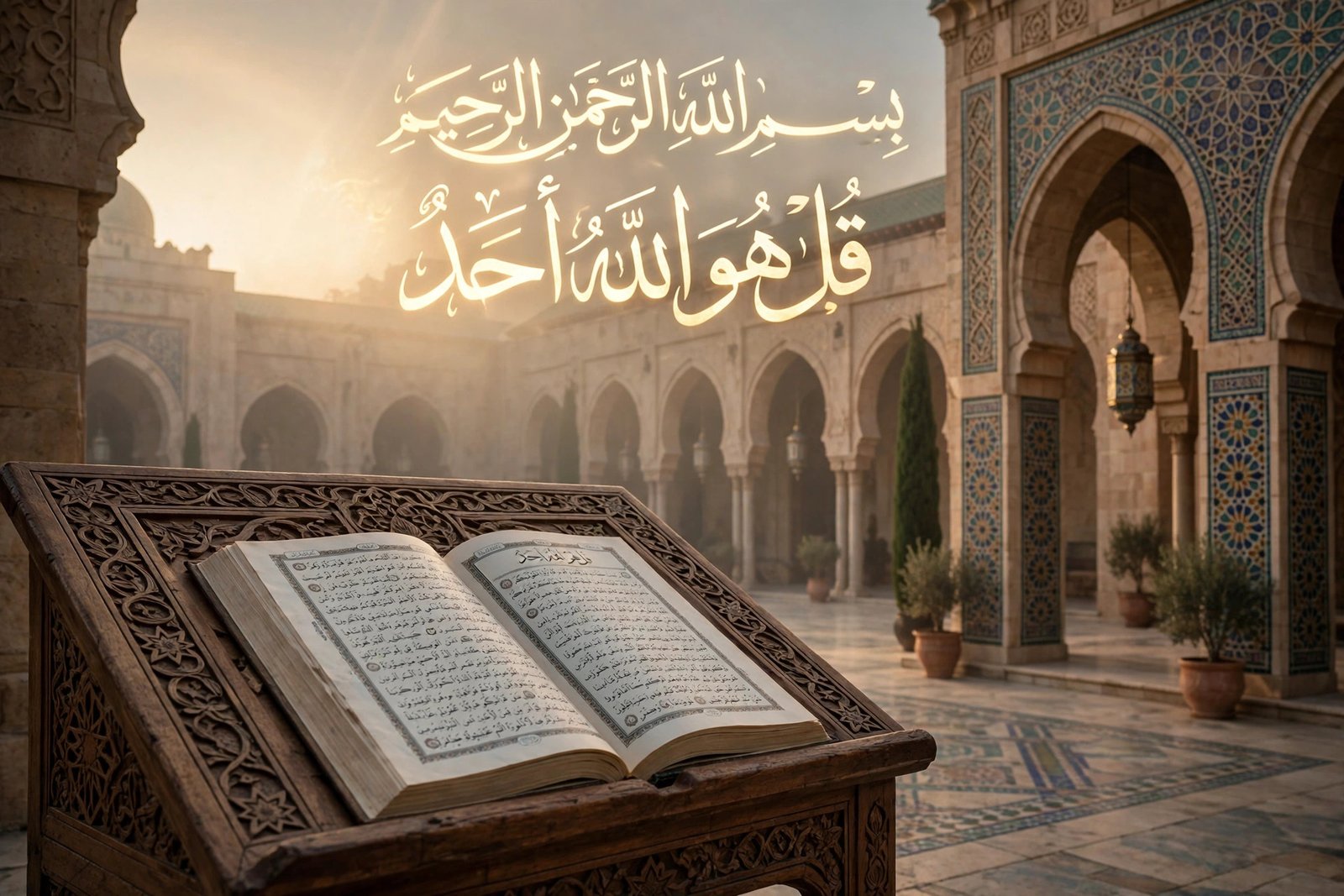
Surah Al-Ikhlas is one of the shortest chapters of the Holy Quran, yet its reward and rank are immense. In only four short verses, this Surah presents the purest message of Tawhid, the Oneness of Allah, and the virtues of Surah Al-Ikhlas are so great that the Beloved Prophet Muhammad ﷺ declared it equal to one-third of the Quran. In this complete guide, we explore the meaning, the authentic virtues, and the daily practice of Surah Al-Ikhlas in the light of the Quran and Hadith, according to the creed of Aqeedah Ahle Sunnat.
Table of Contents
- What Is Surah Al-Ikhlas?
- The Text and Meaning of Surah Al-Ikhlas
- Equal to One-Third of the Quran
- Loving Surah Al-Ikhlas Brings Allah’s Love
- Ten Recitations — A Palace in Paradise
- Surah Al-Ikhlas in the Daily Sunnah
- The Message of Tawhid in Four Verses
- How to Make Surah Al-Ikhlas Part of Your Day
- Frequently Asked Questions
What Is Surah Al-Ikhlas?
Surah Al-Ikhlas is the 112th chapter of the Holy Quran. It was revealed in Makkah and consists of only four verses, yet the scholars of Islam call it the Surah of sincerity and purity of faith. The word Ikhlas means sincerity — to worship Allah alone with a pure heart, free from any trace of shirk (associating partners with Allah). That is why this Surah holds such a unique position among all the chapters of the Quran.
When the disbelievers of Makkah asked the Beloved Prophet Muhammad ﷺ about the lineage and nature of Allah, this Surah was revealed as the perfect, complete answer. It describes Allah in His absolute Oneness, His self-sufficiency, and His uniqueness — a description that no other scripture contains in such brief and perfect words. For the believers, it is a daily reminder of the foundation of our faith, and a source of immense reward, as we will see in the virtues of the chapters of the Quran that the Prophet ﷺ taught us.
At Jamia Saeedia Darul Quran, the teaching of the Quran begins with the correct recitation and understanding of such short Surahs, because they are recited in every prayer and carry the core of our Aqeedah. Our Quran courses guide students of all ages through Nazra, Hifz and Tajweed, so that these blessed words are recited correctly and with love.
The Text and Meaning of Surah Al-Ikhlas
The Surah reads:
قُلْ هُوَ اللَّهُ أَحَدٌ اللَّهُ الصَّمَدُ لَمْ يَلِدْ وَلَمْ يُولَدْ وَلَمْ يَكُن لَّهُ كُفُوًا أَحَدٌ
“Say: He is Allah, the One. Allah, the Eternal Refuge. He neither begets nor is born. And there is none comparable to Him.” (Surah Al-Ikhlas 112:1-4)
Each verse carries a complete lesson of Tawhid. “Allah, the One” declares that Allah is absolutely One, without partner, without equal, without division. “Allah-us-Samad” means that Allah is the One to Whom all creation turns for every need, while He needs nothing and no one. “He neither begets nor is born” rejects every false belief that Allah has children or parents — He is free from all such human qualities. “And there is none comparable to Him” closes the Surah with the seal of uniqueness: nothing in the heavens or the earth resembles Allah in any way.
This is why the scholars say that Surah Al-Ikhlas is the summary of the entire Quran’s message about Allah. The Quran teaches three great themes: the Oneness of Allah, the stories of the Prophets and nations, and the rulings of the Shariah. Surah Al-Ikhlas contains the first and greatest of these themes in its purest form. That is the secret behind its extraordinary reward, as explained in the next section.
Equal to One-Third of the Quran
The most famous virtue of Surah Al-Ikhlas is the glad tidings given by the Beloved Prophet Muhammad ﷺ that this short Surah equals one-third of the Quran in reward. Sayyiduna Abu Sa’id Al-Khudri رضی اللہ عنہ narrated that a man heard another man reciting Surah Al-Ikhlas repeatedly. The next morning he came to the Messenger of Allah ﷺ and mentioned it, as if he considered it a small thing. The Prophet ﷺ said:
“By Him in Whose Hand my life is, this Surah is equal to one-third of the Quran!” (Sahih al-Bukhari 5013)
In another narration, the Prophet ﷺ asked his Companions رضی اللہ عنہم: “Would any of you be unable to recite one-third of the Quran in a single night?” They found it difficult, and he ﷺ explained: “Say: He is Allah, the One — that is one-third of the Quran.” (Sahih al-Bukhari 5015)
The scholars of Ahle Sunnat explain that this equality is in reward and meaning, not in sufficiency. The Quran’s message is broadly of three kinds — Tawhid, the stories of the Prophets, and the laws of the Shariah — and Surah Al-Ikhlas contains the theme of Tawhid completely. Therefore, its reward equals one-third of the Quran’s reward. However, this does not mean that reciting it three times replaces the recitation of the whole Quran in matters such as fulfilling an oath or completing a Khatm. The reward is multiplied by Allah’s generosity, but the obligation and the distinct reward of reciting the entire Quran remain.
Think about the mercy in this: in less than one minute, a believer can earn the reward of reciting one-third of the Quran. A person who recites it three times earns, by Allah’s grace, the reward of the whole Quran. This is why the pious elders of Islam made Surah Al-Ikhlas a daily habit, and why it is recited in the Sunnah prayers of Fajr and in the Witr prayer. For those who are learning the Quran, our guide to the virtues of reciting the Quran explains how even a small amount of daily recitation builds a lifelong connection with the Book of Allah.
Loving Surah Al-Ikhlas Brings Allah’s Love
Among the most beautiful virtues of Surah Al-Ikhlas is that loving it brings the love of Allah and opens the door to Paradise. Sayyidah Aisha رضی اللہ عنہا narrated that the Prophet ﷺ sent a man as the commander of an expedition. The man would lead his companions in prayer and would always complete his recitation with Surah Al-Ikhlas. When they returned, they mentioned this to the Prophet ﷺ, who said: “Ask him why he does that.” The man replied: “Because it describes the qualities of the Most Merciful, and I love to recite it.” The Prophet ﷺ said:
“Tell him that Allah loves him.” (Sahih al-Bukhari 7375, Sahih Muslim 813)
In another narration, a man of the Ansar used to lead the prayer in the mosque of Quba and would recite Surah Al-Ikhlas in every rak’ah before another Surah. His companions asked him to stop, but he said: “I love it, and I will not leave it.” When the Prophet ﷺ came and heard of this, he asked the man the reason, and the man said: “I love it.” The Prophet ﷺ replied:
“Your love for it will admit you to Paradise.” (Jami` at-Tirmidhi 2901)
These narrations teach us a great principle of our faith: the love of the words of Allah is a sign of the love of Allah. When a believer loves Surah Al-Ikhlas because it describes Allah — His Oneness, His perfection, His freedom from all defects — then Allah loves that believer in return. This is the path of the Awliya Kiram رحمۃ اللہ علیہم, who filled their hearts with the love of the Quran and the love of the Prophet ﷺ. The virtues of dhikr remind us that the remembrance of Allah is the greatest of all deeds, and Surah Al-Ikhlas is among the finest forms of that remembrance.
Ten Recitations — A Palace in Paradise
Another remarkable virtue of Surah Al-Ikhlas is the promise of a palace in Paradise for the one who recites it ten times. Sayyiduna Mu’adh ibn Anas Al-Juhani رضی اللہ عنہ narrated that the Prophet ﷺ said:
“Whoever recites ‘Say: He is Allah, the One’ until he completes it, ten times, Allah will build for him a palace in Paradise.” (Musnad Ahmad 15610)
When Sayyiduna Umar ibn Al-Khattab رضی اللہ عنہ heard this, he said: “Then we will recite it many times, O Messenger of Allah!” The Prophet ﷺ replied: “Allah is more generous and has better rewards.” The scholars have graded this narration as hasan (sound), including Shaykh al-Albani رحمۃ اللہ علیہ in Sahih al-Jami` (6472). This shows the vast generosity of Allah: a deed that takes less than two minutes can earn a palace in the eternal home of Paradise.
This hadith also teaches us the beautiful attitude of the Sahaba Kiram رضی اللہ عنہم. When they heard of a great reward, their first thought was not to doubt it, but to do the deed more and more. Sayyiduna Umar’s response — “then we will recite it many times” — is a lesson for every believer: whenever we learn of a reward, we should rush to earn it. The virtues of Durood Sharif carry the same message: small, consistent deeds of the tongue bring enormous rewards from Allah.
Surah Al-Ikhlas in the Daily Sunnah
Surah Al-Ikhlas was a constant part of the daily worship of the Beloved Prophet Muhammad ﷺ. Sayyidah Aisha رضی اللہ عنہا narrated that every night, when the Prophet ﷺ went to his bed, he would cup his hands together, blow into them, and recite Surah Al-Ikhlas, Surah Al-Falaq and Surah An-Nas. Then he would wipe his hands over whatever parts of his body he could reach, beginning with his head and face, and he would do this three times. (Sahih al-Bukhari 5017)
The Prophet ﷺ also recited Surah Al-Ikhlas regularly in prayer. It was his practice to recite Surah Al-Kafirun and Surah Al-Ikhlas in the two Sunnah rak’ahs of Fajr (Sahih Muslim 726), and likewise in the Sunnah of Maghrib and in the Witr prayer. This is why the scholars say that the Sunnah prayers are the best classroom for learning the short Surahs: the Prophet ﷺ chose Al-Ikhlas again and again, because its message of pure Tawhid is the foundation of the whole faith.
For parents, this is a practical lesson: teach your children Surah Al-Ikhlas early, and make it part of the bedtime routine. The Islamic upbringing of children begins with such small, blessed habits. A child who sleeps each night after reciting Al-Ikhlas, Al-Falaq and An-Nas grows up with the protection of Allah and the love of the Quran in the heart. Our daily duas page collects the Masnoon duas for morning, evening and bedtime, so the whole family can follow the Sunnah together.
The Message of Tawhid in Four Verses
Why is Surah Al-Ikhlas called the Surah of sincerity? Because it purifies the belief of the believer from every false idea about Allah. The people of the Book and the idol-worshippers had attributed children, partners and human qualities to Allah. This Surah answers all of them in four decisive verses:
- Allah is One — not two, not three, not many. There is no partner in His divinity, His worship, or His attributes.
- Allah is As-Samad — the Eternal Refuge. Every creature depends on Him, while He depends on nothing. The name As-Samad appears only in this Surah in the entire Quran, which is why the scholars say this Surah is unique in describing Allah.
- He neither begets nor is born — Allah has no children and no parents. He is free from birth, death and all human needs.
- None is comparable to Him — no creature resembles Allah in His essence, His attributes, or His actions. As the Quran says elsewhere: “There is nothing like unto Him.” (Surah Ash-Shura 42:11)
This is the Aqeedah of Ahle Sunnat wal Jamaat, the creed held by the Sahaba Kiram رضی اللہ عنہم, the Ahle Bayt, and the righteous scholars of fourteen centuries: Allah is One in His essence and attributes, free from body, place, direction, children and partners, and nothing resembles Him. The virtues of Ayatul Kursi teach the same lesson — that Allah is the Ever-Living, the Sustainer of all existence, and that no one shares His divinity. When a believer recites Surah Al-Ikhlas with understanding, the heart is cleansed of shirk and filled with the pure love of Allah alone.
How to Make Surah Al-Ikhlas Part of Your Day
The virtues of Surah Al-Ikhlas are not meant to stay in books — they are meant to be lived every day. Here is a simple routine that any Muslim can follow, built entirely on the Sunnah of the Beloved Prophet Muhammad ﷺ:
- After Fajr prayer: Recite Surah Al-Ikhlas three times along with your morning adhkar. Remember, three recitations carry the reward of the whole Quran. Our article on the virtues of Fajr prayer explains how the morning hours are the most blessed time of the day.
- In the Sunnah of Fajr and Maghrib: Recite Surah Al-Kafirun in the first rak’ah and Surah Al-Ikhlas in the second, as the Prophet ﷺ used to do. This simple practice follows the Sunnah exactly.
- Ten times a day: Set aside two minutes — after any prayer, on the way to work, or before sleep — to recite Surah Al-Ikhlas ten times, seeking the palace in Paradise promised in the hadith. Make it a family habit; children love counting to ten.
- Before sleeping: Recite Surah Al-Ikhlas, Surah Al-Falaq and Surah An-Nas into your cupped hands, blow gently, and wipe over your body three times, as the Prophet ﷺ did every night. (Sahih al-Bukhari 5017)
- Teach it to others: Teach Surah Al-Ikhlas to your children, your family and your friends. The Prophet ﷺ said that the best of you are those who learn the Quran and teach it. (Sahih al-Bukhari 5027)
Consistency is more beloved to Allah than occasional excess. The Prophet ﷺ said that the most beloved deeds to Allah are those done regularly, even if they are small. (Sahih al-Bukhari 6464) A daily habit of Surah Al-Ikhlas — even a few minutes — is better than a single long session that is never repeated. The virtues of Surah Al-Mulk and the virtues of Surah Al-Kahf on Friday show the same pattern: the Quran rewards those who return to it daily.
Frequently Asked Questions
Does reciting Surah Al-Ikhlas three times equal reciting the whole Quran?
In reward, yes — the Prophet ﷺ said that Surah Al-Ikhlas equals one-third of the Quran (Sahih al-Bukhari 5013), so reciting it three times carries the reward of the whole Quran by Allah’s grace. However, the scholars explain that this is in reward, not in sufficiency: it does not replace the recitation of the whole Quran for a Khatm, nor does it fulfil an oath to recite the entire Quran. Both rewards are distinct, and the believer should recite the whole Quran as well.
What is the reward of reciting Surah Al-Ikhlas ten times?
The Prophet ﷺ said that whoever recites Surah Al-Ikhlas ten times, Allah will build for him a palace in Paradise (Musnad Ahmad 15610). The scholars have graded this narration as hasan (sound). It takes less than two minutes, and it is one of the easiest deeds with the greatest reward.
Why is Surah Al-Ikhlas called the Surah of sincerity?
Because it purifies the belief of the believer. It describes Allah alone — One, Eternal, without children or parents, without any equal — and frees the heart from shirk. A person who believes in what this Surah teaches worships Allah alone with a sincere heart, which is the meaning of Ikhlas.
Can children recite Surah Al-Ikhlas?
Yes, and they should be encouraged to do so from an early age. It is one of the first Surahs children memorise, it is short and easy, and it carries immense reward. Teaching it to a child earns the teacher the same reward as the child’s recitation, by the grace of Allah. Our Quran courses for children begin with these short Surahs.
When should Surah Al-Ikhlas be recited?
There is no fixed time limit — it can be recited at any time. The Sunnah highlights specific occasions: the Sunnah of Fajr and Maghrib, the Witr prayer, the morning and evening adhkar, and before sleeping with Surah Al-Falaq and Surah An-Nas. Making it a daily habit in the morning and at bedtime is the best way to keep its blessings in your life.
Related Articles
اردو میں مکمل مضمون
سورۃ الاخلاص کی فضیلت: مکمل رہنمائی
سورۃ الاخلاص قرآن مجید کی سب سے مختصر سورتوں میں سے ایک ہے، لیکن اس کا اجر اور مرتبہ بہت بلند ہے۔ صرف چار مختصر آیات میں یہ سورۃ اللہ تعالیٰ کی توحید کا خالص ترین پیغام پیش کرتی ہے، اور سورۃ الاخلاص کی فضیلت اتنی عظیم ہے کہ نبی اکرم صلی اللہ علیہ وآلہ وسلم نے اسے قرآن مجید کے ایک تہائی حصے کے برابر قرار دیا۔ اس مضمون میں ہم قرآن و حدیث کی روشنی میں، عقیدہ اہل سنت کے مطابق، سورۃ الاخلاص کا مفہوم، اس کی مستند فضائل اور اس کی روزمرہ عملی زندگی کا جائزہ لیں گے۔
فہرست
- سورۃ الاخلاص کیا ہے؟
- سورۃ الاخلاص کا متن اور ترجمہ
- قرآن مجید کے ایک تہائی حصے کے برابر
- سورۃ الاخلاص سے محبت اللہ کی محبت کا ذریعہ
- دس مرتبہ پڑھنے پر جنت میں محل
- روزمرہ سنت میں سورۃ الاخلاص
- چار آیات میں توحید کا پیغام
- سورۃ الاخلاص کو اپنی روزمرہ زندگی کا حصہ کیسے بنائیں؟
- عام سوالات
سورۃ الاخلاص کیا ہے؟
سورۃ الاخلاص قرآن مجید کی 112ویں سورۃ ہے۔ یہ مکی سورۃ ہے اور صرف چار آیات پر مشتمل ہے، لیکن علماء اسلام اسے اخلاص اور ایمان کی پاکیزگی کی سورۃ کہتے ہیں۔ لفظ اخلاص کا مطلب ہے خلوص — اللہ تعالیٰ کی عبادت خالص دل سے، شرک کی ہر آلودگی سے پاک ہو کر۔ یہی وجہ ہے کہ قرآن مجید کی تمام سورتوں میں اس سورۃ کا مقام منفرد ہے۔
جب مکہ کے کفار نے نبی اکرم صلی اللہ علیہ وآلہ وسلم سے اللہ تعالیٰ کے نسب اور اس کی ذات کے بارے میں سوال کیا تو یہ سورۃ مکمل اور بہترین جواب کے طور پر نازل ہوئی۔ یہ سورۃ اللہ تعالیٰ کی مطلق وحدانیت، اس کی بے نیازی اور اس کی یکتائی کو بیان کرتی ہے — ایسا بیان جو کسی اور آسمانی کتاب میں اتنے مختصر اور کامل الفاظ میں موجود نہیں۔ مومن کے لیے یہ سورۃ اپنے عقیدے کی بنیاد کی روزانہ یاد دہانی ہے اور عظیم اجر کا ذریعہ ہے۔ تلاوت قرآن کی فضیلت کے بارے میں ہماری رہنمائی میں بتایا گیا ہے کہ روزانہ تھوڑی سی تلاوت بھی اللہ کی کتاب سے مضبوط تعلق قائم کر دیتی ہے۔
جامعہ سعیدیہ دارالقرآن میں قرآن کی تعلیم کا آغاز ایسی ہی مختصر سورتوں کی صحیح تلاوت اور فہم سے ہوتا ہے، کیونکہ یہ ہر نماز میں پڑھی جاتی ہیں اور ہمارے عقیدے کی بنیاد ہیں۔ ہمارے قرآن کورسز ہر عمر کے طلبہ کو ناظرہ، حفظ اور تجوید کی رہنمائی فراہم کرتے ہیں تاکہ یہ مبارک کلمات صحیح اور محبت کے ساتھ پڑھے جائیں۔
سورۃ الاخلاص کا متن اور ترجمہ
سورۃ الاخلاص اس طرح ہے:
قُلْ هُوَ اللَّهُ أَحَدٌ اللَّهُ الصَّمَدُ لَمْ يَلِدْ وَلَمْ يُولَدْ وَلَمْ يَكُن لَّهُ كُفُوًا أَحَدٌ
ترجمہ: “کہہ دیجیے: وہ اللہ ہے، ایک۔ اللہ بے نیاز ہے۔ نہ اس نے کسی کو جنا اور نہ وہ جنا گیا۔ اور اس کا کوئی ہمسر نہیں۔” (سورۃ الاخلاص 112:1-4)
ہر آیت توحید کا مکمل سبق ہے۔ “اللہ ایک ہے” کا مطلب ہے کہ اللہ تعالیٰ مطلقاً ایک ہے — نہ اس کا کوئی شریک ہے، نہ کوئی برابر، نہ کوئی تقسیم۔ “اللہ الصمد” کا مطلب ہے کہ اللہ وہ ذات ہے جس کی طرف تمام مخلوق اپنی ہر ضرورت کے لیے رجوع کرتی ہے، جبکہ وہ کسی کا محتاج نہیں۔ “نہ اس نے کسی کو جنا اور نہ وہ جنا گیا” ہر اس غلط عقیدے کی تردید کرتا ہے جس میں اللہ کے لیے اولاد یا والدین کا تصور کیا جاتا ہے — وہ ان تمام انسانی صفات سے پاک ہے۔ “اور اس کا کوئی ہمسر نہیں” سورۃ کو یکتائی کی مہر کے ساتھ مکمل کرتا ہے: آسمانوں اور زمین میں کوئی چیز کسی بھی طرح اللہ کی مانند نہیں۔
اسی لیے علماء فرماتے ہیں کہ سورۃ الاخلاص اللہ کے بارے میں قرآن کے پورے پیغام کا خلاصہ ہے۔ قرآن کے پیغام کے تین بڑے موضوعات ہیں: اللہ کی توحید، انبیاء کرام علیہم السلام اور قوموں کے قصے، اور شریعت کے احکام۔ سورۃ الاخلاص ان میں سے پہلے اور عظیم ترین موضوع کو خالص ترین صورت میں بیان کرتی ہے۔ یہی اس کے غیر معمولی اجر کا راز ہے۔
قرآن مجید کے ایک تہائی حصے کے برابر
سورۃ الاخلاص کی سب سے مشہور فضیلت نبی اکرم صلی اللہ علیہ وآلہ وسلم کی یہ خوشخبری ہے کہ یہ مختصر سورۃ قرآن مجید کے ایک تہائی حصے کے برابر ہے۔ حضرت ابو سعید خدری رضی اللہ عنہ سے روایت ہے کہ ایک شخص نے دوسرے شخص کو سورۃ الاخلاص بار بار پڑھتے سنا۔ اگلی صبح وہ رسول اللہ صلی اللہ علیہ وآلہ وسلم کی خدمت میں حاضر ہوا اور اس کا ذکر کیا، گویا اسے معمولی چیز سمجھتا تھا۔ نبی اکرم صلی اللہ علیہ وآلہ وسلم نے فرمایا:
“اس ذات کی قسم جس کے قبضے میں میری جان ہے، یہ سورۃ قرآن کے ایک تہائی حصے کے برابر ہے!” (صحیح البخاری 5013)
ایک اور روایت میں نبی اکرم صلی اللہ علیہ وآلہ وسلم نے صحابہ کرام رضی اللہ عنہم سے فرمایا: “کیا تم میں سے کوئی ایک رات میں قرآن کا ایک تہائی حصہ پڑھنے سے عاجز ہے؟” صحابہ کو یہ مشکل لگا تو آپ صلی اللہ علیہ وآلہ وسلم نے فرمایا: “قُلْ هُوَ اللَّهُ أَحَدٌ قرآن کا ایک تہائی حصہ ہے۔” (صحیح البخاری 5015)
اہل سنت کے علماء وضاحت کرتے ہیں کہ یہ برابری اجر اور مفہوم میں ہے، کفایت میں نہیں۔ قرآن کا پیغام مجموعی طور پر تین موضوعات پر مشتمل ہے — توحید، انبیاء کے قصے اور شریعت کے احکام — اور سورۃ الاخلاص توحید کے موضوع کو مکمل طور پر بیان کرتی ہے۔ اس لیے اس کا اجر قرآن کے اجر کے ایک تہائی کے برابر ہے۔ تاہم اس کا مطلب یہ نہیں کہ اسے تین مرتبہ پڑھنے سے پورے قرآن کی تلاوت کا فرض یا ختم پورا ہو جاتا ہے۔ اجر اللہ کی سخاوت سے بڑھا ہوا ہے، لیکن پورے قرآن کی تلاوت کا الگ اجر اور اس کی الگ اہمیت باقی رہتی ہے۔
اس رحمت پر غور کیجیے: ایک منٹ سے بھی کم وقت میں مومن قرآن کے ایک تہائی حصے کا اجر حاصل کر سکتا ہے۔ جو شخص اسے تین مرتبہ پڑھے، اللہ کے فضل سے اسے پورے قرآن کا اجر ملتا ہے۔ اسی لیے بزرگوں نے سورۃ الاخلاص کو روزانہ کی عادت بنا لیا، اور اسی لیے یہ فجر کی سنتوں اور وتر کی نماز میں پڑھی جاتی ہے۔ سورۃ یٰسین کی فضیلت اور سورۃ الملک کی فضیلت بھی اسی اصول کو بیان کرتی ہیں: قرآن ان لوگوں کو اجر دیتا ہے جو روزانہ اس کی طرف لوٹتے ہیں۔
سورۃ الاخلاص سے محبت اللہ کی محبت کا ذریعہ
سورۃ الاخلاص کی سب سے خوبصورت فضیلت یہ ہے کہ اس سے محبت کرنا اللہ کی محبت اور جنت میں داخلے کا ذریعہ بنتا ہے۔ حضرت عائشہ رضی اللہ عنہا سے روایت ہے کہ نبی اکرم صلی اللہ علیہ وآلہ وسلم نے ایک شخص کو لشکر کا سردار بنا کر بھیجا۔ وہ شخص نماز میں اپنے ساتھیوں کی امامت کرتا اور اپنی قراءت ہمیشہ سورۃ الاخلاص پر ختم کرتا۔ جب وہ واپس آئے تو صحابہ نے نبی اکرم صلی اللہ علیہ وآلہ وسلم سے اس کا ذکر کیا۔ آپ صلی اللہ علیہ وآلہ وسلم نے فرمایا: “اس سے پوچھو کہ وہ ایسا کیوں کرتا ہے۔” اس شخص نے جواب دیا: “کیونکہ یہ سورۃ رحمن کی صفات بیان کرتی ہے اور مجھے اسے پڑھنا پسند ہے۔” نبی اکرم صلی اللہ علیہ وآلہ وسلم نے فرمایا:
“اسے بتا دو کہ اللہ اس سے محبت کرتا ہے۔” (صحیح البخاری 7375، صحیح مسلم 813)
ایک اور روایت میں، انصار کا ایک شخص مسجد قبا میں نماز کی امامت کرتا تھا اور ہر رکعت میں سورۃ الاخلاص پڑھتا تھا۔ اس کے ساتھیوں نے اسے روکنے کی کوشش کی لیکن اس نے کہا: “مجھے اس سے محبت ہے اور میں اسے نہیں چھوڑوں گا۔” جب نبی اکرم صلی اللہ علیہ وآلہ وسلم تشریف لائے اور انہیں یہ بات بتائی گئی تو آپ صلی اللہ علیہ وآلہ وسلم نے اس شخص سے وجہ پوچھی۔ اس نے کہا: “مجھے اس سے محبت ہے۔” نبی اکرم صلی اللہ علیہ وآلہ وسلم نے فرمایا:
“تمہاری اس سے محبت تمہیں جنت میں داخل کر دے گی۔” (جامع الترمذی 2901)
ان احادیث سے ہمیں اپنے ایمان کا ایک عظیم اصول سیکھنے کو ملتا ہے: اللہ کے کلام سے محبت، اللہ کی محبت کی علامت ہے۔ جب مومن سورۃ الاخلاص سے اس لیے محبت کرتا ہے کہ یہ اللہ کی وحدانیت، اس کی کمالیت اور اس کی ہر عیب سے پاکیزگی کو بیان کرتی ہے، تو اللہ بھی اس مومن سے محبت کرتا ہے۔ یہی اولیاء کرام رحمۃ اللہ علیہم کا راستہ ہے، جنہوں نے اپنے دلوں کو قرآن کی محبت اور نبی اکرم صلی اللہ علیہ وآلہ وسلم کی محبت سے بھر دیا تھا۔ ذکر الٰہی کی فضیلت ہمیں یاد دلاتی ہے کہ اللہ کا ذکر سب سے بڑا عمل ہے، اور سورۃ الاخلاص اس ذکر کی بہترین صورتوں میں سے ایک ہے۔
دس مرتبہ پڑھنے پر جنت میں محل
سورۃ الاخلاص کی ایک اور قابل ذکر فضیلت یہ ہے کہ جو شخص اسے دس مرتبہ پڑھے، اللہ تعالیٰ اس کے لیے جنت میں ایک محل بناتا ہے۔ حضرت معاذ بن انس الجہنی رضی اللہ عنہ سے روایت ہے کہ نبی اکرم صلی اللہ علیہ وآلہ وسلم نے فرمایا:
“جو شخص قُلْ هُوَ اللَّهُ أَحَدٌ کو مکمل کر کے دس مرتبہ پڑھے، اللہ اس کے لیے جنت میں ایک محل بنائے گا۔” (مسند احمد 15610)
جب حضرت عمر بن الخطاب رضی اللہ عنہ نے یہ سنا تو فرمایا: “پھر تو ہم اسے بہت زیادہ مرتبہ پڑھیں گے، یا رسول اللہ!” نبی اکرم صلی اللہ علیہ وآلہ وسلم نے فرمایا: “اللہ زیادہ سخی ہے اور اس کے اجر بہتر ہیں۔” علماء نے اس روایت کو حسن (صحیح) قرار دیا ہے، جن میں شیخ البانی رحمۃ اللہ علیہ بھی شامل ہیں (صحیح الجامع 6472)۔ یہ اللہ کی وسیع سخاوت کی دلیل ہے: دو منٹ سے بھی کم وقت کا عمل جنت میں ابدی گھر کا ذریعہ بن سکتا ہے۔
یہ حدیث ہمیں صحابہ کرام رضی اللہ عنہم کے خوبصورت طرز عمل کی بھی تعلیم دیتی ہے۔ جب انہیں کسی عظیم اجر کی خبر ملتی تو ان کا پہلا خیال شک کرنا نہیں، بلکہ اس عمل کو زیادہ سے زیادہ کرنا ہوتا تھا۔ حضرت عمر رضی اللہ عنہ کا جواب — “پھر ہم اسے بہت مرتبہ پڑھیں گے” — ہر مومن کے لیے سبق ہے: جب بھی ہمیں کسی اجر کی خبر ملے، ہمیں اسے حاصل کرنے کی جلدی کرنی چاہیے۔ درود شریف کی فضیلت بھی یہی پیغام دیتی ہے: زبان کے چھوٹے چھوٹے مستقل اعمال اللہ کی طرف سے عظیم اجر لاتے ہیں۔
روزمرہ سنت میں سورۃ الاخلاص
سورۃ الاخلاص نبی اکرم صلی اللہ علیہ وآلہ وسلم کی روزمرہ عبادت کا مستقل حصہ تھی۔ حضرت عائشہ رضی اللہ عنہا سے روایت ہے کہ ہر رات جب نبی اکرم صلی اللہ علیہ وآلہ وسلم اپنے بستر پر تشریف لے جاتے تو اپنے دونوں ہاتھوں کو ملا کر ان میں پھونکتے، پھر سورۃ الاخلاص، سورۃ الفلق اور سورۃ الناس پڑھتے۔ پھر اپنے ہاتھ اپنے جسم کے جتنے حصوں تک پہنچ سکتے تھے، پھیرتے — سر اور چہرے سے شروع کر کے — اور یہ عمل تین مرتبہ کرتے۔ (صحیح البخاری 5017)
نبی اکرم صلی اللہ علیہ وآلہ وسلم نماز میں بھی سورۃ الاخلاص باقاعدگی سے پڑھتے تھے۔ آپ صلی اللہ علیہ وآلہ وسلم فجر کی دو سنت رکعتوں میں سورۃ الکافرون اور سورۃ الاخلاص پڑھتے تھے (صحیح مسلم 726)، اور اسی طرح مغرب کی سنت اور وتر کی نماز میں بھی۔ یہی وجہ ہے کہ علماء فرماتے ہیں کہ سنت نمازیں مختصر سورتوں کو سیکھنے کی بہترین درسگاہ ہیں: نبی اکرم صلی اللہ علیہ وآلہ وسلم نے بار بار سورۃ الاخلاص کو چنا، کیونکہ خالص توحید کا یہ پیغام پورے ایمان کی بنیاد ہے۔
والدین کے لیے یہ عملی سبق ہے: اپنے بچوں کو سورۃ الاخلاص جلدی سکھائیں اور اسے سونے سے پہلے کی عادت بنا دیں۔ بچوں کی اسلامی تربیت ایسی ہی چھوٹی مبارک عادتوں سے شروع ہوتی ہے۔ جو بچہ ہر رات سورۃ الاخلاص، سورۃ الفلق اور سورۃ الناس پڑھ کر سوتا ہے، وہ اللہ کی حفاظت اور قرآن کی محبت کے ساتھ بڑا ہوتا ہے۔ ہمارے روزمرہ دعاؤں کا صفحہ صبح، شام اور سونے سے پہلے کی مسنون دعائیں جمع کرتا ہے تاکہ پورا خاندان مل کر سنت پر عمل کر سکے۔
چار آیات میں توحید کا پیغام
سورۃ الاخلاص کو اخلاص کی سورۃ کیوں کہا جاتا ہے؟ کیونکہ یہ مومن کے عقیدے کو اللہ کے بارے میں ہر غلط خیال سے پاک کر دیتی ہے۔ اہل کتاب اور بت پرستوں نے اللہ کے لیے اولاد، شریک اور انسانی صفات منسوب کی تھیں۔ یہ سورۃ ان سب کا جواب چار فیصلہ کن آیات میں دیتی ہے:
- اللہ ایک ہے — نہ دو، نہ تین، نہ بہت سے۔ اس کی الوہیت، اس کی عبادت یا اس کی صفات میں کوئی شریک نہیں۔
- اللہ الصمد ہے — ابدی پناہ گاہ۔ ہر مخلوق اس کی محتاج ہے، جبکہ وہ کسی کا محتاج نہیں۔ الصمد کا نام پورے قرآن میں صرف اسی سورۃ میں آیا ہے، اسی لیے علماء کہتے ہیں کہ یہ سورۃ اللہ کی صفات بیان کرنے میں منفرد ہے۔
- نہ اس نے کسی کو جنا اور نہ وہ جنا گیا — اللہ کی نہ اولاد ہے اور نہ والدین۔ وہ پیدائش، موت اور تمام انسانی ضروریات سے پاک ہے۔
- اس کا کوئی ہمسر نہیں — کوئی مخلوق اللہ کی ذات، اس کی صفات یا اس کے افعال میں اس کی مانند نہیں۔ جیسا کہ قرآن میں دوسری جگہ فرمایا گیا: “اس جیسا کوئی نہیں۔” (سورۃ الشوریٰ 42:11)
یہی عقیدہ اہل سنت والجماعت ہے، جو صحابہ کرام رضی اللہ عنہم، اہل بیت اور چودہ صدیوں کے صالح علماء کا عقیدہ ہے: اللہ اپنی ذات اور صفات میں ایک ہے، جسم، مکان، سمت، اولاد اور شریک سے پاک ہے، اور کوئی چیز اس کی مانند نہیں۔ آیت الکرسی کی فضیلت بھی یہی سبق دیتی ہے — کہ اللہ حی و قیوم ہے، تمام مخلوق کا سنبھالنے والا ہے، اور اس کی الوہیت میں کوئی شریک نہیں۔ جب مومن سمجھ کر سورۃ الاخلاص پڑھتا ہے تو اس کا دل شرک سے پاک ہو کر صرف اللہ کی محبت سے بھر جاتا ہے۔
سورۃ الاخلاص کو اپنی روزمرہ زندگی کا حصہ کیسے بنائیں؟
سورۃ الاخلاص کی فضائل کتابوں میں رہنے کے لیے نہیں — انہیں ہر روز جینا چاہیے۔ یہاں ایک سادہ معمول ہے جس پر کوئی بھی مسلمان عمل کر سکتا ہے، جو مکمل طور پر نبی اکرم صلی اللہ علیہ وآلہ وسلم کی سنت پر مبنی ہے:
- فجر کی نماز کے بعد: صبح کے اذکار کے ساتھ سورۃ الاخلاص تین مرتبہ پڑھیں۔ یاد رکھیں، تین مرتبہ پڑھنے پر پورے قرآن کا اجر ملتا ہے۔ فجر کی نماز کی فضیلت کے بارے میں ہمارا مضمون بتاتا ہے کہ صبح کے اوقات دن کے سب سے بابرکت اوقات ہیں۔
- فجر اور مغرب کی سنتوں میں: پہلی رکعت میں سورۃ الکافرون اور دوسری رکعت میں سورۃ الاخلاص پڑھیں، جیسا کہ نبی اکرم صلی اللہ علیہ وآلہ وسلم کرتے تھے۔ یہ سادہ عمل سنت کی بالکل پیروی ہے۔
- روزانہ دس مرتبہ: دو منٹ نکال کر — کسی بھی نماز کے بعد، کام پر جاتے ہوئے، یا سونے سے پہلے — سورۃ الاخلاص دس مرتبہ پڑھیں، جنت میں محل کی نیت سے۔ اسے خاندانی عادت بنا لیں؛ بچوں کو دس تک گننا بہت پسند ہوتا ہے۔
- سونے سے پہلے: سورۃ الاخلاص، سورۃ الفلق اور سورۃ الناس اپنے ہاتھوں میں پڑھ کر پھونکیں اور اپنے جسم پر تین مرتبہ پھیریں، جیسا کہ نبی اکرم صلی اللہ علیہ وآلہ وسلم ہر رات کرتے تھے۔ (صحیح البخاری 5017)
- دوسروں کو سکھائیں: سورۃ الاخلاص اپنے بچوں، اپنے خاندان اور اپنے دوستوں کو سکھائیں۔ نبی اکرم صلی اللہ علیہ وآلہ وسلم نے فرمایا کہ تم میں سے بہتر وہ ہے جو قرآن سیکھے اور سکھائے۔ (صحیح البخاری 5027)
اللہ کو مستقل عمل کبھی کبھار کے زیادہ عمل سے زیادہ محبوب ہے۔ نبی اکرم صلی اللہ علیہ وآلہ وسلم نے فرمایا کہ اللہ کو سب سے محبوب اعمال وہ ہیں جو مستقل کیے جائیں، چاہے وہ چھوٹے ہوں۔ (صحیح البخاری 6464) سورۃ الاخلاص کی روزانہ عادت — چاہے چند منٹ کی ہو — اس ایک لمبے عمل سے بہتر ہے جو کبھی دہرایا نہ جائے۔ سورۃ الملک کی فضیلت اور جمعہ کے دن سورۃ الکہف کی فضیلت بھی یہی اصول بیان کرتی ہیں: قرآن ان لوگوں کو اجر دیتا ہے جو روزانہ اس کی طرف لوٹتے ہیں۔
عام سوالات
کیا سورۃ الاخلاص تین مرتبہ پڑھنے سے پورے قرآن کا اجر ملتا ہے؟
اجر میں، جی ہاں — نبی اکرم صلی اللہ علیہ وآلہ وسلم نے فرمایا کہ سورۃ الاخلاص قرآن کے ایک تہائی حصے کے برابر ہے (صحیح البخاری 5013)، اس لیے اسے تین مرتبہ پڑھنے پر اللہ کے فضل سے پورے قرآن کا اجر ملتا ہے۔ تاہم علماء وضاحت کرتے ہیں کہ یہ اجر میں ہے، کفایت میں نہیں: اس سے پورے قرآن کی تلاوت کا ختم پورا نہیں ہوتا اور نہ ہی پورے قرآن کی تلاوت کی قسم پوری ہوتی ہے۔ دونوں کے اجر الگ ہیں، اور مومن کو پورا قرآن بھی پڑھنا چاہیے۔
سورۃ الاخلاص دس مرتبہ پڑھنے کا اجر کیا ہے؟
نبی اکرم صلی اللہ علیہ وآلہ وسلم نے فرمایا کہ جو شخص سورۃ الاخلاص دس مرتبہ پڑھے، اللہ اس کے لیے جنت میں ایک محل بنائے گا (مسند احمد 15610)۔ علماء نے اس روایت کو حسن (صحیح) قرار دیا ہے۔ اس میں دو منٹ سے بھی کم وقت لگتا ہے، اور یہ سب سے آسان عمل ہے جس کا اجر سب سے بڑا ہے۔
سورۃ الاخلاص کو اخلاص کی سورۃ کیوں کہا جاتا ہے؟
کیونکہ یہ مومن کے عقیدے کو پاک کرتی ہے۔ یہ اللہ کو بیان کرتی ہے — ایک، ابدی، نہ اولاد نہ والدین، نہ کوئی برابر — اور دل کو شرک سے پاک کر دیتی ہے۔ جو شخص اس سورۃ کی تعلیم پر ایمان رکھتا ہے، وہ خالص دل سے صرف اللہ کی عبادت کرتا ہے، اور یہی اخلاص کا مطلب ہے۔
کیا بچے سورۃ الاخلاص پڑھ سکتے ہیں؟
جی ہاں، اور انہیں چھوٹی عمر سے اس کی ترغیب دینی چاہیے۔ یہ بچوں کی حفظ کی جانے والی پہلی سورتوں میں سے ایک ہے، یہ مختصر اور آسان ہے، اور اس کا اجر عظیم ہے۔ بچے کو سکھانے والے کو بھی بچے کی تلاوت کا اجر ملتا ہے، اللہ کے فضل سے۔ ہمارے بچوں کے لیے قرآن کورسز انہی مختصر سورتوں سے شروع ہوتے ہیں۔
سورۃ الاخلاص کب پڑھنی چاہیے؟
اس کی کوئی مقررہ وقت کی حد نہیں — اسے کسی بھی وقت پڑھا جا سکتا ہے۔ سنت میں خاص مواقع بیان کیے گئے ہیں: فجر اور مغرب کی سنت، وتر کی نماز، صبح و شام کے اذکار، اور سونے سے پہلے سورۃ الفلق اور سورۃ الناس کے ساتھ۔ صبح اور سونے سے پہلے اسے روزانہ کی عادت بنا لینا اس کی برکتوں کو اپنی زندگی میں برقرار رکھنے کا بہترین طریقہ ہے۔

Leave A Comment