

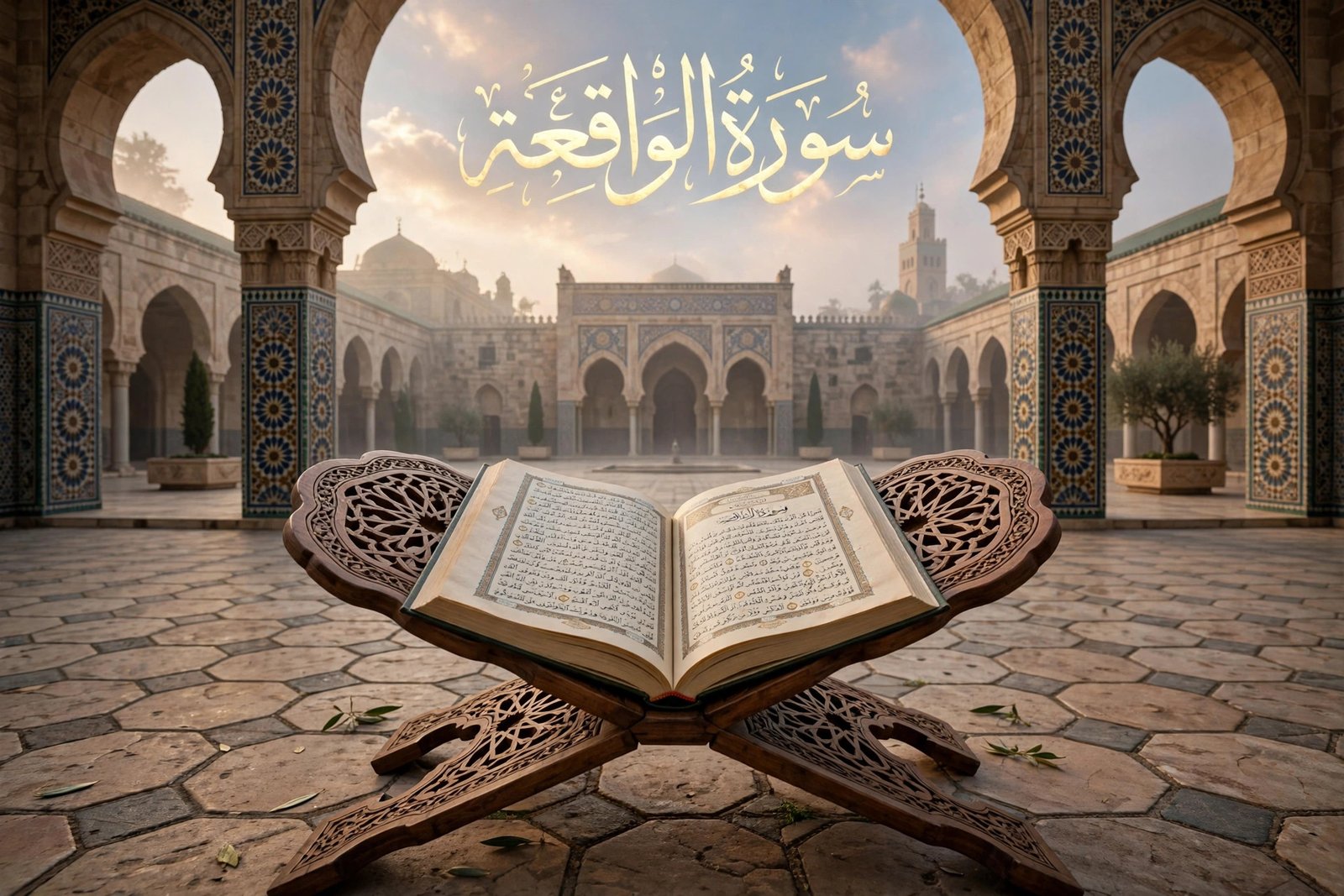
Surah Al-Waqi’ah is one of the most awe-inspiring chapters of the Holy Quran. Its very name means “The Inevitable Event”, and from its first verse it places the Day of Judgement before our eyes as a certainty that no one can deny. In this complete guide to the virtues of Surah Al-Waqi’ah, we will look at what the surah teaches, the authentic hadith that mentions it, and — with complete honesty — the famous narration about poverty and what the scholars of hadith actually said about it. The goal is simple: to recite this blessed surah with knowledge, with love, and with the right intention, in the light of the Quran and the Sunnah according to the creed of Ahl-e-Sunnat.
Surah Al-Waqi’ah is the 56th surah of the Quran. It was revealed in Makkah, it contains 96 verses, and it sits in the 27th Juz, immediately after Surah Ar-Rahman. Its opening words are so powerful that the surah takes its name from them: “When the Occurrence occurs, there is, at its occurrence, no denial” (Surah Al-Waqi’ah 56:1-2). The word Al-Waqi’ah is itself one of the names of the Day of Judgement, because that Day will certainly come to pass. Unlike some surahs that argue and reason with the denier, this surah speaks as though the Hour has already arrived — and then asks every reader a single piercing question: when it comes, where will you stand?
Table of Contents
- What Is Surah Al-Waqi’ah?
- The Three Groups on the Day of Judgement
- The Surah That Turned the Prophet’s ﷺ Hair Grey
- The Reward of Reciting the Quran
- The Famous Narration About Poverty — An Honest Look
- What the Surah Itself Teaches About Provision (Rizq)
- Lessons from Surah Al-Waqi’ah for Daily Life
- How to Make Surah Al-Waqi’ah Part of Your Night
- Frequently Asked Questions
What Is Surah Al-Waqi’ah?
Surah Al-Waqi’ah is a Makki surah revealed in the early period of the Prophet Muhammad’s ﷺ mission in Makkah, when the disbelievers were openly mocking the idea of resurrection. “When we die and become dust and bones, will we really be raised again?” they asked. The surah answers them not with philosophy but with the plain signs they see every day: the seed they sow, the water they drink, the fire they kindle — all of these are created and controlled by Allah alone, so the One who creates life the first time can surely bring it back again. For a fuller picture of how the Quran describes the reward of its recitation, see our article on the virtues of reciting the Quran.
The surah is named after its first word, Al-Waqi’ah — the Event that will certainly happen. It is one of the names of the Day of Judgement, and the surah uses it deliberately: the Day is not a possibility or a theory, it is an appointment fixed by Allah. The surah then divides all of mankind on that Day into three groups, describes the reward of two of them and the punishment of the third, and finishes by bringing every reader face to face with the moment of death itself. There is no surah in the Quran that describes the Hereafter with more vivid, unforgettable imagery in such a short space. Those who wish to deepen their understanding of the Quran’s message may join the Quran courses at Jamia Saeedia Darul Quran, where Nazra, Hifz and Tajweed are taught with care.
The surah’s position in the Mushaf is also meaningful. It comes immediately after Surah Ar-Rahman, the surah of Allah’s blessings, and it is followed by Surah Al-Hadid. Ar-Rahman asks again and again, “Which of your Lord’s favours will you deny?” — and Al-Waqi’ah shows what happens to those who denied them. The two surahs belong together, and many believers recite them one after the other in their nightly routine.
The Three Groups on the Day of Judgement
The heart of Surah Al-Waqi’ah is its division of mankind into three groups. Allah says: “And you become [of] three kinds: Then the companions of the right — what are the companions of the right? And the companions of the left — what are the companions of the left? And the forerunners, the forerunners — those are the ones brought near [to Allah]” (Surah Al-Waqi’ah 56:7-11). Every human being who ever lived will belong to one of these three groups, and the surah describes each of them in detail so that we can choose our group while we still have time.
1. As-Sabiqun — The Forerunners
The first group is As-Sabiqun, the forerunners — those who raced ahead of others in faith and good deeds. Allah says of them: “Those are the ones brought near [to Allah], in the Gardens of Pleasure, a [large] company of the former peoples and a few of the later peoples” (Surah Al-Waqi’ah 56:11-14). These are the Prophets, the Siddiqin, the martyrs and the righteous — the best of every nation. Their reward is described in the most beautiful words: reclining on thrones woven with gold, served by immortal youths with cups and jugs, and given every fruit they desire and the meat of every bird they wish for (Surah Al-Waqi’ah 56:15-21). This is the highest rank, and it is reached by racing towards Allah in this life — by praying before others pray, by giving before others give, and by obeying before others obey. The life of the Prophet Muhammad ﷺ is the greatest example of this spirit, as we explored in our article on the Prophet’s ﷺ mercy to the worlds.
2. Ashab al-Yamin — The Companions of the Right Hand
The second group is Ashab al-Yamin, the companions of the right hand — the ordinary believers who believed and did good deeds. Their reward is described in verses 27 to 40: they will be among lote trees without thorns, banana trees with fruit piled one above another, extended shade, water poured out, and abundant fruit that is neither cut off nor forbidden (Surah Al-Waqi’ah 56:27-33). They will recline on raised couches with companions of equal age, pure and untouched. The surah calls them “a company of the former peoples and a company of the later peoples” (Surah Al-Waqi’ah 56:39-40), which is glad tidings for this Ummah: many from this nation will be among the companions of the right. To be among them, a believer needs the two foundations — true faith and righteous action — and then the doors of Allah’s mercy open wide. Regular prayer is the first of those actions, and the virtues of Fajr prayer show how the day of a believer begins with success.
3. Ashab ash-Shimal — The Companions of the Left Hand
The third group is Ashab ash-Shimal, the companions of the left hand — those who denied the truth and lived in heedlessness. Their abode is described with terrifying clarity: scorching wind, scalding water, and the shade of black smoke that is neither cool nor generous (Surah Al-Waqi’ah 56:41-44). The surah tells us why they reached this end: “Indeed, they were before that indulging in affluence, and they used to persist in the great violation, and they used to say, ‘When we die and become dust and bones, are we indeed to be resurrected?'” (Surah Al-Waqi’ah 56:45-47). Their crime was not poverty or weakness — it was arrogance, luxury without gratitude, and mockery of the Hereafter. The surah holds up this mirror so that we may correct ourselves before the mirror is taken away. True repentance in Islam is always open while a person still breathes, and returning to Allah is the way out of every group except the saved.
The Surah That Turned the Prophet’s ﷺ Hair Grey
The most authentic hadith about Surah Al-Waqi’ah is also one of the most moving. Sayyiduna Abdullah ibn Abbas رضی اللہ عنہما reported that Sayyiduna Abu Bakr Siddiq رضی اللہ عنہ said to the Prophet Muhammad ﷺ, “O Messenger of Allah, you have become grey!” The Prophet ﷺ replied: “Hud, Al-Waqi’ah, Al-Mursalat, ‘Amma Yatasa’alun and Idhash-Shamsu Kuwwirat have turned me grey” (Jami’ at-Tirmidhi 3297). Imam Tirmidhi graded this narration hasan gharib, and Shaykh al-Albani graded it sahih. Five surahs are named — Hud (11), Al-Waqi’ah (56), Al-Mursalat (77), An-Naba (78) and At-Takwir (81) — and the scholars explain that they are joined by a single theme: the terrors of the Day of Qiyamah and the destruction of the nations that denied their Prophets.
Think about what this means. The Prophet Muhammad ﷺ, the most beloved of all creation to Allah, the one whose past and future sins were forgiven, was so moved by these surahs that his blessed hair turned grey before its time. It was not fear for himself — it was the weight of his Ummah upon his heart. He read in these surahs what awaits those who reject the truth, and his compassion for his people made the hair on his blessed head turn white. When we recite Surah Al-Waqi’ah, we are reciting one of the very surahs that made the Prophet ﷺ grey. That alone is enough reason to recite it slowly, to understand its meaning, and to let its warnings settle in the heart. For those who want to understand the life and mission of the Prophet ﷺ more deeply, our article on the lessons from the Hijrah shows how he carried this message through hardship with perfect trust in Allah.
This hadith also teaches us how the Sahaba Kiram رضی اللہ عنہم watched the Prophet ﷺ with love. Sayyiduna Abu Bakr Siddiq رضی اللہ عنہ noticed a few grey hairs and asked about them with concern. The Prophet’s ﷺ answer turned a small observation into a lesson for the whole Ummah: the Quran is not a book to be recited with the tongue while the heart sleeps. It is a living message that should move us, shake us, and change us — just as it moved the greatest heart that ever lived.
The Reward of Reciting the Quran
Before we speak of any specific virtue of Surah Al-Waqi’ah, we must remember the general virtue that covers it. Sayyiduna Abdullah ibn Mas’ud رضی اللہ عنہ reported that the Messenger of Allah ﷺ said: “Whoever reads a letter from the Book of Allah receives a good deed for it, and a good deed is multiplied ten times. I do not say that Alif-Lam-Mim is one letter; rather Alif is a letter, Lam is a letter and Mim is a letter” (Jami’ at-Tirmidhi 2910). Imam Tirmidhi graded it hasan sahih, and Shaykh al-Albani graded it sahih. Surah Al-Waqi’ah contains thousands of letters, so every recitation of it brings thousands of multiplied rewards by the grace of Allah.
The Prophet Muhammad ﷺ also said: “Read the Quran, for it will come as an intercessor for its companions on the Day of Resurrection” (Sahih Muslim 804). On the very Day that Surah Al-Waqi’ah describes in such detail, the Quran itself will stand up and speak for the one who recited it. And he ﷺ said: “The best of you are those who learn the Quran and teach it” (Sahih al-Bukhari 5027). So the reward is not only in reciting Surah Al-Waqi’ah ourselves — it is multiplied when we teach it to our children, our families and our students. The virtues of Surah Al-Mulk carry the same message: a surah recited every night becomes a companion that defends its reader.
The Famous Narration About Poverty — An Honest Look
No discussion of Surah Al-Waqi’ah is complete without addressing the narration that most people have heard: “Whoever recites Surah Al-Waqi’ah every night will never be afflicted by poverty.” It is attributed to Sayyiduna Abdullah ibn Mas’ud رضی اللہ عنہ and is recorded by Imam al-Bayhaqi in Shu’ab al-Iman and by others. The story attached to it is touching: when Ibn Mas’ud رضی اللہ عنہ lay ill and was asked whether he feared poverty for his daughters, he said he had instructed them to recite Surah Al-Waqi’ah every night, quoting this promise. Honesty demands that we also tell you what the scholars of hadith said about this narration, because the religion of Islam is built on truth, not on wishful thinking.
The scholars of hadith graded this narration as weak (da’if). Imam Ahmad ibn Hanbal, Imam Abu Hatim and Imam ad-Daraqutni all judged its chain to be weak, pointing to unknown narrators in it and to versions of the report that contradict one another. Shaykh al-Albani graded it da’if in Silsilah ad-Da’ifah (289), and Imam al-Munawi called it munkar (rejected). A related wording, “Teach your women Surah Al-Waqi’ah, for it brings sufficiency,” was likewise graded weak by Shaykh al-Albani. These narrations are not found in any of the six major collections of hadith, and a promise about a person’s income cannot be built upon a report this disputed.
Does this mean we should not recite Surah Al-Waqi’ah at night? Not at all. The scholars who graded the narration weak still encouraged reciting the surah for the general reward of the Quran and for the greatness of its meanings. Some of the pious predecessors acted upon such narrations in matters of virtue under strict conditions, but the correct approach for us is clear: recite Surah Al-Waqi’ah because it is the Word of Allah, because the Prophet ﷺ named it among the surahs that moved him, and because every letter brings ten rewards — not because of a guaranteed promise about wealth. Allah is the Provider, and the surah itself points us back to Him, as we will see next. And if we truly seek relief from hardship, the authentic means are well known: patience in difficult times, trust in Allah, seeking forgiveness, honest work, and charity — as taught in our article on Sadaqah and charity in Islam.
What the Surah Itself Teaches About Provision (Rizq)
It is beautiful that the surah most people connect with provision does not promise wealth at all — instead, it asks us to look at where provision actually comes from. Allah asks three questions in a row, each one about something we take for granted. “Have you seen that which you sow? Is it you who makes it grow, or are We the Grower?” (Surah Al-Waqi’ah 56:63-64). “Have you seen the water that you drink? Is it you who brought it down from the clouds, or are We the Bringer?” (Surah Al-Waqi’ah 56:68-69). “Have you seen the fire that you ignite? Is it you who produced its tree, or are We the Producer?” (Surah Al-Waqi’ah 56:71-72). The farmer sows, but he does not make the seed grow. The traveller drinks, but he does not send the rain. The family cooks, but they did not create the fire. Every provision comes from Allah alone.
This is the true lesson of Surah Al-Waqi’ah about rizq: the Provider is Allah, not the surah, not a formula, and not our own effort. Allah says: “And whoever fears Allah, He will make for him a way out, and He will provide for him from where he does not expect” (Surah At-Talaq 65:2-3). That is the authentic promise of provision in the Quran, and its condition is taqwa — consciousness of Allah. The surah then reminds us of the greatest reality of all: “Indeed, it is a noble Quran, in a Register well-protected; none touch it except the purified” (Surah Al-Waqi’ah 56:77-79). The Quran is honoured and protected, and those who honour it — by reciting it, understanding it and living by it — are honoured by Allah in return. Earning a lawful livelihood is part of that honour, and our guide to halal earnings in Islam explains how work itself becomes worship when it is done honestly.
The surah ends where every life ends: at the moment of death. “Then why, when the soul reaches the throat, and you are at that time looking on — and Our angels are nearer to him than you, but you do not see” (Surah Al-Waqi’ah 56:83-85). No wealth, no family and no power can hold the soul back when its time comes. Then the three groups return one final time: if the dying person is among those brought near, there is rest and fragrance and a Garden of Pleasure; if among the companions of the right, there is peace; and if among the deniers, there is scalding water and burning (Surah Al-Waqi’ah 56:88-94). The surah closes with the command that sums up its whole message: “So exalt the name of your Lord, the Most Great” (Surah Al-Waqi’ah 56:96). That is the last word — glorify Allah, and prepare for the meeting with Him.
Lessons from Surah Al-Waqi’ah for Daily Life
Surah Al-Waqi’ah is not only a description of the Hereafter; it is a manual for living today. Its lessons are practical, and any believer can act upon them starting tonight.
1. Remember the Hereafter every day
The surah’s opening words deny all denial: the Event will occur. A believer who keeps the Day of Judgement in mind does not cheat, does not oppress, and does not waste time — because he knows that every deed is being recorded. The virtues of Surah Al-Kahf on Friday carry the same reminder: the Quran gives us weekly anchors so that the Hereafter never leaves our hearts.
2. Race towards good deeds
The forerunners did not reach their rank by accident; they raced. Every prayer offered on time, every coin given in charity, every harsh word swallowed — these are the steps of the race. The one who waits for a “better time” to become righteous is already falling behind. Gratitude in Islam is one of the simplest ways to race ahead: the grateful heart is the heart that Allah loves, and gratitude turns every blessing into a reward.
3. Put your trust in the Provider, not the provision
The surah’s questions about the seed, the water and the fire teach us to look past the means to the Source. The job is a means; the business is a means; the harvest is a means. Allah is the Provider. This does not mean abandoning effort — the farmer still sows the seed — but it means the heart rests with Allah, not with the salary, the shop or the crop. That trust is called tawakkul, and it is the peace that no amount of money can buy. The power of dua in Islam is the believer’s direct line to the Provider: ask Him, and ask Him often.
4. Honour the Quran
“None touch it except the purified” (Surah Al-Waqi’ah 56:79) — the Quran is honoured by Allah, and we honour it by performing wudu before touching the Mushaf, by reciting it with tajweed, and by acting upon it. Our article on how to perform wudu step by step explains the purity that befits the Book of Allah, and the daily duas of a Muslim help us fill our days with the remembrance that the Quran commands.
5. Prepare for the moment of death
The surah’s closing passage places us at a deathbed and asks, “Then why…?” It is a question with no answer except submission. The wise believer prepares for that moment now: by keeping his prayers, by clearing his debts, by forgiving others, and by repenting daily. The night prayer is one of the best preparations, and the importance of Tahajjud prayer shows how the last third of the night is the time when Allah draws nearest to His servants.
How to Make Surah Al-Waqi’ah Part of Your Night
Making Surah Al-Waqi’ah part of your daily routine is simple, and it takes only a few minutes. The surah has 96 verses and can be recited in about ten minutes at a calm pace. Here is a practical plan that any family can follow:
- Recite it after Isha prayer. Many families recite Surah Al-Mulk after Isha; adding Surah Al-Waqi’ah alongside it makes the night complete with two of the most beloved nightly surahs.
- Read the translation once a week. The surah’s power is in its meaning. Read a reliable translation with your family at least once a week so that the words are not only on the tongue but in the heart.
- Teach it to your children. The Prophet ﷺ said the best of us are those who learn the Quran and teach it (Sahih al-Bukhari 5027). A child who memorises Surah Al-Waqi’ah carries the reminder of the Hereafter for the rest of his life. The Islamic upbringing of children begins with exactly this kind of habit.
- Learn it with proper Tajweed. Reciting correctly is part of honouring the Quran. If your recitation needs improvement, the Tajweed and Nazra courses at Jamia Saeedia Darul Quran are taught by qualified teachers, and the Names of Allah pages can help you reflect on the Provider whose names fill this surah.
- Act on one verse each week. Choose one lesson — gratitude for water, honesty in earnings, forgiveness before sleep — and practise it for a week. The Quran was revealed to be lived, not only recited.
Frequently Asked Questions
Is the hadith about Surah Al-Waqi’ah and poverty authentic?
No. The narration “Whoever recites Surah Al-Waqi’ah every night will never be afflicted by poverty” is graded weak (da’if) by the scholars of hadith, including Imam Ahmad, Imam Abu Hatim, Imam ad-Daraqutni, and Shaykh al-Albani in Silsilah ad-Da’ifah (289). It is recorded by Imam al-Bayhaqi in Shu’ab al-Iman. We should recite the surah for the general reward of the Quran and the greatness of its meanings, and seek provision through taqwa, honest work and dua, as the Quran itself promises in Surah At-Talaq (65:2-3).
What is the authentic hadith about Surah Al-Waqi’ah?
The authentic hadith is the one in Jami’ at-Tirmidhi (3297): when Sayyiduna Abu Bakr Siddiq رضی اللہ عنہ said the Prophet ﷺ had become grey, the Prophet ﷺ replied that Hud, Al-Waqi’ah, Al-Mursalat, An-Naba and At-Takwir had turned him grey. Imam Tirmidhi graded it hasan gharib and Shaykh al-Albani graded it sahih.
When is the best time to recite Surah Al-Waqi’ah?
There is no fixed time established by an authentic hadith. Many believers recite it at night after Isha, alongside Surah Al-Mulk, as part of their nightly routine. It may be recited at any time of the day or night, and the reward of every letter is multiplied ten times (Jami’ at-Tirmidhi 2910).
How many verses are in Surah Al-Waqi’ah?
Surah Al-Waqi’ah is the 56th surah of the Quran. It is a Makki surah with 96 verses, located in the 27th Juz, immediately after Surah Ar-Rahman.
What does “Al-Waqi’ah” mean?
Al-Waqi’ah means “The Inevitable Event” or “The Occurrence”. It is one of the names of the Day of Judgement, because that Day will certainly come to pass and no one can deny it when it arrives (Surah Al-Waqi’ah 56:1-2).
Related Articles
اردو میں مکمل مضمون
سورۃ الواقعہ قرآن مجید کی ان عظیم سورتوں میں سے ہے جو انسان کے دل کو جھنجھوڑ دیتی ہے۔ اس کا نام ہی “الواقعہ” ہے یعنی وہ واقعہ جو ہو کر رہے گا، اور اس کی پہلی آیت سے ہی قیامت کا دن ہماری آنکھوں کے سامنے آ جاتا ہے۔ اس مضمون میں ہم سورۃ الواقعہ کی فضیلت کے بارے میں مکمل رہنمائی پیش کریں گے — یہ سورت کیا سکھاتی ہے، اس کے بارے میں کون سی صحیح حدیث موجود ہے، اور غربت کے بارے میں مشہور روایت کی حقیقت کیا ہے۔ ہمارا مقصد یہ ہے کہ ہم اس بابرکت سورت کو علم، محبت اور صحیح نیت کے ساتھ پڑھیں، قرآن و حدیث کی روشنی میں اور عقیدہ اہل سنت کے مطابق۔
سورۃ الواقعہ قرآن مجید کی 56ویں سورت ہے۔ یہ مکی سورت ہے، اس میں 96 آیات ہیں، اور یہ 27ویں پارے میں سورۃ الرحمن کے فوراً بعد واقع ہے۔ اس کی ابتدائی آیات میں فرمایا گیا: “جب واقع ہونے والی واقع ہو جائے گی، اس کے واقع ہونے میں کوئی جھٹلاو نہیں” (سورۃ الواقعہ 56:1-2)۔ لفظ “الواقعہ” قیامت کے ناموں میں سے ایک ہے، کیونکہ وہ دن یقیناً آ کر رہے گا۔ یہ سورت منکرین سے بحث نہیں کرتی بلکہ ایسے انداز میں بات کرتی ہے جیسے قیامت آ ہی چکی ہو — اور پھر ہر پڑھنے والے سے ایک سوال پوچھتی ہے: جب وہ دن آئے گا تو تم کس گروہ میں ہو گے؟
فہرست
- سورۃ الواقعہ کیا ہے؟
- قیامت کے دن تین گروہ
- وہ سورت جس نے نبی اکرم ﷺ کے بال سفید کر دیے
- تلاوتِ قرآن کا اجر
- غربت والی روایت — ایک ایماندارانہ جائزہ
- سورت رزق کے بارے میں کیا سکھاتی ہے؟
- روزمرہ زندگی کے لیے سبق
- سورۃ الواقعہ کو اپنی رات کا حصہ کیسے بنائیں؟
- عام سوالات
سورۃ الواقعہ کیا ہے؟
سورۃ الواقعہ مکی سورت ہے جو نبی اکرم ﷺ کی مکی زندگی کے ابتدائی دور میں نازل ہوئی، جب کفار قیامت کا کھلم کھلا مذاق اڑاتے تھے۔ وہ کہتے تھے: “جب ہم مر کر مٹی اور ہڈیاں ہو جائیں گے تو کیا واقعی ہمیں دوبارہ اٹھایا جائے گا؟” سورت نے ان کا جواب فلسفے سے نہیں بلکہ ان نشانیوں سے دیا جو وہ روز دیکھتے تھے: وہ بیج جو وہ بوتے ہیں، وہ پانی جو وہ پیتے ہیں، وہ آگ جو وہ جلاتے ہیں — یہ سب اللہ ہی کے پیدا کیے ہوئے ہیں، تو جو پہلی بار زندگی پیدا کر سکتا ہے وہ اسے دوبارہ بھی لوٹا سکتا ہے۔ قرآن کی تلاوت کے اجر کے بارے میں مزید جاننے کے لیے ہمارا مضمون تلاوتِ قرآن کی فضیلت پڑھیں۔
سورت کا نام اس کے پہلے لفظ “الواقعہ” سے لیا گیا ہے — وہ واقعہ جو یقیناً پیش آئے گا۔ یہ قیامت کے ناموں میں سے ایک ہے، اور سورت نے اسے جان بوجھ کر استعمال کیا ہے: قیامت کوئی امکان یا نظریہ نہیں بلکہ اللہ کی طرف سے مقرر شدہ ملاقات ہے۔ پھر سورت قیامت کے دن تمام انسانوں کو تین گروہوں میں تقسیم کرتی ہے، ان میں سے دو کے انعام اور تیسرے کے عذاب کو بیان کرتی ہے، اور آخر میں ہر پڑھنے والے کو موت کے لمحے سے روبرو کر دیتی ہے۔ قرآن میں کوئی سورت اتنے مختصر انداز میں آخرت کو اتنی واضح اور یادگار تصویر کے ساتھ بیان نہیں کرتی۔ جو حضرات قرآن کے پیغام کو گہرائی سے سمجھنا چاہتے ہیں وہ جامعہ سعیدیہ دارالقرآن کے قرآنی کورسز میں داخلہ لے سکتے ہیں جہاں ناظرہ، حفظ اور تجوید محبت و توجہ سے پڑھائی جاتی ہے۔
مصحف میں سورت کی جگہ بھی معنی خیز ہے۔ یہ سورۃ الرحمن کے فوراً بعد آتی ہے، جو اللہ کی نعمتوں کی سورت ہے، اور اس کے بعد سورۃ الحدید ہے۔ سورۃ الرحمن بار بار پوچھتی ہے: “تم اپنے رب کی کون کون سی نعمت کو جھٹلاؤ گے؟” — اور سورۃ الواقعہ دکھاتی ہے کہ ان نعمتوں کو جھٹلانے والوں کا کیا انجام ہو گا۔ یہ دونوں سورتیں ایک ساتھ ہیں، اور بہت سے مومنین انہیں رات کے معمول میں ایک ساتھ پڑھتے ہیں۔
قیامت کے دن تین گروہ
سورۃ الواقعہ کا مرکزی مضمون انسانوں کو تین گروہوں میں تقسیم کرنا ہے۔ اللہ تعالیٰ فرماتا ہے: “اور تم تین قسم کے ہو جاؤ گے: پھر داہنے والے — داہنے والے کیا (خوب) ہیں؟ اور بائیں والے — بائیں والے کیا (برے) ہیں؟ اور سبقت کرنے والے، سبقت کرنے والے — یہی مقرب ہیں” (سورۃ الواقعہ 56:7-11)۔ جو بھی انسان کبھی پیدا ہوا وہ ان تینوں میں سے ایک گروہ میں ہو گا، اور سورت نے ہر گروہ کو تفصیل سے بیان کیا ہے تاکہ ہم ابھی وقت رہتے اپنا گروہ چن سکیں۔
1۔ السابقون — سبقت کرنے والے
پہلا گروہ السابقون ہے، یعنی سبقت کرنے والے — وہ لوگ جو ایمان اور نیک اعمال میں دوسروں سے آگے بڑھ گئے۔ اللہ تعالیٰ فرماتا ہے: “یہی مقرب ہیں، نعمتوں کے باغوں میں، اگلوں میں سے بہت سے اور پچھلوں میں سے تھوڑے” (سورۃ الواقعہ 56:11-14)۔ یہ انبیاء، صدیقین، شہداء اور نیک لوگ ہیں — ہر امت کے بہترین افراد۔ ان کا انعام انتہائی خوبصورت الفاظ میں بیان کیا گیا ہے: سونے سے بنے ہوئے تختوں پر تکیہ لگائے ہوئے، ہمیشہ رہنے والے لڑکے پیالوں اور جاموں کے ساتھ ان کی خدمت کریں گے، اور انہیں ہر پھل اور ہر پرندے کا گوشت ملے گا جس کی وہ خواہش کریں (سورۃ الواقعہ 56:15-21)۔ یہ سب سے بلند درجہ ہے، اور یہ اسی کو ملتا ہے جو اس زندگی میں اللہ کی طرف دوڑتا ہے — دوسروں سے پہلے نماز پڑھتا ہے، دوسروں سے پہلے دیتا ہے، اور دوسروں سے پہلے اطاعت کرتا ہے۔ نبی اکرم ﷺ کی زندگی اس جذبے کی سب سے بڑی مثال ہے، جیسا کہ ہم نے اپنے مضمون نبی اکرم ﷺ کی رحمت للعالمینی میں بیان کیا ہے۔
2۔ اصحاب الیمین — داہنے ہاتھ والے
دوسرا گروہ اصحاب الیمین ہے، یعنی داہنے ہاتھ والے — عام مومنین جنہوں نے ایمان لایا اور نیک اعمال کیے۔ ان کا انعام آیات 27 سے 40 میں بیان ہوا ہے: وہ بغیر کانٹوں والے بیری کے درختوں، تہ بہ تہ پھل والے کیلے کے درختوں، پھیلی ہوئی چھاؤں، بہتے ہوئے پانی اور کثرت والے پھلوں میں ہوں گے جو نہ ختم ہوں گے اور نہ روکے جائیں گے (سورۃ الواقعہ 56:27-33)۔ وہ اونچی مسندوں پر بیٹھیں گے اور ان کے ساتھ ہم عمر پاکیزہ ساتھی ہوں گے۔ سورت انہیں “اگلوں میں سے ایک جماعت اور پچھلوں میں سے ایک جماعت” (سورۃ الواقعہ 56:39-40) کہتی ہے، جو اس امت کے لیے خوشخبری ہے: اس امت کے بہت سے لوگ داہنے والوں میں ہوں گے۔ ان میں شامل ہونے کے لیے مومن کو دو بنیادیں چاہیے — سچا ایمان اور نیک عمل — پھر اللہ کی رحمت کے دروازے کھل جاتے ہیں۔ باقاعدہ نماز ان اعمال میں سب سے پہلی ہے، اور فجر کی نماز کی فضیلت بتاتی ہے کہ مومن کا دن کامیابی سے کیسے شروع ہوتا ہے۔
3۔ اصحاب الشمال — بائیں ہاتھ والے
تیسرا گروہ اصحاب الشمال ہے، یعنی بائیں ہاتھ والے — وہ لوگ جنہوں نے حق کو جھٹلایا اور غفلت میں زندگی گزاری۔ ان کا ٹھکانہ خوفناک الفاظ میں بیان ہوا ہے: تیز گرم ہوا، کھولتا ہوا پانی، اور کالے دھوئیں کی چھاؤں جو نہ ٹھنڈی ہے نہ فائدہ مند (سورۃ الواقعہ 56:41-44)۔ سورت بتاتی ہے کہ وہ اس انجام تک کیوں پہنچے: “بے شک وہ اس سے پہلے نعمتوں میں پلے ہوئے تھے، اور وہ بڑے گناہ پر اڑے رہتے تھے، اور کہتے تھے: کیا جب ہم مر کر مٹی اور ہڈیاں ہو جائیں گے تو کیا واقعی ہمیں دوبارہ اٹھایا جائے گا؟” (سورۃ الواقعہ 56:45-47)۔ ان کا جرم غربت یا کمزوری نہیں تھا — بلکہ تکبر، بغیر شکر کے عیش و عشرت، اور آخرت کا مذاق تھا۔ سورت یہ آئینہ اس لیے دکھاتی ہے کہ ہم ابھی خود کو درست کر لیں۔ اسلام میں توبہ کا دروازہ ہمیشہ کھلا ہے جب تک انسان سانس لے رہا ہے، اور اللہ کی طرف لوٹنا ہی ہر گروہ سے نکلنے کا راستہ ہے۔
وہ سورت جس نے نبی اکرم ﷺ کے بال سفید کر دیے
سورۃ الواقعہ کے بارے میں سب سے مستند حدیث انتہائی دل کو چھو لینے والی ہے۔ سیدنا عبداللہ بن عباس رضی اللہ عنہما نے روایت کیا کہ سیدنا ابوبکر صدیق رضی اللہ عنہ نے نبی اکرم ﷺ سے عرض کیا: “یا رسول اللہ! آپ کے بال سفید ہو گئے ہیں!” نبی اکرم ﷺ نے فرمایا: “ہود، الواقعہ، المرسلات، عم یتساءلون اور اذا الشمس کورت نے مجھے بوڑھا کر دیا” (جامع ترمذی 3297)۔ امام ترمذی نے اس حدیث کو حسن غریب کہا ہے اور شیخ البانی نے اسے صحیح قرار دیا ہے۔ پانچ سورتوں کا نام لیا گیا — ہود (11)، الواقعہ (56)، المرسلات (77)، النبا (78) اور التکویر (81) — اور علماء بتاتے ہیں کہ ان سب کا ایک ہی موضوع ہے: قیامت کے دن کی ہولناکیاں اور ان قوموں کی تباہی جنہوں نے اپنے انبیاء کو جھٹلایا۔
ذرا سوچیے کہ اس کا کیا مطلب ہے۔ نبی اکرم ﷺ، اللہ کے سب سے محبوب بندے، جن کے اگلے پچھلے گناہ معاف کر دیے گئے تھے، ان سورتوں سے اتنے متاثر ہوئے کہ ان کے مبارک بال وقت سے پہلے سفید ہو گئے۔ یہ خوف اپنے لیے نہیں تھا — یہ اپنی امت کا بوجھ تھا جو ان کے دل پر تھا۔ انہوں نے ان سورتوں میں پڑھا کہ حق کو جھٹلانے والوں کا کیا انجام ہو گا، اور اپنی امت کے لیے ان کی شفقت نے ان کے مبارک سر کے بال سفید کر دیے۔ جب ہم سورۃ الواقعہ پڑھتے ہیں تو ہم وہی سورت پڑھ رہے ہوتے ہیں جس نے نبی اکرم ﷺ کو بوڑھا کر دیا۔ یہی بات کافی ہے کہ ہم اسے آہستہ پڑھیں، اس کا مطلب سمجھیں، اور اس کی تنبیہ کو دل میں اترنے دیں۔ نبی اکرم ﷺ کی زندگی اور مشن کو مزید گہرائی سے سمجھنے کے لیے ہمارا مضمون ہجرت مدینہ سے سبق پڑھیں جس میں بتایا گیا ہے کہ آپ ﷺ نے یہ پیغام مشکلات کے باوجود اللہ پر کامل بھروسے کے ساتھ کیسے پہنچایا۔
یہ حدیث ہمیں یہ بھی سکھاتی ہے کہ صحابہ کرام رضی اللہ عنہم نبی اکرم ﷺ کو کیسی محبت سے دیکھتے تھے۔ سیدنا ابوبکر صدیق رضی اللہ عنہ نے چند سفید بال دیکھے اور تشویش سے پوچھا۔ نبی اکرم ﷺ کے جواب نے ایک چھوٹی سی بات کو پوری امت کے لیے سبق بنا دیا: قرآن ایسی کتاب نہیں کہ زبان سے پڑھا جائے اور دل سویا رہے۔ یہ زندہ پیغام ہے جو ہمیں ہلا دے، جھنجھوڑ دے اور بدل دے — بالکل ویسے جیسے اس نے سب سے عظیم دل کو ہلا دیا تھا۔
تلاوتِ قرآن کا اجر
سورۃ الواقعہ کی کسی خاص فضیلت کی بات کرنے سے پہلے ہمیں وہ عمومی فضیلت یاد رکھنی چاہیے جو اسے بھی شامل ہے۔ سیدنا عبداللہ بن مسعود رضی اللہ عنہ نے روایت کیا کہ رسول اللہ ﷺ نے فرمایا: “جو شخص کتاب اللہ کا ایک حرف پڑھتا ہے اسے ایک نیکی ملتی ہے، اور نیکی دس گنا بڑھا دی جاتی ہے۔ میں یہ نہیں کہتا کہ الم ایک حرف ہے، بلکہ الف ایک حرف ہے، لام ایک حرف ہے اور میم ایک حرف ہے” (جامع ترمذی 2910)۔ امام ترمذی نے اسے حسن صحیح کہا ہے اور شیخ البانی نے اسے صحیح قرار دیا ہے۔ سورۃ الواقعہ میں ہزاروں حروف ہیں، لہٰذا اس کی ہر تلاوت اللہ کے فضل سے ہزاروں گنا اجر لے کر آتی ہے۔
نبی اکرم ﷺ نے یہ بھی فرمایا: “قرآن پڑھا کرو، کیونکہ وہ قیامت کے دن اپنے پڑھنے والوں کے لیے سفارشی بن کر آئے گا” (صحیح مسلم 804)۔ اسی دن جسے سورۃ الواقعہ اتنی تفصیل سے بیان کرتی ہے، قرآن خود کھڑا ہو کر اپنے پڑھنے والے کے لیے سفارش کرے گا۔ اور آپ ﷺ نے فرمایا: “تم میں بہترین وہ ہیں جو قرآن سیکھتے ہیں اور سکھاتے ہیں” (صحیح البخاری 5027)۔ لہٰذا اجر صرف خود سورۃ الواقعہ پڑھنے میں نہیں — بلکہ اسے اپنے بچوں، اپنے گھر والوں اور اپنے شاگردوں کو سکھانے میں بھی ہے۔ سورۃ الملک کی فضیلت بھی یہی پیغام دیتی ہے: ہر رات پڑھی جانے والی سورت اپنے پڑھنے والے کی ساتھی بن جاتی ہے جو اس کی حفاظت کرتی ہے۔
غربت والی روایت — ایک ایماندارانہ جائزہ
سورۃ الواقعہ پر کوئی بات اس روایت کا ذکر کیے بغیر مکمل نہیں ہوتی جو سب نے سنی ہوئی ہے: “جو شخص ہر رات سورۃ الواقعہ پڑھے گا اسے کبھی غربت نہیں پہنچے گی۔” یہ سیدنا عبداللہ بن مسعود رضی اللہ عنہ سے منسوب ہے اور امام بیہقی نے اسے شعب الایمان میں اور دوسروں نے بھی روایت کیا ہے۔ اس کے ساتھ جڑی کہانی دل کو چھو لینے والی ہے: جب ابن مسعود رضی اللہ عنہ بیمار پڑے تو ان سے پوچھا گیا کہ کیا انہیں اپنی بیٹیوں کی غربت کا ڈر ہے، تو انہوں نے کہا کہ انہوں نے اپنی بیٹیوں کو ہر رات سورۃ الواقعہ پڑھنے کی ہدایت کی ہے، اور اسی وعدے کا حوالہ دیا۔ ایمانداری کا تقاضا ہے کہ ہم آپ کو یہ بھی بتائیں کہ محدثین نے اس روایت کے بارے میں کیا کہا ہے، کیونکہ اسلام کا دین سچائی پر قائم ہے، خواہشات پر نہیں۔
محدثین نے اس روایت کو ضعیف قرار دیا ہے۔ امام احمد بن حنبل، امام ابو حاتم اور امام دارقطنی سب نے اس کی سند کو ضعیف کہا ہے، اور اس کی سند میں نامعلوم راویوں کی طرف اور روایت کے مختلف الفاظ کی طرف اشارہ کیا ہے۔ شیخ البانی نے اسے سلسلۃ الاحادیث الضعیفہ (289) میں ضعیف قرار دیا ہے، اور امام مناوی نے اسے منکر (مردود) کہا ہے۔ اس سے ملتی جلتی روایت “اپنی عورتوں کو سورۃ الواقعہ سکھاؤ، کیونکہ وہ کفایت لاتی ہے” کو بھی شیخ البانی نے ضعیف قرار دیا ہے۔ یہ روایات حدیث کی چھ مشہور کتابوں میں سے کسی میں نہیں ہیں، اور کسی کی آمدنی کے بارے میں وعدہ ایسی متنازع روایت پر نہیں بنایا جا سکتا۔
کیا اس کا مطلب یہ ہے کہ ہمیں رات کو سورۃ الواقعہ نہیں پڑھنی چاہیے؟ ہرگز نہیں۔ جن علماء نے اس روایت کو ضعیف کہا ہے انہوں نے بھی قرآن کی عمومی فضیلت اور اس سورت کے عظیم معانی کی وجہ سے اس کی تلاوت کی ترغیب دی ہے۔ کچھ سلف نے فضائل کے معاملات میں ایسی روایات پر سخت شرائط کے ساتھ عمل کیا، لیکن ہمارے لیے صحیح طریقہ واضح ہے: سورۃ الواقعہ اس لیے پڑھیں کہ وہ اللہ کا کلام ہے، اس لیے کہ نبی اکرم ﷺ نے اسے ان سورتوں میں شمار کیا جنہوں نے آپ کو متاثر کیا، اور اس لیے کہ ہر حرف پر دس گنا اجر ہے — نہ کہ دولت کے کسی ضمانت شدہ وعدے کی وجہ سے۔ اللہ ہی رازق ہے، اور سورت خود ہمیں اسی کی طرف لوٹاتی ہے، جیسا کہ ہم آگے دیکھیں گے۔ اور اگر ہم واقعی مشکل سے نجات چاہتے ہیں تو مستند ذرائع معلوم ہیں: مشکل وقت میں صبر، اللہ پر بھروسہ، استغفار، محنت اور صدقہ — جیسا کہ ہمارے مضمون صدقہ کی فضیلت میں سکھایا گیا ہے۔
سورت رزق کے بارے میں کیا سکھاتی ہے؟
یہ بات کتنی خوبصورت ہے کہ جس سورت کو لوگ رزق سے جوڑتے ہیں وہ دولت کا وعدہ ہی نہیں کرتی — بلکہ ہمیں یہ دیکھنے کو کہتی ہے کہ رزق آتا کہاں سے ہے۔ اللہ تین سوال پوچھتا ہے، ہر ایک ایسی چیز کے بارے میں جسے ہم معمولی سمجھتے ہیں۔ “کیا تم نے دیکھا جو تم بوتے ہو؟ کیا تم اسے اگاتے ہو یا ہم اگانے والے ہیں؟” (سورۃ الواقعہ 56:63-64)۔ “کیا تم نے وہ پانی دیکھا جو تم پیتے ہو؟ کیا تم نے اسے بادلوں سے اتارا ہے یا ہم اتارنے والے ہیں؟” (سورۃ الواقعہ 56:68-69)۔ “کیا تم نے وہ آگ دیکھی جو تم جلاتے ہو؟ کیا تم نے اس کا درخت پیدا کیا ہے یا ہم پیدا کرنے والے ہیں؟” (سورۃ الواقعہ 56:71-72)۔ کسان بیج بوتا ہے، لیکن وہ اسے نہیں اگاتا۔ مسافر پانی پیتا ہے، لیکن وہ بارش نہیں بھیجتا۔ گھر والے کھانا پکاتے ہیں، لیکن انہوں نے آگ پیدا نہیں کی۔ ہر رزق صرف اللہ کی طرف سے ہے۔
سورۃ الواقعہ کا رزق کے بارے میں یہی سچا سبق ہے: رازق اللہ ہے، نہ سورت، نہ کوئی وظیفہ، اور نہ ہماری اپنی کوشش۔ اللہ فرماتا ہے: “اور جو اللہ سے ڈرتا ہے اللہ اس کے لیے نکلنے کا راستہ بنا دیتا ہے، اور اسے وہاں سے رزق دیتا ہے جہاں سے وہ گمان بھی نہیں کرتا” (سورۃ الطلاق 65:2-3)۔ یہ قرآن میں رزق کا مستند وعدہ ہے، اور اس کی شرط تقویٰ ہے — اللہ کا خوف۔ پھر سورت ہمیں سب سے بڑی حقیقت یاد دلاتی ہے: “بے شک یہ باعزت قرآن ہے، محفوظ کتاب میں، اسے صرف پاک لوگ ہی چھوتے ہیں” (سورۃ الواقعہ 56:77-79)۔ قرآن اللہ کے ہاں باعزت اور محفوظ ہے، اور جو اس کی عزت کرتے ہیں — اسے پڑھ کر، سمجھ کر اور اس پر عمل کر کے — اللہ انہیں عزت دیتا ہے۔ حلال روزی کمانا بھی اسی عزت کا حصہ ہے، اور ہمارا مضمون حلال روزی کمانا بتاتا ہے کہ محنت خود عبادت کیسے بن جاتی ہے جب وہ ایمانداری سے کی جائے۔
سورت وہیں ختم ہوتی ہے جہاں ہر زندگی ختم ہوتی ہے: موت کے لمحے پر۔ “پھر کیوں نہیں، جب جان حلق تک پہنچ جاتی ہے، اور تم اس وقت دیکھ رہے ہوتے ہو — اور ہمارے فرشتے اس کے تم سے زیادہ قریب ہوتے ہیں، لیکن تم نہیں دیکھتے” (سورۃ الواقعہ 56:83-85)۔ نہ دولت، نہ خاندان، نہ طاقت روح کو روک سکتی ہے جب اس کا وقت آ جائے۔ پھر تینوں گروہ ایک آخری بار لوٹتے ہیں: اگر مرنے والا مقربین میں سے ہے تو اس کے لیے راحت اور خوشبو اور نعمتوں کا باغ ہے؛ اگر داہنے والوں میں سے ہے تو اس کے لیے سلامتی ہے؛ اور اگر جھٹلانے والوں میں سے ہے تو اس کے لیے کھولتا ہوا پانی اور جلتی آگ ہے (سورۃ الواقعہ 56:88-94)۔ سورت اس حکم کے ساتھ ختم ہوتی ہے جو اس کے پورے پیغام کا خلاصہ ہے: “پس اپنے رب کے نام کی تسبیح کرو جو سب سے عظیم ہے” (سورۃ الواقعہ 56:96)۔ یہی آخری لفظ ہے — اللہ کی تسبیح کرو، اور اس سے ملاقات کی تیاری کرو۔
روزمرہ زندگی کے لیے سبق
سورۃ الواقعہ صرف آخرت کی تصویر نہیں؛ یہ آج کی زندگی گزارنے کی رہنمائی بھی ہے۔ اس کے سبق عملی ہیں، اور کوئی بھی مومن آج رات سے ان پر عمل شروع کر سکتا ہے۔
1۔ ہر دن آخرت کو یاد رکھیں
سورت کے ابتدائی الفاظ ہر انکار کو رد کر دیتے ہیں: واقعہ ہو کر رہے گا۔ جو مومن قیامت کو ذہن میں رکھتا ہے وہ نہ دھوکا دیتا ہے، نہ ظلم کرتا ہے، اور نہ وقت ضائع کرتا ہے — کیونکہ وہ جانتا ہے کہ ہر عمل لکھا جا رہا ہے۔ جمعہ کے دن سورۃ الکہف کی فضیلت بھی یہی یاد دہانی دیتی ہے: قرآن ہمیں ہفتہ وار یاد دہانی دیتا ہے تاکہ آخرت ہمارے دلوں سے کبھی نہ نکلے۔
2۔ نیکیوں کی طرف دوڑیں
سبقت کرنے والے اتفاق سے اپنے مقام تک نہیں پہنچے؛ وہ دوڑے تھے۔ وقت پر پڑھی گئی ہر نماز، دیا گیا ہر سکہ، پیا گیا ہر سخت لفظ — یہ دوڑ کے قدم ہیں۔ جو شخص نیک بننے کے لیے “بہتر وقت” کا انتظار کرتا ہے وہ پہلے ہی پیچھے رہ جاتا ہے۔ اسلام میں شکر گزاری آگے بڑھنے کا سب سے آسان طریقہ ہے: شکر گزار دل وہ دل ہے جسے اللہ پسند کرتا ہے، اور شکر ہر نعمت کو اجر میں بدل دیتا ہے۔
3۔ رازق پر بھروسہ کریں، رزق پر نہیں
سورت کے بیج، پانی اور آگ کے بارے میں سوالات ہمیں سکھاتے ہیں کہ ذرائع سے آگے دیکھ کر اصل سرچشمے کو دیکھیں۔ نوکری ایک ذریعہ ہے؛ کاروبار ایک ذریعہ ہے؛ فصل ایک ذریعہ ہے۔ اللہ رازق ہے۔ اس کا مطلب محنت چھوڑنا نہیں — کسان پھر بھی بیج بوتا ہے — بلکہ اس کا مطلب یہ ہے کہ دل اللہ کے ساتھ مطمئن رہے، نہ تنخواہ، نہ دکان اور نہ فصل کے ساتھ۔ اس بھروسے کو توکل کہتے ہیں، اور یہ وہ سکون ہے جو کوئی دولت نہیں خرید سکتی۔ اسلام میں دعا کی طاقت رازق تک مومن کی سیدھی راہ ہے: اس سے مانگو، اور بار بار مانگو۔
4۔ قرآن کی عزت کریں
“اسے صرف پاک لوگ ہی چھوتے ہیں” (سورۃ الواقعہ 56:79) — قرآن اللہ کے ہاں باعزت ہے، اور ہم اس کی عزت اس طرح کرتے ہیں کہ مصحف کو چھونے سے پہلے وضو کریں، اسے تجوید کے ساتھ پڑھیں، اور اس پر عمل کریں۔ ہمارا مضمون وضو کا صحیح طریقہ بتاتا ہے کہ کتاب اللہ کے شایان شان پاکیزگی کیا ہے، اور مسلمان کی روزمرہ دعائیں ہمارے دنوں کو اس ذکر سے بھرنے میں مدد کرتی ہیں جس کا قرآن حکم دیتا ہے۔
5۔ موت کے لمحے کی تیاری کریں
سورت کا اختتامی حصہ ہمیں موت کے بستر پر کھڑا کر کے پوچھتا ہے: “پھر کیوں نہیں؟” اس سوال کا کوئی جواب نہیں سوائے تسلیم کے۔ عقلمند مومن اس لمحے کی تیاری ابھی کرتا ہے: نمازوں کو قائم رکھ کر، قرضوں کو چکا کر، دوسروں کو معاف کر کے، اور روزانہ توبہ کر کے۔ رات کی نماز بہترین تیاریوں میں سے ایک ہے، اور تہجد کی نماز کی اہمیت بتاتی ہے کہ رات کا آخری تہائی حصہ وہ وقت ہے جب اللہ اپنے بندوں کے سب سے قریب ہوتا ہے۔
سورۃ الواقعہ کو اپنی رات کا حصہ کیسے بنائیں؟
سورۃ الواقعہ کو اپنی روزمرہ زندگی کا حصہ بنانا آسان ہے، اور اس میں صرف چند منٹ لگتے ہیں۔ سورت میں 96 آیات ہیں اور اسے آرام سے پڑھنے میں تقریباً دس منٹ لگتے ہیں۔ یہ عملی منصوبہ کوئی بھی خاندان اپنا سکتا ہے:
- نماز عشاء کے بعد پڑھیں۔ بہت سے خاندان عشاء کے بعد سورۃ الملک پڑھتے ہیں؛ اس کے ساتھ سورۃ الواقعہ شامل کرنے سے رات دو محبوب سورتوں کے ساتھ مکمل ہو جاتی ہے۔
- ہفتے میں ایک بار ترجمہ پڑھیں۔ سورت کی طاقت اس کے معنی میں ہے۔ ہفتے میں کم از کم ایک بار اپنے خاندان کے ساتھ مستند ترجمہ پڑھیں تاکہ الفاظ صرف زبان پر نہ رہیں بلکہ دل میں اتر جائیں۔
- اپنے بچوں کو سکھائیں۔ نبی اکرم ﷺ نے فرمایا کہ تم میں بہترین وہ ہیں جو قرآن سیکھتے ہیں اور سکھاتے ہیں (صحیح البخاری 5027)۔ جو بچہ سورۃ الواقعہ حفظ کر لیتا ہے وہ آخرت کی یاد اپنی پوری زندگی ساتھ لے کر چلتا ہے۔ بچوں کی اسلامی تربیت اسی طرح کی عادتوں سے شروع ہوتی ہے۔
- صحیح تجوید کے ساتھ سیکھیں۔ درست پڑھنا قرآن کی عزت کا حصہ ہے۔ اگر آپ کی تلاوت میں بہتری کی ضرورت ہے تو جامعہ سعیدیہ دارالقرآن کے تجوید و ناظرہ کورسز مستند اساتذہ سے پڑھائے جاتے ہیں، اور اسماء الحسنیٰ کے صفحات آپ کو اس رازق کے ناموں پر غور کرنے میں مدد دیتے ہیں جس کے نام اس سورت میں بھرے ہوئے ہیں۔
- ہر ہفتے ایک آیت پر عمل کریں۔ ایک سبق چنیں — پانی پر شکر، کمائی میں ایمانداری، سونے سے پہلے معافی — اور ایک ہفتے تک اس پر عمل کریں۔ قرآن نازل ہی اس لیے ہوا ہے کہ اس پر عمل کیا جائے، نہ کہ صرف پڑھا جائے۔
عام سوالات
کیا سورۃ الواقعہ اور غربت والی حدیث مستند ہے؟
نہیں۔ روایت “جو شخص ہر رات سورۃ الواقعہ پڑھے گا اسے کبھی غربت نہیں پہنچے گی” کو محدثین نے ضعیف قرار دیا ہے، جن میں امام احمد، امام ابو حاتم، امام دارقطنی اور شیخ البانی شامل ہیں (سلسلۃ الاحادیث الضعیفہ 289)۔ یہ امام بیہقی نے شعب الایمان میں روایت کی ہے۔ ہمیں سورت قرآن کی عمومی فضیلت اور اس کے عظیم معانی کی وجہ سے پڑھنی چاہیے، اور رزق تقویٰ، حلال محنت اور دعا سے مانگنا چاہیے، جیسا کہ قرآن نے سورۃ الطلاق (65:2-3) میں وعدہ کیا ہے۔
سورۃ الواقعہ کے بارے میں مستند حدیث کون سی ہے؟
مستند حدیث جامع ترمذی (3297) میں ہے: جب سیدنا ابوبکر صدیق رضی اللہ عنہ نے کہا کہ نبی اکرم ﷺ کے بال سفید ہو گئے ہیں، تو نبی اکرم ﷺ نے فرمایا کہ ہود، الواقعہ، المرسلات، النبا اور التکویر نے مجھے بوڑھا کر دیا ہے۔ امام ترمذی نے اسے حسن غریب کہا ہے اور شیخ البانی نے اسے صحیح قرار دیا ہے۔
سورۃ الواقعہ پڑھنے کا بہترین وقت کون سا ہے؟
اس کا کوئی مقرر وقت مستند حدیث سے ثابت نہیں۔ بہت سے مومنین اسے رات کو نماز عشاء کے بعد سورۃ الملک کے ساتھ پڑھتے ہیں، اپنے رات کے معمول کے حصے کے طور پر۔ اسے دن یا رات کے کسی بھی وقت پڑھا جا سکتا ہے، اور ہر حرف کا اجر دس گنا ہے (جامع ترمذی 2910)۔
سورۃ الواقعہ میں کتنی آیات ہیں؟
سورۃ الواقعہ قرآن مجید کی 56ویں سورت ہے۔ یہ مکی سورت ہے جس میں 96 آیات ہیں، اور یہ 27ویں پارے میں سورۃ الرحمن کے فوراً بعد واقع ہے۔
“الواقعہ” کا کیا مطلب ہے؟
الواقعہ کا مطلب ہے “وہ واقعہ جو ہو کر رہے گا” یا “واقع ہونے والی”۔ یہ قیامت کے ناموں میں سے ایک ہے، کیونکہ وہ دن یقیناً آ کر رہے گا اور جب وہ آ جائے گا تو کوئی اس کا انکار نہیں کر سکے گا (سورۃ الواقعہ 56:1-2)۔
مزید پڑھیں
اللہ تعالیٰ ہمیں سورۃ الواقعہ کو سمجھ کر پڑھنے، اس کے سبق پر عمل کرنے، اور قیامت کے دن مقربین اور داہنے والوں میں شامل ہونے کی توفیق عطا فرمائے۔ آمین۔ جامعہ سعیدیہ دارالقرآن قرآن و سنت کی روشنی میں امت کی خدمت کے لیے کوشاں ہے — ہمارے کورسز اور مضامین سے استفادہ کریں اور اپنے بچوں کو قرآن کی تعلیم سے آراستہ کریں۔


Leave A Comment