

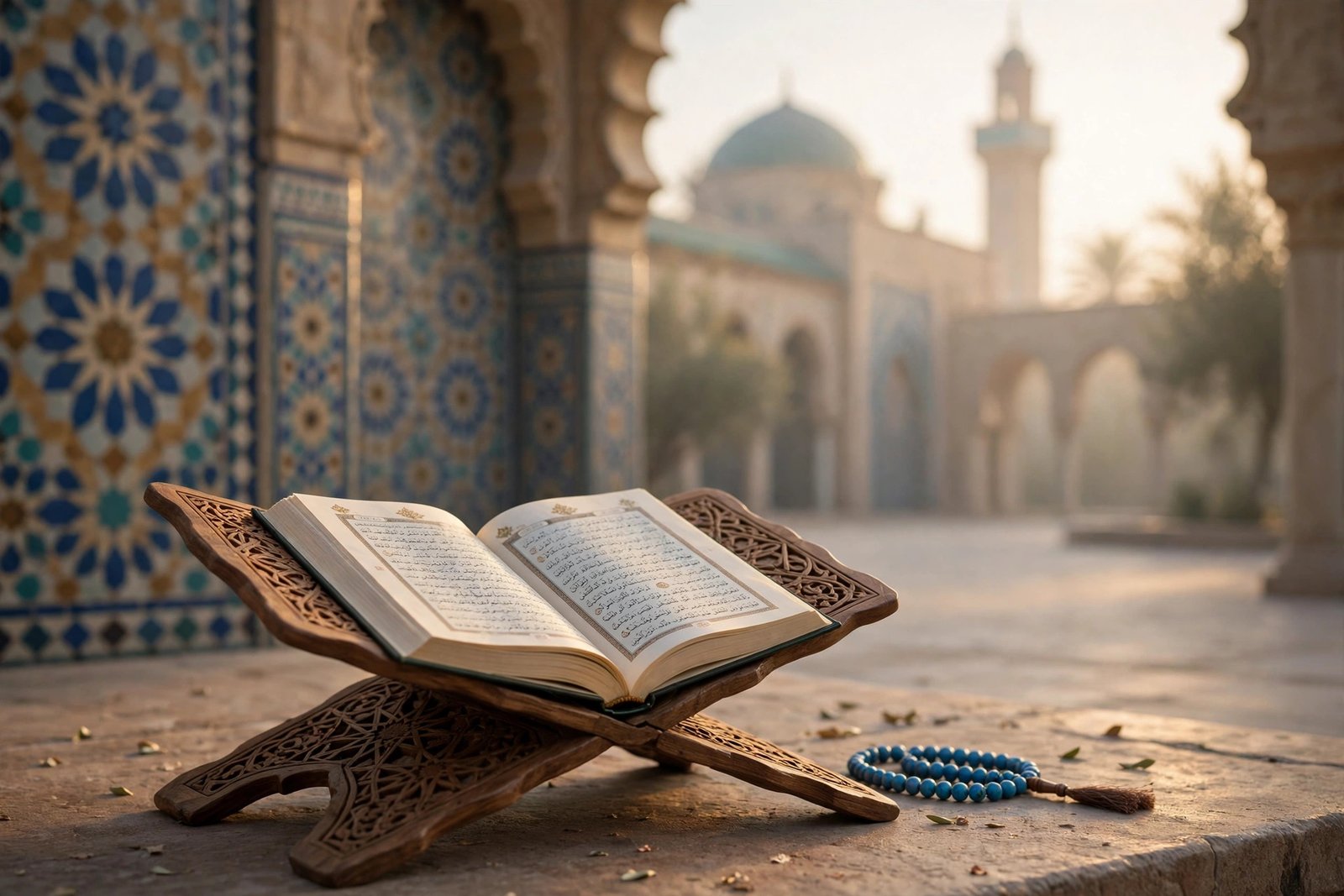
Daily sunnahs of Prophet Muhammad ﷺ are the small, blessed habits that turn an ordinary day into an act of worship. From the moment a believer opens his eyes in the morning until he closes them at night, the Sunnah of the Prophet Muhammad ﷺ shows him how to eat, drink, dress, greet, enter, leave, sleep, and wake — all in a way that earns the pleasure of Allah Almighty. These daily sunnahs are not difficult rituals reserved for scholars; they are simple actions that any Muslim man, woman, or child can practise, and each one carries a reward. In this article, we explore the most important daily sunnahs of the Prophet Muhammad ﷺ in the light of the Quran and authentic Hadith, and how every believer can bring them into his everyday life, step by step.
Table of Contents
- What Is a Sunnah?
- The Quran Commands Us to Follow the Prophet ﷺ
- Morning Sunnahs: Waking Up the Prophetic Way
- Sunnahs of Wudu and Prayer
- Sunnahs of Eating and Drinking
- Sunnahs of Dress and Appearance
- Sunnahs of Entering and Leaving the Home
- Sunnahs of Greeting and Good Character
- Evening and Night Sunnahs: Sleeping the Prophetic Way
- The Blessing of Small, Consistent Sunnahs
- How to Bring Sunnahs Into Your Daily Life
- Frequently Asked Questions
What Is a Sunnah?
The word Sunnah means the way, the path, or the practice of the Prophet Muhammad ﷺ — everything he said, did, and approved of during his blessed life. When the scholars of Islam speak of the daily sunnahs, they mean the regular habits of the Prophet Muhammad ﷺ: the way he woke up, the way he performed wudu, the way he ate, the way he dressed, the way he greeted people, and the way he slept. These were not random habits. Every action of the Prophet Muhammad ﷺ was guided by revelation, and Allah Almighty chose him as the perfect example for all mankind until the Day of Judgement.
It is important to understand that the Sunnah is not an optional extra in Islam. The Quran itself commands the believers to follow the Prophet Muhammad ﷺ, and the scholars of Ahl-e-Sunnat have always taught that the Sunnah is the second source of Islamic law after the Quran. A Muslim who loves Allah must love His Prophet ﷺ, and the truest sign of that love is following his way in daily life. The one who follows the Sunnah in small things will find it easy to follow it in big things, and the one who neglects the Sunnah in small things will slowly drift away from the Deen. As the importance of seeking knowledge in Islam teaches us, learning the Sunnah is itself an act of worship, and the believer who studies the life of the Prophet Muhammad ﷺ finds his own life transformed by it.
The daily sunnahs can be divided into two kinds. Some are Sunnah Muakkadah — the strongly emphasised practices that the Prophet Muhammad ﷺ almost never left, such as the two rak’ahs before Fajr. Others are the general habits of his blessed life, such as eating with the right hand and beginning every good action with Bismillah. Both kinds carry reward, and both kinds bring blessing into the home. The believer should not ask, “Is this Sunnah compulsory or optional?” — he should ask, “Did my beloved Prophet ﷺ do this?” If the answer is yes, then doing it is an honour, and leaving it is a loss.
The Quran Commands Us to Follow the Prophet ﷺ
Allah Almighty says in the Holy Quran: “Indeed, in the Messenger of Allah you have an excellent example for whoever hopes in Allah and the Last Day and remembers Allah much.” (Surah Al-Ahzab 33:21). This verse is the foundation of the entire science of the Sunnah. Allah does not merely suggest that we follow the Prophet Muhammad ﷺ — He declares him to be the excellent example, the perfect model, for every believer. Whatever situation a Muslim faces in life, he will find the answer in the example of the Prophet Muhammad ﷺ, because his life covered every aspect of human existence: worship, family, trade, leadership, friendship, and daily routine.
Allah Almighty also says: “Say: If you love Allah, follow me, and Allah will love you and forgive you your sins. And Allah is Forgiving and Merciful.” (Surah Aal-e-Imran 3:31). This is one of the greatest verses in the Quran. It makes the love of Allah conditional upon following the Prophet Muhammad ﷺ. A person may claim to love Allah, but his claim is only proven when he walks in the footsteps of the Prophet ﷺ. And the reward of following him is beyond measure: Allah Himself will love the follower and forgive his sins. What greater prize could a believer seek than the love of Allah and the forgiveness of his sins? The tawbah, repentance in Islam, begins with returning to the way of the Prophet Muhammad ﷺ, and the one who follows his Sunnah has already taken the greatest step toward forgiveness.
In another verse, Allah Almighty says: “Whoever obeys the Messenger has obeyed Allah.” (Surah An-Nisa 4:80). Obedience to the Prophet Muhammad ﷺ is obedience to Allah, because the Prophet ﷺ never spoke from his own desire — his teaching was revelation from Allah. This is why the Companions رضی اللہ عنہم followed his every action with such devotion. They watched how he ate, how he drank, how he slept, and how he walked, and they copied him in everything, because they knew that every action of his was beloved to Allah. The Prophet Muhammad’s trustworthiness, Al-Amin, is part of this same truth: the one whom Allah trusted with His message is the one whose every habit is worthy of being followed.
Morning Sunnahs: Waking Up the Prophetic Way
The day of a believer begins before the sun rises. The Prophet Muhammad ﷺ used to wake up for Tahajjud in the last part of the night, and then pray Fajr with the congregation. The importance of Tahajjud prayer is so great that Allah Almighty praised those who stand in prayer while others sleep, and the Prophet Muhammad ﷺ never abandoned the night prayer, even when he was ill or travelling. A believer who wishes to follow the Sunnah should set his alarm for Fajr at the very least, and for Tahajjud whenever he is able, for the one who begins his day with Allah finds blessing in every hour that follows.
Upon waking, the Prophet Muhammad ﷺ would say: “Alhamdu lillahil-ladhi ahyana ba’da ma amatana wa ilayhin-nushur — All praise is for Allah who gave us life after He caused us to die, and to Him is the resurrection.” (Sahih al-Bukhari 6312). This simple dua reminds the believer that sleep is a small death, and waking is a small resurrection. Every morning is a new life given by Allah, and the first words of the day should be gratitude, not complaint. The believer who wakes with this dua begins his day remembering that his life belongs to Allah and will return to Him.
Another morning Sunnah is the use of the miswak. The Prophet Muhammad ﷺ said: “Were it not for the hardship upon my Ummah, I would have ordered them to use the miswak before every prayer.” (Sahih al-Bukhari 887, Sahih Muslim 252). The miswak cleans the mouth, pleases Allah, and freshens the breath before prayer and before meeting people. The Prophet Muhammad ﷺ used the miswak upon waking, before wudu, before entering his home, and before sleeping. In our time, the toothbrush serves the same purpose, and the believer who cleans his teeth with the intention of following the Sunnah earns the reward of the Sunnah. The virtues of Fajr prayer also teach us that the morning is the most blessed part of the day, and the one who wakes early for Fajr and begins with miswak, wudu, and prayer has started his day in the way most beloved to Allah.
After waking, the Sunnah is to wash the hands three times before putting them into a vessel of water, because a person does not know where his hands have been during the night. The Prophet Muhammad ﷺ also taught that the believer should rub the sleep from his face and look toward the sky, remembering Allah. These small actions take only moments, but they fill the morning with the remembrance of Allah. The one who begins his day with the Sunnah will find that his whole day is different — his heart is lighter, his prayers are sweeter, and his work is blessed.
Sunnahs of Wudu and Prayer
Wudu is the gateway to prayer, and the Prophet Muhammad ﷺ performed it with great care and beauty. Allah Almighty says: “O you who believe, when you rise to prayer, wash your faces and your forearms to the elbows and wipe over your heads and wash your feet to the ankles.” (Surah Al-Ma’idah 5:6). The Prophet Muhammad ﷺ taught the exact method of wudu: beginning with Bismillah, washing the hands three times, rinsing the mouth and nose, washing the face three times, washing the arms to the elbows three times, wiping the head once, washing the ears, and washing the feet to the ankles three times. The how to perform wudu guide on this site explains every step in full detail, and the believer who learns it properly has learned one of the most important daily sunnahs.
The Prophet Muhammad ﷺ said: “Purity is half of faith.” (Sahih Muslim 223). Wudu is not merely washing — it is an act of worship that cleanses the sins along with the limbs. The Prophet Muhammad ﷺ said that when a believer washes his face in wudu, every sin his eyes committed is washed away with the water, and when he washes his hands, every sin his hands committed is washed away, until he emerges from wudu pure and clean. (Sahih Muslim 244). This is why the believer should perform wudu slowly and with presence of heart, remembering that each drop of water is carrying away his sins.
After completing wudu, the Sunnah is to say the Shahadah and the dua: “Ash-hadu an la ilaha illallahu wahdahu la sharika lahu wa ash-hadu anna Muhammadan abduhu wa rasuluh — I bear witness that there is no god but Allah alone, without partner, and I bear witness that Muhammad is His servant and Messenger.” The Prophet Muhammad ﷺ said that whoever says this after wudu, the eight gates of Paradise are opened for him, and he may enter through whichever gate he wishes. (Sahih Muslim 234). What a tremendous reward for a few words after wudu! The believer should also pray two rak’ahs of Tahiyyat al-Wudu whenever he performs wudu, for the Prophet Muhammad ﷺ heard the footsteps of Bilal رضی اللہ عنہ in Paradise, and Bilal رضی اللہ عنہ said that whenever he performed wudu, he prayed two rak’ahs after it. (Sahih al-Bukhari 1149).
The Sunnah prayers around the five daily prayers are among the most rewarding daily sunnahs. The two rak’ahs before Fajr are so beloved that the Prophet Muhammad ﷺ said they are “better than the world and everything in it.” (Sahih Muslim 725). The Prophet Muhammad ﷺ also regularly prayed four rak’ahs before Zuhr and two after it, two after Maghrib, and two after Isha. These twelve rak’ahs are called the Sunan Rawatib, and the Prophet Muhammad ﷺ said that whoever prays twelve rak’ahs of Sunnah in a day and night, Allah will build a house for him in Paradise. (Sahih Muslim 728). The believer who guards these prayers has built his house in Paradise brick by brick, day after day. Those who wish to learn the prayers in detail should explore the Quran courses at Jamia Saeedia Darul Quran, where the method of prayer is taught step by step in the light of the Sunnah.
Sunnahs of Eating and Drinking
Eating is something every person does several times a day, and the Prophet Muhammad ﷺ turned it into an act of worship through the Sunnah. The first Sunnah of eating is to say Bismillah before beginning. The Prophet Muhammad ﷺ said: “When any of you eats, let him mention the name of Allah. If he forgets to mention the name of Allah at the beginning, let him say: Bismillahi awwalahu wa akhirahu — In the name of Allah at its beginning and at its end.” (Sunan Abi Dawud 3767). The one who eats without Bismillah eats with Shaytan, but the one who begins with the name of Allah eats with blessing. Parents should teach their children to say Bismillah before every meal, so that the habit becomes part of their nature from childhood.
The second Sunnah is to eat with the right hand. The Prophet Muhammad ﷺ said: “When one of you eats, let him eat with his right hand, and when he drinks, let him drink with his right hand, for Shaytan eats with his left hand and drinks with his left hand.” (Sahih Muslim 2020). This is a clear command, and the believer should train himself and his children to always use the right hand for eating and drinking. The third Sunnah is to eat from what is in front of you, and not to reach across the table. The Prophet Muhammad ﷺ taught a young Companion: “O young boy, say Bismillah, eat with your right hand, and eat from what is in front of you.” (Sahih al-Bukhari 5376). These three instructions — Bismillah, right hand, and eating from in front — are the complete manners of eating in a single Hadith.
The Prophet Muhammad ﷺ also taught moderation in eating. He said that the son of Adam fills no vessel worse than his stomach, and that a few mouthfuls are enough to keep his back straight — and if he must eat more, then a third for food, a third for drink, and a third for air. (Jami` at-Tirmidhi 2380). The believer eats to live and worship, not to indulge. Overeating makes the body heavy, the heart hard, and the prayer difficult. The one who eats moderately finds his body light for worship and his heart soft for the remembrance of Allah. The halal earnings in Islam is closely connected to this: the believer earns his food through lawful means, eats it with gratitude, and never wastes it, for waste is the way of Shaytan.
After eating, the Sunnah is to praise Allah. The Prophet Muhammad ﷺ said that Allah is pleased with His servant when he eats a morsel and praises Him for it, and drinks a sip and praises Him for it. (Sahih Muslim 2734). The dua after eating — “Alhamdu lillahil-ladhi at’amana wa saqana wa ja’alana minal-muslimin — All praise is for Allah who fed us and gave us drink and made us among the Muslims” — takes only a few seconds, but it turns a meal into an act of gratitude. The Sunnah of drinking is to drink in three sips, sitting down, saying Bismillah before and Alhamdulillah after. The Prophet Muhammad ﷺ forbade drinking in one gulp like a camel, and he taught that the one who serves the drink should drink last — “the one who serves the people is the last of them to drink.” (Jami` at-Tirmidhi 1885).
Sunnahs of Dress and Appearance
The Prophet Muhammad ﷺ dressed with simplicity, cleanliness, and dignity. He loved white clothing, and he said: “Wear white garments, for they are the best of your garments.” (Sunan Abi Dawud 4061). White is the colour of purity, and the Prophet Muhammad ﷺ also commanded that the dead be shrouded in white. The believer should keep his clothes clean and tidy, for Allah Almighty says: “And your clothing, purify it.” (Surah Al-Muddaththir 74:4). Cleanliness of dress is part of faith, and the Muslim who dresses neatly honours both himself and the Deen.
When putting on clothes, the Sunnah is to begin with the right side and to say the dua: “Alhamdu lillahil-ladhi kasani hadha wa razaqanihi min ghayri hawlim minni wa la quwwah — All praise is for Allah who clothed me with this and provided it for me without any power or might of mine.” The Prophet Muhammad ﷺ said that whoever says this when he puts on a garment, his past sins are forgiven. (Sunan Abi Dawud 4023). What a mercy of Allah — that the simple act of dressing, done with the Sunnah dua, can wipe away sins! When removing clothes, the Sunnah is to begin with the left side and to say Bismillah, so that the eyes of the jinn are veiled from the believer’s awrah.
The Prophet Muhammad ﷺ also taught the Sunnah of oiling and combing the hair, using perfume, and keeping the appearance neat. He used to apply oil to his blessed hair, part it, and keep it tidy, and he loved the fragrance of musk and amber. The Prophet Muhammad ﷺ said: “Whoever has hair should honour it.” (Sunan Abi Dawud 4163). Perfume is a Sunnah for men especially before Jumu’ah and before going to the mosque, for the believer should come to the house of Allah in his best state. The haya, modesty in Islam, is the guide for dress: the clothing of a believer should be loose, clean, and dignified, covering what Allah has commanded to be covered, and never imitating the shameless fashions of those who display their bodies.
Among the daily sunnahs of appearance is the keeping of the beard for men. The Prophet Muhammad ﷺ commanded: “Trim the moustache and let the beard grow.” (Sahih al-Bukhari 5893). The beard is the adornment of a man’s face and the sign of the Prophets, for all the Prophets عليهم السلام wore beards. The believer who keeps his beard with the intention of following the Prophet Muhammad ﷺ earns reward every moment of his life, even while he sleeps, because his face carries the sign of the Sunnah.
Sunnahs of Entering and Leaving the Home
The home is the first mosque of the believer, and the Prophet Muhammad ﷺ filled it with Sunnah from the moment of entering to the moment of leaving. When entering the home, the Sunnah is to say Bismillah and to greet the family with Salam. The Prophet Muhammad ﷺ said: “When a man enters his house and mentions Allah upon entering and upon eating, Shaytan says to his companions: there is no lodging for you here and no dinner. But when he enters without mentioning Allah, Shaytan says: you have found lodging. And when he does not mention Allah upon eating, Shaytan says: you have found lodging and dinner.” (Sahih Muslim 2018). A home entered with Bismillah and Salam is a home where Shaytan cannot stay — and a home where he cannot stay is a home of peace.
When leaving the home, the Sunnah is to say: “Bismillahi tawakkaltu ‘alallah, wa la hawla wa la quwwata illa billah — In the name of Allah, I place my trust in Allah, and there is no power and no might except with Allah.” The Prophet Muhammad ﷺ said that whoever says this when leaving his home, it is said to him: you have been guided, you have been sufficed, and you have been protected — and Shaytan moves away from him. (Sunan Abi Dawud 5095). Every time a believer leaves his home for work, for study, or for any need, this short dua places him under the protection of Allah for the whole journey. The power of dua in Islam is seen in these daily duas: small words with immense protection, taught by the Prophet Muhammad ﷺ for every step of life.
Another beautiful Sunnah of entering the home is the use of the miswak. The first thing the Prophet Muhammad ﷺ did when he entered his home was to use the miswak. (Sahih Muslim 253). He wanted his mouth to be clean and fresh when he met his family, especially his wives رضی اللہ عنہن. This teaches the believer that the family deserves his best manners — not his leftovers. Many people are polite with strangers and harsh with their families, but the Sunnah is the opposite: the best of you are the best to their families, and the Prophet Muhammad ﷺ was the best to his family. (Jami` at-Tirmidhi 3895).
Sunnahs of Greeting and Good Character
Among the most beloved daily sunnahs is the spreading of Salam. The Prophet Muhammad ﷺ said: “You will not enter Paradise until you believe, and you will not believe until you love one another. Shall I not tell you of something which, if you do it, you will love one another? Spread Salam among yourselves.” (Sahih Muslim 54). Salam is not merely a greeting — it is a dua for peace, a declaration of safety, and a bond of love between Muslims. The one who greets first is the better of the two, and the Prophet Muhammad ﷺ was always the first to greet, even to children. He would pass by a group of children and greet them with Salam, teaching the Ummah that no one is too small or too low to deserve a greeting.
The Sunnah of greeting includes shaking hands when meeting, for the Prophet Muhammad ﷺ said that when two Muslims meet and shake hands, their sins fall away like leaves fall from a tree. The believer should greet with a smile, for the Prophet Muhammad ﷺ said: “Your smile in the face of your brother is charity.” (Jami` at-Tirmidhi 1956). A smile costs nothing, but it is recorded as charity, and it opens hearts that words cannot open. The kindness to neighbors in Islam begins with this same smile and Salam: the neighbour who is greeted warmly every day becomes a friend, and the street where Salam is spread becomes a street of peace.
Good character is itself the greatest Sunnah of daily life. The Prophet Muhammad ﷺ said: “The most beloved of you to me and the closest to me on the Day of Judgement are those with the best character.” (Jami` at-Tirmidhi 2018). The daily sunnahs of character include speaking the truth, keeping promises, controlling anger, forgiving those who wrong you, and helping those in need. The honesty in Islam is the foundation of this character, and the controlling anger in Islam is its test: the one who controls his anger when he is able to take revenge is the one whose character is truly strong. The Prophet Muhammad ﷺ never took revenge for himself, never raised his voice in the marketplace, and never spoke a harsh word to a servant — and the Companions رضی اللہ عنہم copied him in all of this, until the world saw Islam in their manners before it heard Islam in their words.
Evening and Night Sunnahs: Sleeping the Prophetic Way
Just as the day begins with Sunnah, the night ends with it. The Prophet Muhammad ﷺ would pray Isha, then go to sleep early, so that he could wake for Tahajjud. He disliked staying awake after Isha in idle talk, for the night is for rest and the early morning is for worship. Before sleeping, the Sunnah is to perform wudu, for the Prophet Muhammad ﷺ said: “When you go to bed, perform ablution as you do for prayer, then lie on your right side.” (Sahih al-Bukhari 247). The one who sleeps in the state of wudu has an angel beside him through the night, praying for his forgiveness.
Before sleeping, the Prophet Muhammad ﷺ would recite Surah Al-Ikhlas, Surah Al-Falaq, and Surah An-Nas — the three Quls — blow into his hands, and wipe them over his body. He would do this three times. (Sahih al-Bukhari 5017). He also recited Ayatul Kursi before sleeping, and the Prophet Muhammad ﷺ said that whoever recites it at night, Allah appoints a guardian over him, and no Shaytan comes near him until morning. (Sahih al-Bukhari 2311). The virtues of Ayatul Kursi are among the greatest protections a believer can take into the night, and the virtues of Surah Al-Mulk teach us that reciting it every night protects the believer from the punishment of the grave.
The dua before sleeping is: “Bismika Allahumma amutu wa ahya — In Your name, O Allah, I die and I live.” (Sahih al-Bukhari 6324). The believer sleeps with the name of Allah on his lips, and if Allah takes his soul in the night, he dies in the state of His remembrance. The Prophet Muhammad ﷺ also taught the dua: “Allahumma qini ‘adhabaka yawma tab’athu ‘ibadak — O Allah, protect me from Your punishment on the Day You resurrect Your servants.” This is the way of the believer: he ends his day as he began it, with the remembrance of Allah, and his sleep itself becomes an act of worship, because he slept with the intention of waking fresh for the worship of Allah. The virtues of dhikr in Islam remind us that the heart which sleeps with dhikr wakes with dhikr, and the tongue which ends the day with the name of Allah begins the next day with it too.
The Blessing of Small, Consistent Sunnahs
Many people think that following the Sunnah requires great effort, but the Prophet Muhammad ﷺ taught the opposite. He said: “The most beloved deeds to Allah are the most consistent, even if they are small.” (Sahih al-Bukhari 6464, Sahih Muslim 783). Allah does not ask for perfection in a single day — He asks for consistency over a lifetime. A believer who adopts one Sunnah and keeps it for his whole life is more beloved to Allah than the one who adopts ten sunnahs for a week and then abandons them all. The patience, Sabr, in Islam, is needed here: patience to keep a small habit alive, day after day, until it becomes part of who you are.
Consider the reward of the small sunnahs. Saying Bismillah before eating takes one second, but it brings blessing to the meal. Greeting with Salam takes two seconds, but it is a dua and a cause of love. Smiling at a brother takes no effort, but it is recorded as charity. Using the miswak takes a minute, but it pleases Allah. Reciting Ayatul Kursi before sleeping takes a minute, but it brings a guardian angel for the whole night. These are small deeds with enormous rewards, and they are available to every Muslim, rich or poor, learned or unlearned, young or old. The one who fills his day with these small sunnahs will find that his whole day has become worship, and his whole life has become a following of the Prophet Muhammad ﷺ.
The greatest blessing of the daily sunnahs is that they keep the believer connected to the Prophet Muhammad ﷺ in every moment. Every time he eats with his right hand, he remembers the Prophet ﷺ. Every time he enters his home with Salam, he remembers the Prophet ﷺ. Every time he sleeps on his right side, he remembers the Prophet ﷺ. This constant remembrance fills the heart with love for the Prophet ﷺ, and love for the Prophet ﷺ is the door to the love of Allah. On the Day of Judgement, the Prophet Muhammad ﷺ will recognise his Ummah by the signs of their wudu and by their following of his Sunnah — and the one who followed him in this world will be nearest to him in the next.
How to Bring Sunnahs Into Your Daily Life
Begin with one Sunnah at a time. Choose the easiest Sunnah first — for example, saying Bismillah before eating, or greeting everyone with Salam, or sleeping on your right side. Practise it for a week until it becomes a habit, then add another. The one who tries to change everything in a single day will fail, but the one who changes one thing at a time will change his whole life within a year. Keep a small notebook or a list of the sunnahs you have adopted, and review it every week. Teach the sunnahs to your family, especially your children, for the Islamic upbringing of children begins with the parents living the Sunnah in front of them — children copy what they see far more than what they hear.
Learn the daily duas by heart, one by one. The duas of waking, eating, entering and leaving the home, entering and leaving the washroom, dressing, and sleeping are all short and easy to memorise. Those who wish to learn them systematically should visit the duas page of Jamia Saeedia Darul Quran, where the authentic daily duas are gathered with their translations. Keep the list of duas where you can see it — near your bed, on the dining table, or by the door — until you know them all by heart. And remember: the goal is not to collect knowledge about the Sunnah, but to live it. Knowledge that is not practised is a burden, but knowledge that is practised is light.
Finally, make dua to Allah for steadfastness upon the Sunnah. The Prophet Muhammad ﷺ himself used to make dua: “O Turner of hearts, make my heart firm upon Your religion.” If the Prophet ﷺ, who was protected from sin, asked Allah to keep his heart firm, then how much more do we need to ask? Ask Allah every day to make you among those who love the Sunnah, live the Sunnah, and die upon the Sunnah — for the one who dies upon the Sunnah will be raised with the Prophet Muhammad ﷺ, and there is no greater honour than that.
Frequently Asked Questions
What are the most important daily sunnahs of the Prophet ﷺ?
The most important daily sunnahs include waking for Fajr, using the miswak, performing wudu properly, praying the Sunnah prayers, saying Bismillah before eating, eating with the right hand, greeting with Salam, entering and leaving the home with dua, and sleeping on the right side after reciting the three Quls and Ayatul Kursi. Each of these is simple, and together they fill the whole day with the remembrance of Allah.
Is it compulsory to follow every Sunnah of the Prophet ﷺ?
The Sunnah includes both the strongly emphasised practices and the general habits of the Prophet Muhammad ﷺ. While not every Sunnah is compulsory like the five daily prayers, every Sunnah carries reward, and the Quran commands the believers to follow the Prophet ﷺ as their excellent example (Surah Al-Ahzab 33:21). The believer should follow as many sunnahs as he can, beginning with the easiest, and never look down upon any Sunnah as small.
How can I teach daily sunnahs to my children?
Teach by example first: let your children see you saying Bismillah, eating with your right hand, greeting with Salam, and praying on time. Then teach them one dua at a time, with love and encouragement, and reward them when they practise it. Children learn the Sunnah best when it is part of the daily life of the home, not merely a lesson in a book.
What should I do if I forget a Sunnah dua during the day?
If you forget to say Bismillah before eating, say it when you remember: “Bismillahi awwalahu wa akhirahu.” If you forget any other dua, simply say it when you remember, and do not feel that the day is ruined. Allah looks at the effort and the intention, and the one who keeps trying to follow the Sunnah is beloved to Allah even when he forgets sometimes.
Can small sunnahs really change my life?
Yes. The Prophet Muhammad ﷺ said that the most beloved deeds to Allah are the most consistent, even if they are small (Sahih al-Bukhari 6464). Small sunnahs practised every day change the heart slowly and surely: they increase the remembrance of Allah, strengthen love for the Prophet ﷺ, bring blessing into the home, and protect the believer from sin. A lifetime of small sunnahs is a lifetime of worship.
Related Articles
اردو میں مکمل مضمون
نبی اکرم ﷺ کی روزمرہ سنتیں وہ چھوٹی چھوٹی بابرکت عادتیں ہیں جو ایک عام دن کو عبادت میں بدل دیتی ہیں۔ مومن صبح آنکھ کھولنے کے لمحے سے لے کر رات آنکھ بند کرنے تک، نبی اکرم ﷺ کی سنت اسے سکھاتی ہے کہ کیسے کھائے، کیسے پیے، کیسے پہنے، کیسے سلام کرے، کیسے گھر میں داخل ہو، کیسے نکلے، کیسے سوئے اور کیسے جاگے — یہ سب اس طرح کہ اللہ تعالیٰ کی رضا حاصل ہو۔ نبی اکرم ﷺ کی یہ روزمرہ سنتیں کوئی مشکل عبادتیں نہیں جو صرف علماء کے لیے ہوں؛ یہ سادہ اعمال ہیں جن پر ہر مسلمان مرد، عورت اور بچہ عمل کر سکتا ہے، اور ہر ایک پر اجر ہے۔ اس مضمون میں ہم قرآن و حدیث کی روشنی میں نبی اکرم ﷺ کی اہم ترین روزمرہ سنتوں کا جائزہ لیں گے اور یہ سیکھیں گے کہ ہر مومن انہیں اپنی روزمرہ زندگی میں قدم بہ قدم کیسے لا سکتا ہے۔
فہرست مضامین
- سنت کیا ہے؟
- قرآن کا حکم: نبی اکرم ﷺ کی پیروی
- صبح کی سنتیں: نبوی طریقے سے جاگنا
- وضو اور نماز کی سنتیں
- کھانے پینے کی سنتیں
- لباس اور ظاہری وضع کی سنتیں
- گھر میں داخل ہونے اور نکلنے کی سنتیں
- سلام اور حسنِ اخلاق کی سنتیں
- شام اور رات کی سنتیں: نبوی طریقے سے سونا
- چھوٹی مگر مسلسل سنتوں کی برکت
- سنتوں کو روزمرہ زندگی میں کیسے لائیں؟
- اکثر پوچھے جانے والے سوالات
سنت کیا ہے؟
سنت کا مطلب ہے نبی اکرم ﷺ کا طریقہ، راستہ اور عمل — وہ سب کچھ جو آپ ﷺ نے فرمایا، کیا اور جس کی اجازت دی۔ جب علمائے اسلام روزمرہ سنتوں کی بات کرتے ہیں تو اس سے مراد نبی اکرم ﷺ کی معمول کی عادتیں ہیں: آپ ﷺ کیسے جاگتے تھے، کیسے وضو فرماتے تھے، کیسے کھاتے تھے، کیسے لباس پہنتے تھے، کیسے سلام فرماتے تھے اور کیسے سوتے تھے۔ یہ کوئی اتفاقی عادتیں نہیں تھیں۔ نبی اکرم ﷺ کا ہر عمل وحی کی رہنمائی سے تھا، اور اللہ تعالیٰ نے آپ ﷺ کو قیامت تک تمام انسانوں کے لیے بہترین نمونہ بنایا۔
یہ سمجھنا ضروری ہے کہ سنت اسلام میں کوئی اختیاری اضافہ نہیں ہے۔ قرآن خود مومنوں کو نبی اکرم ﷺ کی پیروی کا حکم دیتا ہے، اور اہل سنت کے علماء نے ہمیشہ سکھایا ہے کہ سنت قرآن کے بعد اسلامی شریعت کا دوسرا ماخذ ہے۔ جو مسلمان اللہ سے محبت کرتا ہے اسے اس کے نبی ﷺ سے محبت ہونی چاہیے، اور اس محبت کی سچی علامت روزمرہ زندگی میں آپ ﷺ کے طریقے پر چلنا ہے۔ جو چھوٹی باتوں میں سنت پر عمل کرتا ہے اس کے لیے بڑی باتوں میں عمل کرنا آسان ہو جاتا ہے، اور جو چھوٹی باتوں میں سنت کو چھوڑ دیتا ہے وہ آہستہ آہستہ دین سے دور ہو جاتا ہے۔ جیسا کہ اسلام میں علم کی اہمیت ہمیں سکھاتی ہے، سنت سیکھنا خود ایک عبادت ہے، اور جو مومن نبی اکرم ﷺ کی زندگی کا مطالعہ کرتا ہے اس کی اپنی زندگی بدل جاتی ہے۔
روزمرہ سنتوں کی دو قسمیں ہیں۔ بعض سنتِ مؤکدہ ہیں — وہ مضبوطی سے تاکید کی گئی عبادتیں جنہیں نبی اکرم ﷺ تقریباً کبھی نہیں چھوڑتے تھے، جیسے فجر سے پہلے کی دو رکعتیں۔ اور بعض آپ ﷺ کی زندگی کی عمومی عادتیں ہیں، جیسے دائیں ہاتھ سے کھانا اور ہر اچھے کام کی ابتدا بسم اللہ سے کرنا۔ دونوں قسموں پر اجر ہے، اور دونوں گھر میں برکت لاتی ہیں۔ مومن کو یہ نہیں پوچھنا چاہیے کہ “کیا یہ سنت فرض ہے یا نفل؟” — اسے یہ پوچھنا چاہیے کہ “کیا میرے محبوب نبی ﷺ نے یہ کیا تھا؟” اگر جواب ہاں ہے تو اس پر عمل کرنا عزت ہے، اور اسے چھوڑنا نقصان ہے۔
قرآن کا حکم: نبی اکرم ﷺ کی پیروی
اللہ تعالیٰ قرآن مجید میں فرماتا ہے: “بے شک تمہارے لیے اللہ کے رسول ﷺ کی زندگی میں بہترین نمونہ ہے، اس شخص کے لیے جو اللہ اور آخرت کے دن کی امید رکھتا ہے اور اللہ کو کثرت سے یاد کرتا ہے۔” (سورۃ الاحزاب 33:21)۔ یہ آیت سنت کی پوری تعلیم کی بنیاد ہے۔ اللہ صرف یہ مشورہ نہیں دیتا کہ ہم نبی اکرم ﷺ کی پیروی کریں — وہ آپ ﷺ کو بہترین نمونہ قرار دیتا ہے، ہر مومن کے لیے کامل مثال۔ مسلمان زندگی میں جس بھی صورتحال کا سامنا کرے، اس کا جواب اسے نبی اکرم ﷺ کی مثال میں ملے گا، کیونکہ آپ ﷺ کی زندگی نے انسانی زندگی کے ہر پہلو کو گھیر رکھا ہے: عبادت، خاندان، تجارت، قیادت، دوستی اور روزمرہ معمولات۔
اللہ تعالیٰ مزید فرماتا ہے: “کہہ دیجیے: اگر تم اللہ سے محبت کرتے ہو تو میری پیروی کرو، اللہ تم سے محبت کرے گا اور تمہارے گناہ بخش دے گا۔ اور اللہ بخشنے والا مہربان ہے۔” (سورۃ آل عمران 3:31)۔ یہ قرآن کی عظیم ترین آیات میں سے ایک ہے۔ یہ اللہ کی محبت کو نبی اکرم ﷺ کی پیروی سے مشروط کرتی ہے۔ انسان اللہ سے محبت کا دعویٰ تو کر سکتا ہے، لیکن اس کا دعویٰ تب ہی ثابت ہوتا ہے جب وہ نبی اکرم ﷺ کے نقشِ قدم پر چلے۔ اور اس کی پیروی کا اجر بے حساب ہے: اللہ خود پیروی کرنے والے سے محبت کرے گا اور اس کے گناہ بخش دے گا۔ مومن اس سے بڑا انعام کیا چاہ سکتا ہے؟ اسلام میں توبہ کا آغاز نبی اکرم ﷺ کے طریقے کی طرف لوٹنے سے ہوتا ہے، اور جو سنت پر چلتا ہے اس نے معافی کی طرف سب سے بڑا قدم اٹھا لیا ہے۔
ایک اور آیت میں اللہ تعالیٰ فرماتا ہے: “جس نے رسول ﷺ کی اطاعت کی اس نے اللہ کی اطاعت کی۔” (سورۃ النساء 4:80)۔ نبی اکرم ﷺ کی اطاعت اللہ کی اطاعت ہے، کیونکہ نبی اکرم ﷺ نے کبھی اپنی خواہش سے نہیں بولا — آپ ﷺ کی تعلیم اللہ کی وحی تھی۔ اسی لیے صحابہ کرام رضی اللہ عنہم آپ ﷺ کے ہر عمل کی ایسی عقیدت سے پیروی کرتے تھے۔ وہ دیکھتے تھے کہ آپ ﷺ کیسے کھاتے ہیں، کیسے پیتے ہیں، کیسے سوتے ہیں اور کیسے چلتے ہیں، اور ہر چیز میں آپ ﷺ کی نقل کرتے تھے، کیونکہ وہ جانتے تھے کہ آپ ﷺ کا ہر عمل اللہ کو محبوب ہے۔ نبی اکرم ﷺ کی امانت و صداقت، الصادق الامین اسی حقیقت کا حصہ ہے: جسے اللہ نے اپنی وحی کا امین بنایا، اس کی ہر عادت پیروی کے لائق ہے۔
صبح کی سنتیں: نبوی طریقے سے جاگنا
مومن کا دن سورج نکلنے سے پہلے شروع ہوتا ہے۔ نبی اکرم ﷺ رات کے آخری حصے میں تہجد کے لیے جاگتے تھے، پھر فجر جماعت کے ساتھ ادا فرماتے تھے۔ تہجد کی نماز کی اہمیت اتنی عظیم ہے کہ اللہ تعالیٰ نے ان لوگوں کی تعریف فرمائی جو دوسروں کے سوتے وقت نماز میں کھڑے ہوتے ہیں، اور نبی اکرم ﷺ نے تہجد کبھی نہیں چھوڑی، نہ بیماری میں اور نہ سفر میں۔ جو مومن سنت پر چلنا چاہتا ہے اسے کم از کم فجر کے لیے الارم لگانا چاہیے، اور جب بھی ممکن ہو تہجد کے لیے بھی، کیونکہ جو اپنا دن اللہ کے ساتھ شروع کرتا ہے اس کے ہر گھنٹے میں برکت آ جاتی ہے۔
جاگنے پر نبی اکرم ﷺ یہ دعا پڑھتے تھے: “الحمد للہ الذی احیانا بعد ما اماتنا والیہ النشور — تمام تعریفیں اللہ کے لیے ہیں جس نے ہمیں موت کے بعد زندگی دی، اور اسی کی طرف لوٹنا ہے۔” (صحیح البخاری 6312)۔ یہ سادہ سی دعا مومن کو یاد دلاتی ہے کہ نیند ایک چھوٹی موت ہے اور جاگنا ایک چھوٹی قیامت ہے۔ ہر صبح اللہ کی عطا کردہ نئی زندگی ہے، اور دن کے پہلے الفاظ شکر کے ہونے چاہییں، شکایت کے نہیں۔ جو مومن اس دعا کے ساتھ جاگتا ہے وہ اپنا دن یہ یاد کرتے ہوئے شروع کرتا ہے کہ اس کی زندگی اللہ کی ہے اور اسی کی طرف لوٹے گی۔
صبح کی ایک اور سنت مسواک کا استعمال ہے۔ نبی اکرم ﷺ نے فرمایا: “اگر میری امت پر مشقت کا خوف نہ ہوتا تو میں انہیں ہر نماز سے پہلے مسواک کا حکم دیتا۔” (صحیح البخاری 887، صحیح مسلم 252)۔ مسواک منہ کو صاف کرتی ہے، اللہ کو راضی کرتی ہے، اور نماز سے پہلے اور لوگوں سے ملنے سے پہلے سانس کو تازہ کرتی ہے۔ نبی اکرم ﷺ جاگنے پر، وضو سے پہلے، گھر میں داخل ہونے پر اور سونے سے پہلے مسواک فرماتے تھے۔ ہمارے زمانے میں ٹوتھ برش بھی یہی مقصد پورا کرتا ہے، اور جو مومن سنت کی نیت سے اپنے دانت صاف کرتا ہے اسے سنت کا اجر ملتا ہے۔ فجر کی نماز کی فضیلت بھی ہمیں یہی سکھاتی ہے کہ صبح دن کا سب سے بابرکت حصہ ہے، اور جو فجر کے لیے جلدی جاگے اور مسواک، وضو اور نماز سے آغاز کرے اس نے اپنا دن اللہ کو سب سے محبوب طریقے سے شروع کیا ہے۔
جاگنے کے بعد سنت یہ ہے کہ برتن میں ہاتھ ڈالنے سے پہلے ہاتھ تین بار دھوئے جائیں، کیونکہ انسان نہیں جانتا کہ رات میں اس کے ہاتھ کہاں رہے۔ نبی اکرم ﷺ چہرے سے نیند کا اثر بھی مٹاتے اور آسمان کی طرف دیکھ کر اللہ کو یاد فرماتے تھے۔ یہ چھوٹے چھوٹے اعمال صرف چند لمحے لیتے ہیں، لیکن صبح کو اللہ کے ذکر سے بھر دیتے ہیں۔ جو اپنا دن سنت کے ساتھ شروع کرتا ہے اس کا سارا دن بدل جاتا ہے — اس کا دل ہلکا ہو جاتا ہے، اس کی نمازیں میٹھی ہو جاتی ہیں اور اس کے کام میں برکت آ جاتی ہے۔
وضو اور نماز کی سنتیں
وضو نماز کا دروازہ ہے، اور نبی اکرم ﷺ اسے بڑی توجہ اور خوبصورتی سے فرماتے تھے۔ اللہ تعالیٰ فرماتا ہے: “اے ایمان والو! جب تم نماز کے لیے کھڑے ہو تو اپنے چہرے اور کہنیوں تک ہاتھ دھو لو، اپنے سروں کا مسح کرو اور ٹخنوں تک پاؤں دھو لو۔” (سورۃ المائدہ 5:6)۔ نبی اکرم ﷺ نے وضو کا درست طریقہ سکھایا: بسم اللہ سے آغاز، ہاتھ تین بار دھونا، کلی کرنا اور ناک میں پانی ڈالنا، چہرہ تین بار دھونا، کہنیوں تک بازو تین بار دھونا، سر کا ایک بار مسح، کانوں کا مسح اور ٹخنوں تک پاؤں تین بار دھونا۔ وضو کا صحیح طریقہ اس سائٹ پر مکمل تفصیل سے بیان کیا گیا ہے، اور جو مومن اسے درست طریقے سے سیکھ لے اس نے روزمرہ کی اہم ترین سنتوں میں سے ایک سیکھ لی۔
نبی اکرم ﷺ نے فرمایا: “پاکیزگی ایمان کا آدھا حصہ ہے۔” (صحیح مسلم 223)۔ وضو صرف دھونا نہیں ہے — یہ ایک عبادت ہے جو اعضاء کے ساتھ گناہوں کو بھی دھو دیتی ہے۔ نبی اکرم ﷺ نے فرمایا کہ جب مومن وضو میں اپنا چہرہ دھوتا ہے تو اس کی آنکھوں کے کیے ہوئے ہر گناہ پانی کے ساتھ دھل جاتا ہے، اور جب وہ اپنے ہاتھ دھوتا ہے تو اس کے ہاتھوں کے کیے ہوئے ہر گناہ دھل جاتے ہیں، یہاں تک کہ وہ وضو سے پاک صاف نکلتا ہے۔ (صحیح مسلم 244)۔ اسی لیے مومن کو وضو آہستہ اور دل کی حضوری کے ساتھ کرنا چاہیے، یہ یاد کرتے ہوئے کہ پانی کا ہر قطرہ اس کے گناہوں کو لے جا رہا ہے۔
وضو مکمل کرنے کے بعد سنت یہ ہے کہ شہادت اور یہ دعا پڑھی جائے: “اشہد ان لا الہ الا اللہ وحدہ لا شریک لہ واشہد ان محمداً عبدہ ورسولہ — میں گواہی دیتا ہوں کہ اللہ کے سوا کوئی معبود نہیں، وہ اکیلا ہے، اس کا کوئی شریک نہیں، اور میں گواہی دیتا ہوں کہ محمد ﷺ اس کے بندے اور رسول ہیں۔” نبی اکرم ﷺ نے فرمایا کہ جو شخص وضو کے بعد یہ کہے، اس کے لیے جنت کے آٹھوں دروازے کھول دیے جاتے ہیں، اور وہ جس دروازے سے چاہے داخل ہو سکتا ہے۔ (صحیح مسلم 234)۔ وضو کے بعد چند الفاظ پر کتنا عظیم اجر ہے! مومن کو جب بھی وضو کرے، اس کے بعد تحیۃ الوضو کی دو رکعتیں بھی پڑھنی چاہییں، کیونکہ نبی اکرم ﷺ نے جنت میں حضرت بلال رضی اللہ عنہ کے قدموں کی آواز سنی تھی، اور حضرت بلال رضی اللہ عنہ نے بتایا کہ جب بھی وہ وضو کرتے تھے، اس کے بعد دو رکعتیں پڑھتے تھے۔ (صحیح البخاری 1149)۔
پانچوں نمازوں کے آس پاس کی سنت نمازیں روزمرہ کی سب سے زیادہ اجر والی سنتوں میں سے ہیں۔ فجر سے پہلے کی دو رکعتیں اتنی محبوب ہیں کہ نبی اکرم ﷺ نے فرمایا کہ وہ “دنیا اور اس میں جو کچھ ہے، اس سے بہتر ہیں۔” (صحیح مسلم 725)۔ نبی اکرم ﷺ ظہر سے پہلے چار اور اس کے بعد دو، مغرب کے بعد دو، اور عشاء کے بعد دو رکعتیں باقاعدگی سے پڑھتے تھے۔ یہ بارہ رکعتیں سننِ رواتب کہلاتی ہیں، اور نبی اکرم ﷺ نے فرمایا کہ جو شخص دن رات میں بارہ رکعت سنت پڑھے، اللہ اس کے لیے جنت میں ایک گھر بنا دے گا۔ (صحیح مسلم 728)۔ جو مومن ان نمازوں کی حفاظت کرتا ہے وہ دن بہ دن جنت میں اپنا گھر بنا رہا ہے۔ جو لوگ نمازوں کو تفصیل سے سیکھنا چاہتے ہیں وہ جامعہ سعیدیہ دارالقرآن کے قرآن کورسز سے استفادہ کریں، جہاں نماز کا طریقہ سنت کی روشنی میں قدم بہ قدم سکھایا جاتا ہے۔
کھانے پینے کی سنتیں
کھانا وہ عمل ہے جو ہر انسان دن میں کئی بار کرتا ہے، اور نبی اکرم ﷺ نے سنت کے ذریعے اسے عبادت بنا دیا۔ کھانے کی پہلی سنت یہ ہے کہ آغاز میں بسم اللہ پڑھی جائے۔ نبی اکرم ﷺ نے فرمایا: “جب تم میں سے کوئی کھائے تو اللہ کا نام لے۔ اگر وہ شروع میں اللہ کا نام لینا بھول جائے تو کہے: بسم اللہ اولہ وآخرہ — شروع میں بھی اللہ کے نام سے اور آخر میں بھی اللہ کے نام سے۔” (سنن ابی داؤد 3767)۔ جو بسم اللہ کے بغیر کھاتا ہے وہ شیطان کے ساتھ کھاتا ہے، اور جو اللہ کے نام سے شروع کرتا ہے وہ برکت کے ساتھ کھاتا ہے۔ والدین کو اپنے بچوں کو ہر کھانے سے پہلے بسم اللہ پڑھنا سکھانا چاہیے، تاکہ یہ عادت بچپن سے ان کی فطرت بن جائے۔
دوسری سنت دائیں ہاتھ سے کھانا ہے۔ نبی اکرم ﷺ نے فرمایا: “جب تم میں سے کوئی کھائے تو اپنے دائیں ہاتھ سے کھائے، اور جب پیے تو اپنے دائیں ہاتھ سے پیے، کیونکہ شیطان اپنے بائیں ہاتھ سے کھاتا ہے اور اپنے بائیں ہاتھ سے پیتا ہے۔” (صحیح مسلم 2020)۔ یہ واضح حکم ہے، اور مومن کو خود کو اور اپنے بچوں کو ہمیشہ دائیں ہاتھ سے کھانے پینے کی تربیت دینی چاہیے۔ تیسری سنت یہ ہے کہ اپنے سامنے سے کھایا جائے، اور دسترخوان کے پار ہاتھ نہ بڑھایا جائے۔ نبی اکرم ﷺ نے ایک نوجوان صحابی کو فرمایا: “اے لڑکے! بسم اللہ کہو، اپنے دائیں ہاتھ سے کھاؤ، اور اپنے سامنے سے کھاؤ۔” (صحیح البخاری 5376)۔ یہ تین ہدایات — بسم اللہ، دایاں ہاتھ، اور سامنے سے کھانا — ایک ہی حدیث میں کھانے کے مکمل آداب ہیں۔
نبی اکرم ﷺ نے کھانے میں میانہ روی بھی سکھائی۔ آپ ﷺ نے فرمایا کہ ابن آدم اپنے پیٹ سے برا کوئی برتن نہیں بھرتا، اور اس کی کمر سیدھی رکھنے کے لیے چند لقمے کافی ہیں — اور اگر اسے زیادہ کھانا ہی ہو تو تہائی کھانے کے لیے، تہائی پینے کے لیے اور تہائی سانس کے لیے۔ (جامع ترمذی 2380)۔ مومن زندہ رہنے اور عبادت کے لیے کھاتا ہے، لذت کے لیے نہیں۔ زیادہ کھانا جسم کو بھاری، دل کو سخت اور نماز کو مشکل بنا دیتا ہے۔ جو میانہ روی سے کھاتا ہے اس کا جسم عبادت کے لیے ہلکا اور دل اللہ کے ذکر کے لیے نرم رہتا ہے۔ حلال روزی کمانا اس سے گہرا تعلق رکھتا ہے: مومن اپنا کھانا حلال ذرائع سے کماتا ہے، شکر کے ساتھ کھاتا ہے اور کبھی ضائع نہیں کرتا، کیونکہ ضائع کرنا شیطان کا طریقہ ہے۔
کھانے کے بعد سنت یہ ہے کہ اللہ کی حمد کی جائے۔ نبی اکرم ﷺ نے فرمایا کہ اللہ اپنے بندے سے خوش ہوتا ہے جب وہ ایک لقمہ کھا کر اس کی حمد کرے، اور ایک گھونٹ پی کر اس کی حمد کرے۔ (صحیح مسلم 2734)۔ کھانے کے بعد کی دعا — “الحمد للہ الذی اطعمنا وسقانا وجعلنا من المسلمین — تمام تعریفیں اللہ کے لیے ہیں جس نے ہمیں کھلایا اور پلایا اور ہمیں مسلمانوں میں سے بنایا” — صرف چند سیکنڈ لیتی ہے، لیکن کھانے کو شکر کی عبادت بنا دیتی ہے۔ پینے کی سنت یہ ہے کہ تین سانسوں میں بیٹھ کر پیا جائے، شروع میں بسم اللہ اور آخر میں الحمد للہ کہا جائے۔ نبی اکرم ﷺ نے ایک ہی سانس میں اونٹ کی طرح پینے سے منع فرمایا، اور سکھایا کہ جو پانی پلائے وہ سب سے آخر میں پیے — “جو لوگوں کو پانی پلائے وہ سب سے آخر میں پیتا ہے۔” (جامع ترمذی 1885)۔
لباس اور ظاہری وضع کی سنتیں
نبی اکرم ﷺ سادگی، صفائی اور وقار کے ساتھ لباس پہنتے تھے۔ آپ ﷺ کو سفید لباس پسند تھا، اور آپ ﷺ نے فرمایا: “سفید کپڑے پہنو، کیونکہ یہ تمہارے کپڑوں میں سب سے بہتر ہیں۔” (سنن ابی داؤد 4061)۔ سفید پاکیزگی کا رنگ ہے، اور نبی اکرم ﷺ نے مردوں کو سفید کپڑوں میں کفن دینے کا بھی حکم فرمایا۔ مومن کو اپنے کپڑے صاف ستھرے رکھنے چاہییں، کیونکہ اللہ تعالیٰ فرماتا ہے: “اور اپنے کپڑوں کو پاک رکھو۔” (سورۃ المدثر 74:4)۔ لباس کی صفائی ایمان کا حصہ ہے، اور جو مسلمان صاف ستھرے لباس پہنتا ہے وہ خود کی بھی عزت کرتا ہے اور دین کی بھی۔
کپڑے پہنتے وقت سنت یہ ہے کہ دائیں طرف سے آغاز کیا جائے اور یہ دعا پڑھی جائے: “الحمد للہ الذی کسانی ہذا ورزقنیہ من غیر حول منی ولا قوۃ — تمام تعریفیں اللہ کے لیے ہیں جس نے مجھے یہ پہنایا اور مجھے یہ میری کسی طاقت اور قوت کے بغیر عطا کیا۔” نبی اکرم ﷺ نے فرمایا کہ جو شخص کپڑا پہنتے وقت یہ کہے، اس کے پچھلے گناہ معاف کر دیے جاتے ہیں۔ (سنن ابی داؤد 4023)۔ اللہ کی کتنی رحمت ہے — کہ لباس پہننے کا سادہ سا عمل، سنت کی دعا کے ساتھ، گناہوں کو مٹا دے! کپڑے اتارتے وقت سنت یہ ہے کہ بائیں طرف سے آغاز کیا جائے اور بسم اللہ کہی جائے، تاکہ جنوں کی نظروں سے مومن کی ستر پوشیدہ رہے۔
نبی اکرم ﷺ نے بالوں میں تیل لگانے، کنگھی کرنے، خوشبو لگانے اور ظاہری وضع کو صاف رکھنے کی سنت بھی سکھائی۔ آپ ﷺ اپنے مبارک بالوں میں تیل لگاتے، مانگ نکالتے اور انہیں صاف رکھتے تھے، اور آپ ﷺ کو مشک و عنبر کی خوشبو پسند تھی۔ نبی اکرم ﷺ نے فرمایا: “جس کے بال ہوں اسے چاہیے کہ ان کی عزت کرے۔” (سنن ابی داؤد 4163)۔ خوشبو مردوں کے لیے خاص طور پر جمعہ اور مسجد جانے سے پہلے سنت ہے، کیونکہ مومن کو اللہ کے گھر میں اپنی بہترین حالت میں آنا چاہیے۔ اسلام میں حیا لباس کی رہنما ہے: مومن کا لباس ڈھیلا، صاف اور باوقار ہونا چاہیے، جو کچھ اللہ نے ڈھانپنے کا حکم دیا ہے اسے ڈھانپے، اور کبھی ان بے حیا فیشنوں کی نقل نہ کرے جو جسم کی نمائش کرتے ہیں۔
ظاہری وضع کی روزمرہ سنتوں میں مردوں کے لیے داڑھی رکھنا بھی ہے۔ نبی اکرم ﷺ نے حکم فرمایا: “مونچھیں کترو اور داڑھی بڑھاؤ۔” (صحیح البخاری 5893)۔ داڑھی مرد کے چہرے کی زینت اور انبیاء علیہم السلام کی علامت ہے، کیونکہ تمام انبیاء علیہم السلام داڑھی رکھتے تھے۔ جو مومن نبی اکرم ﷺ کی پیروی کی نیت سے داڑھی رکھتا ہے اسے زندگی کے ہر لمحے اجر ملتا ہے، سوتے وقت بھی، کیونکہ اس کا چہرہ سنت کی علامت رکھتا ہے۔
گھر میں داخل ہونے اور نکلنے کی سنتیں
گھر مومن کی پہلی مسجد ہے، اور نبی اکرم ﷺ نے اسے داخل ہونے کے لمحے سے لے کر نکلنے کے لمحے تک سنت سے بھر دیا۔ گھر میں داخل ہوتے وقت سنت یہ ہے کہ بسم اللہ کہی جائے اور گھر والوں کو سلام کیا جائے۔ نبی اکرم ﷺ نے فرمایا: “جب آدمی اپنے گھر میں داخل ہو اور داخل ہوتے وقت اور کھاتے وقت اللہ کا نام لے تو شیطان اپنے ساتھیوں سے کہتا ہے: تمہارے لیے یہاں نہ رہنے کی جگہ ہے اور نہ کھانا۔ لیکن جب وہ اللہ کا نام لیے بغیر داخل ہو تو شیطان کہتا ہے: تمہیں رہنے کی جگہ مل گئی۔ اور جب وہ کھاتے وقت اللہ کا نام نہ لے تو شیطان کہتا ہے: تمہیں رہنے کی جگہ اور کھانا مل گیا۔” (صحیح مسلم 2018)۔ جس گھر میں بسم اللہ اور سلام کے ساتھ داخل ہوا جائے وہاں شیطان نہیں ٹھہر سکتا — اور جہاں شیطان نہ ٹھہر سکے وہ گھر امن کا گھر ہے۔
گھر سے نکلتے وقت سنت یہ ہے کہ یہ دعا پڑھی جائے: “بسم اللہ توکلت علی اللہ، ولا حول ولا قوۃ الا باللہ — اللہ کے نام سے، میں نے اللہ پر بھروسہ کیا، اور کوئی طاقت اور قوت نہیں مگر اللہ کی مدد سے۔” نبی اکرم ﷺ نے فرمایا کہ جو شخص گھر سے نکلتے وقت یہ کہے، اس سے کہا جاتا ہے: تمہیں ہدایت دے دی گئی، تمہیں کافی کر دیا گیا، اور تمہیں محفوظ کر دیا گیا — اور شیطان اس سے دور ہو جاتا ہے۔ (سنن ابی داؤد 5095)۔ جب بھی مومن کام، تعلیم یا کسی ضرورت کے لیے گھر سے نکلے، یہ مختصر سی دعا اسے پورے سفر کے لیے اللہ کی حفاظت میں رکھتی ہے۔ اسلام میں دعا کی طاقت ان روزمرہ دعاؤں میں نظر آتی ہے: چھوٹے الفاظ، بے پناہ حفاظت، جو نبی اکرم ﷺ نے زندگی کے ہر قدم کے لیے سکھائی۔
گھر میں داخل ہونے کی ایک اور خوبصورت سنت مسواک کا استعمال ہے۔ نبی اکرم ﷺ جب اپنے گھر میں داخل ہوتے تھے تو سب سے پہلے مسواک فرماتے تھے۔ (صحیح مسلم 253)۔ آپ ﷺ چاہتے تھے کہ جب آپ ﷺ اپنے گھر والوں سے ملیں، خاص طور پر اپنی ازواجِ مطہرات رضی اللہ عنہا سے، تو آپ ﷺ کا منہ صاف اور تازہ ہو۔ یہ مومن کو سکھاتا ہے کہ گھر والے اس کے بہترین اخلاق کے مستحق ہیں — نہ کہ اس کے بچے ہوئے اخلاق کے۔ بہت سے لوگ اجنبیوں سے شائستہ اور اپنے گھر والوں سے سخت ہوتے ہیں، لیکن سنت اس کے برعکس ہے: تم میں سے بہترین وہ ہے جو اپنے گھر والوں کے لیے بہترین ہو، اور نبی اکرم ﷺ اپنے گھر والوں کے لیے سب سے بہتر تھے۔ (جامع ترمذی 3895)۔
سلام اور حسنِ اخلاق کی سنتیں
روزمرہ کی سب سے محبوب سنتوں میں سے ایک سلام کو عام کرنا ہے۔ نبی اکرم ﷺ نے فرمایا: “تم جنت میں داخل نہیں ہو گے جب تک ایمان نہ لاؤ، اور تم ایمان نہیں لاؤ گے جب تک ایک دوسرے سے محبت نہ کرو۔ کیا میں تمہیں ایسی چیز نہ بتاؤں کہ اگر تم اس پر عمل کرو تو ایک دوسرے سے محبت کرنے لگو؟ آپس میں سلام کو عام کرو۔” (صحیح مسلم 54)۔ سلام صرف ایک سلام نہیں ہے — یہ امن کی دعا ہے، سلامتی کا اعلان ہے، اور مسلمانوں کے درمیان محبت کا رشتہ ہے۔ جو پہلے سلام کرے وہ دونوں میں سے بہتر ہے، اور نبی اکرم ﷺ ہمیشہ پہلے سلام فرماتے تھے، حتیٰ کہ بچوں کو بھی۔ آپ ﷺ بچوں کے ایک گروہ کے پاس سے گزرتے تو انہیں سلام فرماتے، اور امت کو سکھاتے کہ کوئی بھی اتنا چھوٹا یا اتنا کم نہیں کہ سلام کا مستحق نہ ہو۔
سلام کی سنت میں ملاقات کے وقت مصافحہ بھی شامل ہے، کیونکہ نبی اکرم ﷺ نے فرمایا کہ جب دو مسلمان ملیں اور مصافحہ کریں تو ان کے گناہ اس طرح جھڑ جاتے ہیں جیسے درخت سے پتے جھڑتے ہیں۔ مومن کو مسکراہٹ کے ساتھ سلام کرنا چاہیے، کیونکہ نبی اکرم ﷺ نے فرمایا: “تمہارے بھائی کے چہرے پر تمہاری مسکراہٹ صدقہ ہے۔” (جامع ترمذی 1956)۔ مسکراہٹ کی کوئی قیمت نہیں، لیکن وہ صدقے کے طور پر لکھی جاتی ہے، اور وہ دل کھول دیتی ہے جنہیں الفاظ نہیں کھول سکتے۔ پڑوسیوں کے حقوق اسلام میں اسی مسکراہٹ اور سلام سے شروع ہوتے ہیں: جس پڑوسی کو ہر روز گرم جوشی سے سلام کیا جائے وہ دوست بن جاتا ہے، اور جس گلی میں سلام عام ہو وہ گلی امن کی گلی بن جاتی ہے۔
حسنِ اخلاق خود روزمرہ زندگی کی سب سے بڑی سنت ہے۔ نبی اکرم ﷺ نے فرمایا: “تم میں سے مجھے سب سے محبوب اور قیامت کے دن میرے سب سے قریب وہ ہوں گے جن کے اخلاق سب سے بہتر ہوں گے۔” (جامع ترمذی 2018)۔ روزمرہ اخلاق کی سنتوں میں سچ بولنا، وعدہ پورا کرنا، غصے پر قابو پانا، ظلم کرنے والے کو معاف کرنا اور ضرورت مندوں کی مدد کرنا شامل ہے۔ اسلام میں سچائی اور امانت اس اخلاق کی بنیاد ہے، اور غصے پر قابو پانا اسلام میں اس کا امتحان ہے: جو غصے پر قابو پائے جب کہ وہ بدلہ لے سکتا ہو، اس کا اخلاق واقعی مضبوط ہے۔ نبی اکرم ﷺ نے کبھی اپنے لیے بدلہ نہیں لیا، کبھی بازار میں اپنی آواز بلند نہیں کی، اور کبھی کسی خادم سے سخت لفظ نہیں کہا — اور صحابہ کرام رضی اللہ عنہم نے آپ ﷺ کی ان تمام باتوں میں پیروی کی، یہاں تک کہ دنیا نے اسلام کو ان کے الفاظ سننے سے پہلے ان کے اخلاق میں دیکھا۔
شام اور رات کی سنتیں: نبوی طریقے سے سونا
جس طرح دن سنت کے ساتھ شروع ہوتا ہے، اسی طرح رات سنت کے ساتھ ختم ہوتی ہے۔ نبی اکرم ﷺ عشاء کی نماز پڑھ کر جلد سو جاتے تھے، تاکہ تہجد کے لیے جاگ سکیں۔ آپ ﷺ کو عشاء کے بعد بے کار باتوں میں جاگنا ناپسند تھا، کیونکہ رات آرام کے لیے ہے اور صبح سویرے عبادت کے لیے ہے۔ سونے سے پہلے سنت یہ ہے کہ وضو کیا جائے، کیونکہ نبی اکرم ﷺ نے فرمایا: “جب تم بستر پر جاؤ تو نماز کی طرح وضو کرو، پھر اپنے دائیں پہلو پر لیٹ جاؤ۔” (صحیح البخاری 247)۔ جو وضو کی حالت میں سوتا ہے اس کے پاس پوری رات ایک فرشتہ رہتا ہے، اس کی مغفرت کی دعا کرتا رہتا ہے۔
سونے سے پہلے نبی اکرم ﷺ سورۃ الاخلاص، سورۃ الفلق اور سورۃ الناس — تینوں قل — پڑھ کر اپنے ہاتھوں میں پھونک مارتے اور انہیں اپنے جسم پر پھیرتے تھے۔ آپ ﷺ یہ تین بار کرتے تھے۔ (صحیح البخاری 5017)۔ آپ ﷺ سونے سے پہلے آیت الکرسی بھی پڑھتے تھے، اور نبی اکرم ﷺ نے فرمایا کہ جو شخص رات میں اسے پڑھے، اللہ اس پر ایک محافظ مقرر کر دیتا ہے، اور صبح تک کوئی شیطان اس کے قریب نہیں آتا۔ (صحیح البخاری 2311)۔ آیت الکرسی کی فضیلت و برکات مومن کے لیے رات کی سب سے بڑی حفاظتوں میں سے ہیں، اور سورۃ الملک کی فضیلت ہمیں سکھاتی ہے کہ اسے ہر رات پڑھنا مومن کو قبر کے عذاب سے محفوظ رکھتا ہے۔
سونے سے پہلے کی دعا یہ ہے: “بسمک اللھم اموت واحیا — اے اللہ! تیرے نام سے میں مرتا ہوں اور جیتا ہوں۔” (صحیح البخاری 6324)۔ مومن اللہ کے نام کے ساتھ سوتا ہے، اور اگر اللہ رات میں اس کی روح قبض کر لے تو وہ اس کے ذکر کی حالت میں مرتا ہے۔ نبی اکرم ﷺ نے یہ دعا بھی سکھائی: “اللھم قنی عذابک یوم تبعث عبادک — اے اللہ! مجھے اپنے عذاب سے بچا، جس دن تو اپنے بندوں کو اٹھائے گا۔” مومن کا یہی طریقہ ہے: وہ اپنا دن اسی طرح ختم کرتا ہے جس طرح اس نے شروع کیا تھا، اللہ کے ذکر کے ساتھ، اور اس کی نیند خود عبادت بن جاتی ہے، کیونکہ وہ اللہ کی عبادت کے لیے تازہ جاگنے کی نیت سے سویا تھا۔ ذکر الٰہی کی فضیلت ہمیں یاد دلاتی ہے کہ جو دل ذکر کے ساتھ سوتا ہے وہ ذکر کے ساتھ جاگتا ہے، اور جو زبان دن کو اللہ کے نام سے ختم کرتی ہے وہ اگلے دن اسی سے شروع کرتی ہے۔
چھوٹی مگر مسلسل سنتوں کی برکت
بہت سے لوگ سمجھتے ہیں کہ سنت پر عمل کے لیے بڑی محنت درکار ہے، لیکن نبی اکرم ﷺ نے اس کے برعکس سکھایا۔ آپ ﷺ نے فرمایا: “اللہ کو سب سے محبوب اعمال وہ ہیں جو سب سے زیادہ مسلسل ہوں، خواہ وہ چھوٹے ہوں۔” (صحیح البخاری 6464، صحیح مسلم 783)۔ اللہ ایک دن میں کمال نہیں مانگتا — وہ پوری زندگی میں تسلسل مانگتا ہے۔ جو مومن ایک سنت اپنا کر پوری زندگی اس پر قائم رہے وہ اللہ کو اس شخص سے زیادہ محبوب ہے جو دس سنتیں ایک ہفتے کے لیے اپنائے اور پھر سب چھوڑ دے۔ مشکل وقت میں صبر یہاں درکار ہے: ایک چھوٹی سی عادت کو دن بہ دن زندہ رکھنے کا صبر، یہاں تک کہ وہ آپ کی شخصیت کا حصہ بن جائے۔
چھوٹی سنتوں کے اجر پر غور کیجیے۔ کھانے سے پہلے بسم اللہ کہنے میں ایک سیکنڈ لگتا ہے، لیکن یہ کھانے میں برکت لاتی ہے۔ سلام کرنے میں دو سیکنڈ لگتے ہیں، لیکن یہ دعا ہے اور محبت کا سبب ہے۔ بھائی کو مسکرانا کوئی محنت نہیں مانگتا، لیکن یہ صدقے کے طور پر لکھا جاتا ہے۔ مسواک میں ایک منٹ لگتا ہے، لیکن یہ اللہ کو راضی کرتی ہے۔ سونے سے پہلے آیت الکرسی پڑھنے میں ایک منٹ لگتا ہے، لیکن یہ پوری رات کے لیے ایک محافظ فرشتہ لاتی ہے۔ یہ چھوٹے اعمال ہیں جن کا اجر بہت بڑا ہے، اور یہ ہر مسلمان کے لیے دستیاب ہیں، امیر ہو یا غریب، عالم ہو یا ان پڑھ، جوان ہو یا بوڑھا۔ جو اپنا دن ان چھوٹی سنتوں سے بھر لے اس کا سارا دن عبادت بن جاتا ہے، اور اس کی ساری زندگی نبی اکرم ﷺ کی پیروی بن جاتی ہے۔
روزمرہ سنتوں کی سب سے بڑی برکت یہ ہے کہ وہ مومن کو ہر لمحے نبی اکرم ﷺ سے جوڑے رکھتی ہیں۔ جب بھی وہ دائیں ہاتھ سے کھاتا ہے، اسے نبی ﷺ یاد آتے ہیں۔ جب بھی وہ سلام کے ساتھ گھر میں داخل ہوتا ہے، اسے نبی ﷺ یاد آتے ہیں۔ جب بھی وہ دائیں پہلو پر سوتا ہے، اسے نبی ﷺ یاد آتے ہیں۔ یہ مسلسل یاد دل کو نبی اکرم ﷺ کی محبت سے بھر دیتی ہے، اور نبی اکرم ﷺ کی محبت اللہ کی محبت کا دروازہ ہے۔ قیامت کے دن نبی اکرم ﷺ اپنی امت کو ان کے وضو کے نشانوں اور اپنی سنت کی پیروی سے پہچانیں گے — اور جو اس دنیا میں آپ ﷺ کی پیروی کرے گا وہ اگلی دنیا میں آپ ﷺ کے سب سے قریب ہوگا۔
سنتوں کو روزمرہ زندگی میں کیسے لائیں؟
ایک وقت میں ایک سنت سے آغاز کریں۔ سب سے آسان سنت پہلے چنیں — مثال کے طور پر، کھانے سے پہلے بسم اللہ کہنا، یا سب کو سلام کرنا، یا دائیں پہلو پر سونا۔ اسے ایک ہفتے تک مشق کریں یہاں تک کہ وہ عادت بن جائے، پھر دوسری شامل کریں۔ جو شخص ایک دن میں سب کچھ بدلنے کی کوشش کرے گا وہ ناکام ہو جائے گا، لیکن جو ایک وقت میں ایک چیز بدلے گا وہ ایک سال میں اپنی پوری زندگی بدل لے گا۔ ان سنتوں کی ایک چھوٹی سی فہرست رکھیں جنہیں آپ نے اپنایا ہے، اور ہر ہفتے اس کا جائزہ لیں۔ سنتوں کو اپنے گھر والوں کو سکھائیں، خاص طور پر اپنے بچوں کو، کیونکہ بچوں کی اسلامی تربیت اس سے شروع ہوتی ہے کہ والدین ان کے سامنے سنت پر عمل کریں — بچے سنی ہوئی باتوں سے زیادہ دیکھی ہوئی باتوں کی نقل کرتے ہیں۔
روزمرہ دعائیں ایک ایک کر کے حفظ کریں۔ جاگنے، کھانے، گھر میں داخل ہونے اور نکلنے، واش روم میں جانے اور نکلنے، کپڑے پہننے اور سونے کی دعائیں سب مختصر اور حفظ کرنے میں آسان ہیں۔ جو لوگ انہیں باقاعدہ طریقے سے سیکھنا چاہتے ہیں وہ جامعہ سعیدیہ دارالقرآن کے دعاؤں کے صفحے سے استفادہ کریں، جہاں مستند روزمرہ دعائیں ترجمے کے ساتھ جمع کی گئی ہیں۔ دعاؤں کی فہرست وہاں رکھیں جہاں آپ اسے دیکھ سکیں — بستر کے پاس، کھانے کی میز پر، یا دروازے کے پاس — یہاں تک کہ آپ انہیں سب زبانی یاد کر لیں۔ اور یاد رکھیں: مقصد سنت کے بارے میں علم جمع کرنا نہیں ہے، بلکہ اس پر عمل کرنا ہے۔ وہ علم جس پر عمل نہ کیا جائے بوجھ ہے، لیکن وہ علم جس پر عمل کیا جائے نور ہے۔
آخر میں، اللہ سے سنت پر ثابت قدمی کی دعا کریں۔ نبی اکرم ﷺ خود یہ دعا فرماتے تھے: “اے دلوں کو پھیرنے والے! میرے دل کو اپنے دین پر ثابت رکھ۔” اگر نبی اکرم ﷺ، جو گناہ سے محفوظ تھے، اللہ سے اپنے دل کی ثبات کی دعا فرماتے تھے، تو ہمیں کتنی زیادہ ضرورت ہے؟ ہر روز اللہ سے مانگیں کہ وہ آپ کو ان لوگوں میں سے بنا دے جو سنت سے محبت کرتے ہیں، سنت پر چلتے ہیں، اور سنت پر مرتے ہیں — کیونکہ جو سنت پر مرے گا وہ نبی اکرم ﷺ کے ساتھ اٹھایا جائے گا، اور اس سے بڑی عزت کوئی نہیں۔
اکثر پوچھے جانے والے سوالات
نبی اکرم ﷺ کی سب سے اہم روزمرہ سنتیں کون سی ہیں؟
سب سے اہم روزمرہ سنتوں میں فجر کے لیے جاگنا، مسواک کا استعمال، درست وضو، سنت نمازیں، کھانے سے پہلے بسم اللہ، دائیں ہاتھ سے کھانا، سلام کرنا، دعا کے ساتھ گھر میں داخل ہونا اور نکلنا، اور تینوں قل اور آیت الکرسی پڑھ کر دائیں پہلو پر سونا شامل ہیں۔ ان میں سے ہر ایک سادہ ہے، اور مل کر یہ پورے دن کو اللہ کے ذکر سے بھر دیتی ہیں۔
کیا نبی اکرم ﷺ کی ہر سنت پر عمل کرنا فرض ہے؟
سنت میں مضبوطی سے تاکید کی گئی عبادتیں اور نبی اکرم ﷺ کی زندگی کی عمومی عادتیں دونوں شامل ہیں۔ اگرچہ ہر سنت پانچ نمازوں کی طرح فرض نہیں ہے، لیکن ہر سنت پر اجر ہے، اور قرآن مومنوں کو نبی اکرم ﷺ کی پیروی کا حکم دیتا ہے بطور بہترین نمونہ (سورۃ الاحزاب 33:21)۔ مومن کو چاہیے کہ وہ جتنی سنتوں پر عمل کر سکے کرے، سب سے آسان سے آغاز کرے، اور کسی سنت کو چھوٹا سمجھ کر اسے حقیر نہ جانے۔
میں اپنے بچوں کو روزمرہ سنتیں کیسے سکھاؤں؟
پہلے مثال سے سکھائیں: آپ کے بچے آپ کو بسم اللہ کہتے ہوئے، دائیں ہاتھ سے کھاتے ہوئے، سلام کرتے ہوئے اور وقت پر نماز پڑھتے ہوئے دیکھیں۔ پھر انہیں ایک وقت میں ایک دعا محبت اور حوصلہ افزائی کے ساتھ سکھائیں، اور جب وہ اس پر عمل کریں تو انہیں انعام دیں۔ بچے سنت کو سب سے بہتر تب سیکھتے ہیں جب وہ گھر کی روزمرہ زندگی کا حصہ ہو، نہ کہ صرف کتاب کا سبق۔
اگر دن میں کوئی سنت دعا بھول جاؤں تو کیا کروں؟
اگر آپ کھانے سے پہلے بسم اللہ کہنا بھول جائیں تو جب یاد آئے کہیں: “بسم اللہ اولہ وآخرہ۔” اگر آپ کوئی اور دعا بھول جائیں تو جب یاد آئے پڑھ لیں، اور یہ نہ سمجھیں کہ دن برباد ہو گیا۔ اللہ کوشش اور نیت کو دیکھتا ہے، اور جو سنت پر عمل کی کوشش کرتا رہتا ہے وہ اللہ کو محبوب ہے خواہ وہ کبھی کبھار بھول ہی جائے۔
کیا چھوٹی سنتیں واقعی میری زندگی بدل سکتی ہیں؟
جی ہاں۔ نبی اکرم ﷺ نے فرمایا کہ اللہ کو سب سے محبوب اعمال وہ ہیں جو سب سے زیادہ مسلسل ہوں، خواہ وہ چھوٹے ہوں (صحیح البخاری 6464)۔ ہر روز کی جانے والی چھوٹی سنتیں دل کو آہستہ آہستہ اور یقینی طور پر بدل دیتی ہیں: وہ اللہ کا ذکر بڑھاتی ہیں، نبی اکرم ﷺ کی محبت مضبوط کرتی ہیں، گھر میں برکت لاتی ہیں، اور مومن کو گناہ سے محفوظ رکھتی ہیں۔ چھوٹی سنتوں کی پوری زندگی، عبادت کی پوری زندگی ہے۔


Leave A Comment