

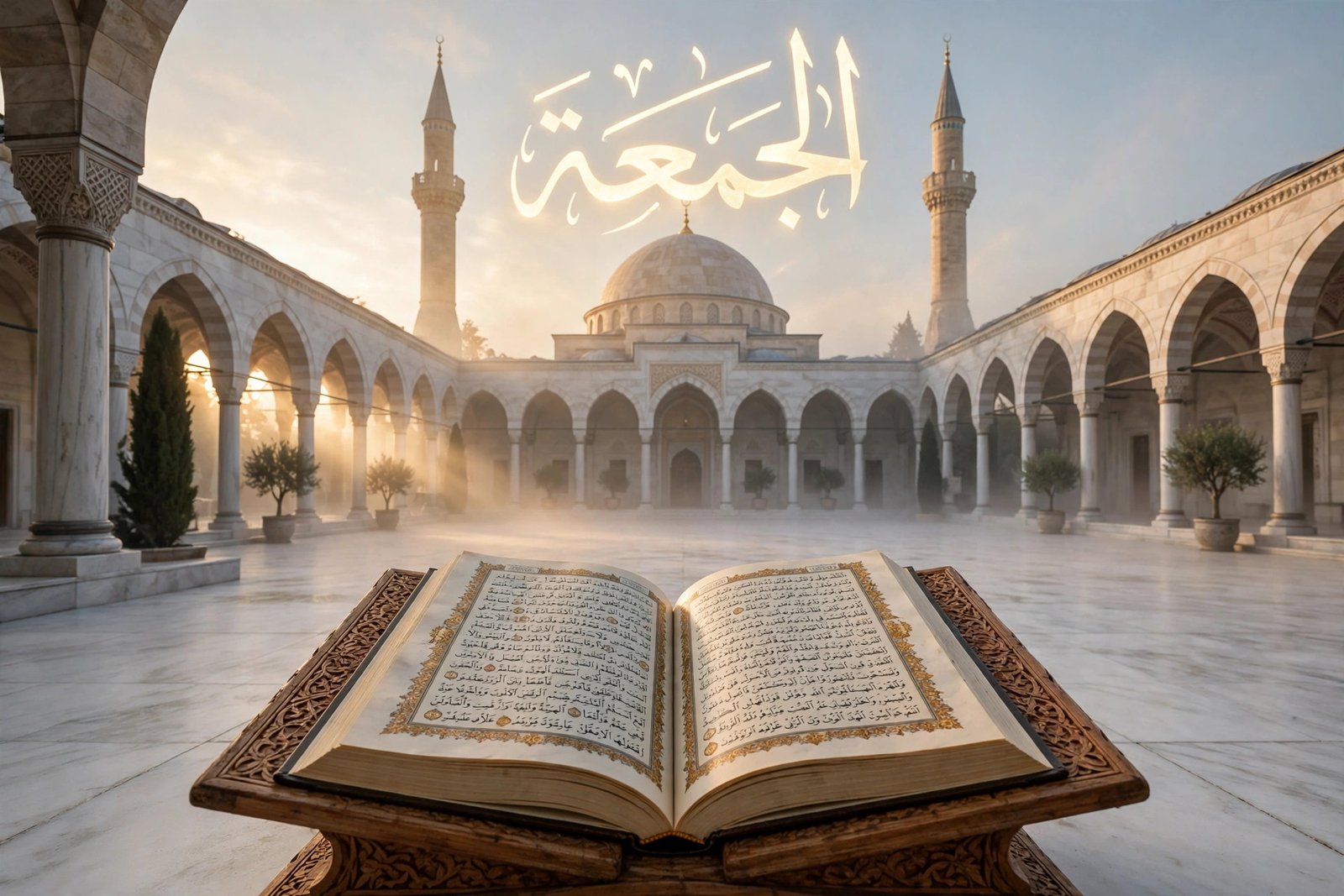
Friday is not an ordinary day in the life of a Muslim. It is the best day of the week, the day Allah chose for the weekly congregation, and the day on which the greatest events of human history took place. In this complete guide to the importance of Jumuah prayer in Islam, we will look at the command of the Quran, the virtues promised in authentic hadith, the Sunnahs that make Friday special, and the serious warning for those who neglect it — all in the light of the Quran and the Sunnah, according to the creed of Ahl-e-Sunnat. Whether you have prayed Jumuah all your life or you are only now learning its value, this guide will help you honour Friday the way it deserves to be honoured.
Jumuah prayer is the congregational prayer held every Friday at the time of Zuhr. It replaces the Zuhr prayer for those who attend it, and it is preceded by the khutbah — the sermon in which the imam reminds the believers of Allah, His Messenger, and the duties of a Muslim. Unlike the five daily prayers, which can be offered at home, Jumuah is a prayer of the community: the believers gather, listen together, and stand shoulder to shoulder in one congregation. That gathering itself is part of its wisdom, because Islam is a religion of brotherhood, and Friday is the day that brotherhood is renewed every week. The importance of the five daily prayers in Islam is the foundation of a Muslim’s day; Jumuah prayer is the crown of the Muslim’s week.
Table of Contents
- What Is Jumuah Prayer?
- The Quranic Command of Jumuah
- Why Friday Is the Best Day of the Week
- The Virtues of Jumuah Prayer
- The Hour of Acceptance on Friday
- The Warning Against Missing Jumuah
- The Sunnahs of Friday
- How Jumuah Prayer Is Performed
- Who Is Excused from Jumuah?
- Making Friday a Day of Worship
- Frequently Asked Questions
What Is Jumuah Prayer?
The word Jumuah comes from the Arabic root jama’a, which means to gather. Friday is called Yaum al-Jumuah — the Day of Gathering — because on this day the Muslims gather in the mosques for the congregational prayer and the khutbah. Allah Himself named a whole surah of the Quran after this day: Surah Al-Jumuah, the 62nd surah. In it, Allah commands the believers to leave their business and hasten to His remembrance when the call is made. No other day of the week has this honour.
Jumuah prayer consists of two rak’ahs offered in congregation after the khutbah. The khutbah is not an extra speech before the prayer; it is an essential part of Jumuah itself. The imam delivers two sermons, sitting briefly between them, and the congregation must listen in silence. Then the iqamah is called and the imam leads two rak’ahs of prayer, reciting the Quran aloud. For the one who attends, Jumuah takes the place of the Zuhr prayer of that day. This is why the Friday congregation is so precious: it is a weekly appointment with Allah that no believer should treat lightly. Just as the virtues of Fajr prayer make the dawn a time of special blessing, the virtues of Jumuah make Friday the most blessed day of the week.
The scholars of Ahl-e-Sunnat have always taught that Jumuah is obligatory (fard) upon every adult, sane, free Muslim man who is resident in a town and able to attend, provided there is no valid excuse such as illness or fear. It is one of the great symbols of Islam, and the mosques filling with worshippers on Friday is one of the most beautiful sights of the Muslim world. The Prophet Muhammad ﷺ established Jumuah in Madinah, and the Ummah has preserved it without interruption for more than fourteen centuries.
The Quranic Command of Jumuah
Allah says in the Holy Quran:
“O you who have believed, when the call is made for prayer on the day of Jumuah, then proceed to the remembrance of Allah and leave trade. That is better for you, if you only knew.” (Surah Al-Jumuah 62:9)
This verse is the foundation of the obligation of Jumuah. Allah does not merely recommend attendance; He commands the believers to hasten to His remembrance and to leave their trade. The command is so strong that buying and selling at the time of Jumuah is discouraged, because nothing — not business, not money, not the market — should come between the believer and the remembrance of Allah. The verse ends with a gentle reminder: “That is better for you, if you only knew.” The trade you leave for an hour is nothing compared to the reward Allah has prepared for the one who answers His call.
The next verse completes the picture of a balanced Friday:
“And when the prayer has been concluded, disperse within the land and seek from the bounty of Allah, and remember Allah often that you may succeed.” (Surah Al-Jumuah 62:10)
Islam does not ask the believer to abandon the world. After the prayer, the believer returns to his work and his earning — but he returns with a heart that remembers Allah. This is the balance of the Muslim life: worship first, then work, and remembrance of Allah in both. The one who seeks halal earnings in Islam knows that his rizq is from Allah, and Friday teaches him to put Allah before his business, even for a short time each week.
Allah also warns, in the same surah, against the attitude of those who rush away from the khutbah towards trade and amusement:
“But when they saw a transaction or a diversion, they rushed to it and left you standing. Say, ‘What is with Allah is better than diversion and than a transaction, and Allah is the best of providers.'” (Surah Al-Jumuah 62:11)
This verse was revealed when some people left the Prophet Muhammad ﷺ standing during the khutbah because a trade caravan had arrived in Madinah. It is a timeless warning: the noise of the market and the glitter of this world must never pull us away from the remembrance of Allah. What is with Allah — His reward, His pleasure, His Paradise — is better than every bargain of this world.
Why Friday Is the Best Day of the Week
The Prophet Muhammad ﷺ said:
“The best day on which the sun has risen is Friday; on it Adam was created, on it he was made to enter Paradise, on it he was expelled from it. And the last hour will take place on no day other than Friday.” (Sahih Muslim 854b)
Consider what this hadith tells us. Friday is the day on which our father, Prophet Adam عليه السلام, was created. It is the day he entered Paradise, and it is the day on which the Hour itself will be established. No other day carries such a history. When the sun rises on Friday, it rises on the greatest day of the week — a day that Allah chose above all other days. The believer who understands this does not treat Friday like any other day. He prepares for it, he looks forward to it, and he fills it with worship.
This is also why Friday is the weekly Eid of the Muslims. The Prophet Muhammad ﷺ called Friday a day of Eid, and the scholars have explained that just as the two annual Eids are days of joy and gathering, Friday is a smaller Eid that returns every week. It is a day of celebration in worship: a day to bathe, to wear one’s best clothes, to apply perfume, to go to the mosque early, and to gather with the believers. The weekly rhythm of the Muslim is built around Friday, and the one who honours it finds his whole week blessed.
Friday is also the day on which the Muslims are reminded of the Hereafter more than any other day. The khutbah speaks of death, of the grave, of the Day of Judgement, and of Paradise and Hell. In this way Friday keeps the heart alive. A heart that hears the reminder every week does not easily forget its purpose. This is one of the great wisdoms of Jumuah: it is a weekly revival of faith. The believer who attends Jumuah regularly finds that his iman is refreshed again and again, just as the one who keeps the virtues of dhikr in Islam alive in his heart finds his faith renewed by the remembrance of Allah.
The Virtues of Jumuah Prayer
The rewards promised for Jumuah prayer are among the greatest promised for any single act of worship. The Prophet Muhammad ﷺ said:
“The five (daily) prayers, and the Friday prayer to the next Friday prayer, and the Ramadan to the next Ramadan, are expiation of the sins committed between them, so long as major sins are avoided.” (Sahih Muslim 233)
Every Friday, the sins of the whole week are wiped away for the one who prays Jumuah and avoids major sins. Think of what this means: a believer can walk into the mosque on Friday carrying the small sins and mistakes of seven days, and walk out with a clean record. This is the mercy of Allah, and it is renewed every single week. The one who guards his Tahajjud prayer and his daily prayers knows the sweetness of standing before Allah in the night; Jumuah gives the whole Ummah a weekly cleansing in the day.
The reward of Jumuah begins even before the prayer, with the reward of going early. The Prophet Muhammad ﷺ said:
“Any person who takes a bath on Friday like the bath of Janaba and then goes for the prayer in the first hour, it is as if he had sacrificed a camel (in Allah’s cause); and whoever goes in the second hour it is as if he had sacrificed a cow; and whoever goes in the third hour, then it is as if he had sacrificed a horned ram; and if one goes in the fourth hour, then it is as if he had sacrificed a hen; and whoever goes in the fifth hour then it is as if he had offered an egg. When the Imam comes out (i.e. starts delivering the Khutba), the angels present themselves to listen to the Khutba.” (Sahih al-Bukhari 881)
The angels themselves stand at the doors of the mosque on Friday, writing down the names of those who come early. The first to arrive is recorded as one who sacrificed a camel; the next as one who sacrificed a cow; then a ram, then a hen, then an egg. But when the imam comes out to deliver the khutbah, the angels close their books and sit down to listen. This hadith teaches us to compete in goodness: the early bird on Friday carries a reward that the latecomer cannot catch. The believer who wants the greatest reward should aim to be among the first in the mosque.
There is a further promise for the one who prepares properly and listens with full attention. The Prophet Muhammad ﷺ said:
“Whoever takes a bath on Friday, purifies himself as much as he can, then uses his (hair) oil or perfumes himself with the scent of his house, then proceeds (for the Jumuah prayer) and does not separate two persons sitting together (in the mosque), then prays as much as (Allah has) written for him and then remains silent while the Imam is delivering the Khutba, his sins in-between the present and the last Friday would be forgiven.” (Sahih al-Bukhari 883)
Notice the details in this hadith: the bath, the purification, the perfume, the respect for those already seated, the voluntary prayer before the khutbah, and then complete silence during the sermon. Each of these is a small act of adab, and together they earn the forgiveness of a whole week. The believer should also remember the warning of the Prophet Muhammad ﷺ about talking during the khutbah: “If you say to your companion, ‘Be quiet,’ while the imam is delivering the khutbah, you have spoken idly.” (Sahih al-Bukhari 934) Even telling another person to be quiet is a distraction. The khutbah deserves the same stillness and attention as the prayer itself.
The Hour of Acceptance on Friday
Among the greatest gifts of Friday is a special hour in which duas are accepted. The Prophet Muhammad ﷺ said:
“There is an hour (opportune time) on Friday and if a Muslim gets it while praying and asks something from Allah, then Allah will definitely meet his demand.” (Sahih al-Bukhari 935)
The Prophet Muhammad ﷺ gestured with his hand to show how short this hour is — a brief window hidden within the day, in which no Muslim asks Allah for good except that He grants it. The scholars differed about exactly when this hour falls. The two strongest views are that it is the time between the imam sitting on the pulpit and the end of the prayer, and that it is the last hour of the day, after Asr prayer until sunset. The Prophet Muhammad ﷺ said, according to the narration of Sayyiduna Jabir رضی اللہ عنہ: “Friday is twelve hours. There is no Muslim who asks anything of Allah, but Allah will grant it to him, so seek it in the last hour after Asr.” (Sunan Abi Dawud 1048)
The wise believer does not try to guess the hour and ignore the rest of the day. He fills the whole of Friday with dua, especially after Asr, when the day draws towards its end and the heart turns to Allah with hope. He asks for himself, for his parents, for his family, for the Ummah, and for the forgiveness of his sins. The one who has learned the power of dua in Islam knows that dua is the weapon of the believer, and Friday is the day on which that weapon is sharpest. The etiquette of making dua — beginning with praise of Allah, sending durood upon the Prophet Muhammad ﷺ, and asking with humility and certainty — is never more rewarding than on this blessed day. You can find beautiful duas for every occasion in our collection of duas, and make them part of your Friday routine.
The Warning Against Missing Jumuah
Just as the rewards of Jumuah are great, the warning against neglecting it is severe. The Prophet Muhammad ﷺ said from his pulpit:
“People should definitely stop neglecting Jumuah, or else Allah will most certainly seal their hearts and they will most certainly be among the negligent.” (Sahih Muslim 865)
And he ﷺ said:
“He who leaves the Friday prayer (continuously) for three Fridays on account of slackness, Allah will print a stamp on his heart.” (Sunan Abi Dawud 1052, graded Hasan Sahih by Shaykh al-Albani)
A sealed heart is a heart upon which the light of guidance no longer falls. The one who misses Jumuah out of laziness, week after week, drifts further from the mosque, further from the reminder, and further from Allah — until the heart becomes hard and heedless. This is why the scholars of Ahl-e-Sunnat have always treated the deliberate abandonment of Jumuah as a major sin. One missed Jumuah without a valid excuse is a serious matter; three in a row is a danger to the heart itself.
The believer should therefore examine himself honestly. If work, business, laziness, or the love of sleep has kept him from Jumuah, he should repent at once and return to the mosque. The door of tawbah is always open, and Allah is the Most Merciful. The one who has read about tawbah and repentance in Islam knows that no sin is too great for the mercy of Allah when the servant turns back with a sincere heart. But repentance must be followed by action: the next Friday, he must be in the mosque.
The Sunnahs of Friday
Friday has its own Sunnahs — the beautiful practices of the Prophet Muhammad ﷺ that turn an ordinary Friday into a day full of reward. The believer who follows them earns the reward of the Sunnah on top of the reward of the prayer itself.
1. Taking a Bath (Ghusl)
The Prophet Muhammad ﷺ said: “Anyone of you going out for the Jumuah prayer should take a bath.” (Sahih al-Bukhari 882) The bath of Friday is a sign of the honour of the day: the believer washes himself and comes to Allah’s house clean, as one would prepare to meet a king. It is also a mercy to the congregation, for the mosque is full and the believers sit close together.
2. Wearing Clean and Beautiful Clothes
Friday is a day of Eid, and the believer should wear his best and cleanest clothes. The Prophet Muhammad ﷺ had a special garment that he wore for Friday and for Eid. Clean clothes, combed hair, and a neat appearance are part of the adab of the mosque, and they show respect for the house of Allah and for the fellow believers.
3. Applying Perfume and Using the Miswak
The Prophet Muhammad ﷺ encouraged the use of perfume on Friday, as in the hadith of Sahih al-Bukhari 883 quoted above. He also encouraged cleaning the teeth with the miswak. The believer should come to the mosque smelling pleasant, not with the smell of food or sweat, so that no one in the congregation is harmed. This is part of kindness to neighbours in Islam in its widest sense: kindness to the brothers and sisters sitting beside you in prayer.
4. Going Early to the Mosque
As we have seen in the hadith of Sahih al-Bukhari 881, the earlier one arrives, the greater the reward. The believer should aim to reach the mosque before the khutbah begins, pray the voluntary prayers, recite the Quran, and sit in quiet remembrance while waiting for the imam. Arriving late, after the khutbah has begun, means missing the angels’ record and part of the reward.
5. Reciting Surah Al-Kahf
It is a beloved Sunnah to recite Surah Al-Kahf on Friday. The narration states that whoever recites Surah Al-Kahf on Friday, a light will shine for him between the two Fridays (graded Sahih by Shaykh al-Albani, Sahih al-Jami’ 6470). This light is the light of guidance and protection. The full virtues of Surah Al-Kahf on Friday are explained in our detailed guide, and Friday is the best day to make this recitation a weekly habit.
6. Sending Abundant Durood upon the Prophet ﷺ
The Prophet Muhammad ﷺ said: “Among the best of your days is Friday. On that day Adam was created, on that day he died, on that day the Trumpet will be blown and on that day all creatures will swoon. So send blessings upon me abundantly on that day, for your blessings will be presented to me.” (Sunan Abi Dawud 1047) Friday is therefore the day of durood above all other days. The believer should fill it with salawat — on the way to the mosque, after the prayer, and in the evening. The virtues of Durood Sharif are countless, and Friday multiplies them.
7. Walking to the Mosque
Walking to the mosque for Jumuah, when one is able, carries its own reward: every step is a good deed, a sin forgiven, and a rank raised. The believer should walk with dignity and calm, without rushing, and enter the mosque with the right foot, reciting the dua for entering the mosque. He should not step over the necks of those already seated, nor separate two people sitting together, as the hadith of Sahih al-Bukhari 883 teaches.
How Jumuah Prayer Is Performed
Jumuah prayer is performed in the mosque in congregation. The imam first delivers the khutbah, which consists of two sermons with a short sitting between them. The khutbah begins with praise of Allah, the testimony of faith, and durood upon the Prophet Muhammad ﷺ, followed by verses of the Quran and a reminder about the duties of a Muslim. The congregation listens in complete silence. After the khutbah, the iqamah is called and the imam leads two rak’ahs of prayer, reciting aloud — usually Surah Al-A’la in the first rak’ah and Surah Al-Ghashiyah in the second, as was the practice of the Prophet Muhammad ﷺ.
Before the khutbah, the believer may pray voluntary prayers — two or four rak’ahs of greeting the mosque and other nafl prayers. After Jumuah, the Prophet Muhammad ﷺ instructed: “Whoever among you prays after Jumuah, let him pray four (rak’ahs).” (Sahih Muslim 881) The believer may pray these four rak’ahs in the mosque, or two rak’ahs at home, as the Prophet Muhammad ﷺ himself did both. The one who performs wudu step by step correctly before coming to the mosque earns the reward of the prayer in a state of purity, and the one who guards his daily prayers finds Jumuah the crown of his week.
It is important to remember that Jumuah is a congregational prayer: it cannot be prayed alone at home. If a person misses Jumuah for a valid reason, he prays Zuhr — four rak’ahs — instead. The khutbah is a condition of Jumuah, and the one who arrives after the prayer has begun should join the congregation in whatever rak’ah he finds; if he catches one rak’ah with the imam, he has caught the Jumuah, and he completes the second rak’ah after the imam’s salam.
Who Is Excused from Jumuah?
Islam is a religion of ease, not hardship, and Jumuah is obligatory only upon those who are able to attend. Women are not obliged to attend Jumuah; their prayer at home is complete and rewarding, and if a woman does attend, her Jumuah is valid. Children are not obliged, though parents should bring them when they are old enough to sit quietly, so that they grow up loving the mosque — a part of the Islamic upbringing of children that bears fruit for a lifetime.
The sick, the traveller, and the one who fears for his safety or his property are excused, and they pray Zuhr instead. The one who is genuinely unable to reach the mosque because of illness or a valid excuse is not sinful; Allah does not burden a soul beyond what it can bear. But the believer should be honest with himself: tiredness, a busy shop, or a long sleep are not valid excuses. The one who can attend and does not is in danger, as the warning hadiths show. The elderly and the weak should attend if they can do so without hardship; the reward is theirs, and the congregation is strengthened by their presence.
Making Friday a Day of Worship
Friday is not only about the prayer; it is a whole day of worship. The believer should fill it with the remembrance of Allah: reciting the Quran, sending durood, making dua, giving sadaqah, and visiting the sick. The one who gives sadaqah and charity in Islam on Friday finds its reward multiplied, for the charity given on the best day carries the blessing of the day itself. He should also remember his parents: visiting them, serving them, and making dua for them, for the rights of parents in Islam are greatest of all after the rights of Allah. To learn the Quran and the teachings of Islam in depth, explore the Quran courses offered by Jamia Saeedia Darul Quran.
The believer should also use Friday to repair his relationships. The week may have brought arguments, misunderstandings, or coldness between brothers; Friday is the day to forgive and to seek forgiveness. The Prophet Muhammad ﷺ taught that the deeds of the believers are presented to Allah on Mondays and Thursdays, and that Allah forgives everyone except those who are in a state of enmity with their brother. Friday is the day to end the enmity, to greet the brother with salam, and to rebuild the bonds of brotherhood in Islam.
As the sun sets on Friday, the believer should look back on his week with gratitude. He attended the congregation, he heard the reminder, he prayed with his brothers, and he asked Allah for his needs. This is the weekly rhythm Allah has given us: six days of work, and one day whose heart is the remembrance of Allah. The one who guards this rhythm will find that his faith stays fresh, his heart stays soft, and his connection with Allah stays strong.
Frequently Asked Questions
Is Jumuah prayer obligatory?
Yes. Jumuah is obligatory (fard) for every adult, sane, free Muslim man who is resident and able to attend, by the command of the Quran (Surah Al-Jumuah 62:9) and the practice of the Prophet Muhammad ﷺ. Women, children, travellers, and the sick are excused and pray Zuhr instead.
What happens if I miss Jumuah prayer?
If you miss Jumuah for a valid reason, pray four rak’ahs of Zuhr instead. If you miss it without a valid excuse, you have committed a serious sin; you should repent immediately and make sure to attend the next Friday. The Prophet Muhammad ﷺ warned that whoever misses three Fridays out of negligence will have a seal placed on his heart (Sunan Abi Dawud 1052).
Can I pray Jumuah at home?
No. Jumuah is a congregational prayer that must be prayed in the mosque with the imam and the congregation. If you cannot attend the mosque, you pray Zuhr (four rak’ahs) at home instead.
What is the best time to make dua on Friday?
There is a special hour on Friday in which duas are accepted (Sahih al-Bukhari 935). The scholars say it is most likely the last hour of the day, after Asr until sunset (Sunan Abi Dawud 1048), or the time between the imam sitting for the khutbah and the end of the prayer. The wise believer makes dua throughout Friday, especially after Asr.
Should I recite Surah Al-Kahf on Friday?
Yes, it is a beloved Sunnah. Whoever recites Surah Al-Kahf on Friday, a light will shine for him between the two Fridays (graded Sahih by Shaykh al-Albani, Sahih al-Jami’ 6470). Read our detailed guide on the virtues of Surah Al-Kahf on Friday to learn more.
Related Articles
May Allah grant us the honour of attending Jumuah every Friday, listening to the khutbah with attentive hearts, and returning from the mosque with our sins forgiven. Ameen. Jamia Saeedia Darul Quran — جامعہ سعیدیہ دارالقرآن — is serving the Ummah in the light of the Quran and the Sunnah; benefit from our courses and articles, and give your children the gift of Quranic education.
اردو میں مکمل مضمون
جمعہ مسلمان کی زندگی میں کوئی عام دن نہیں ہے۔ یہ ہفتے کا سب سے بہتر دن ہے، وہ دن جسے اللہ تعالیٰ نے ہفتہ وار اجتماع کے لیے منتخب فرمایا، اور وہ دن جس میں انسانی تاریخ کے سب سے بڑے واقعات رونما ہوئے۔ اس مکمل مضمون میں ہم جمعہ کی نماز کی اہمیت اسلام میں قرآن کے حکم، مستند احادیث میں بیان شدہ فضائل، جمعہ کی سنتوں، اور اسے چھوڑنے والوں کے لیے سخت وعید کے حوالے سے بیان کریں گے — قرآن و سنت کی روشنی میں، عقیدہ اہل سنت کے مطابق۔ چاہے آپ ساری زندگی جمعہ پڑھتے آئے ہوں یا ابھی اس کی قدر سمجھ رہے ہوں، یہ مضمون آپ کو جمعہ کی عزت کرنے میں مدد دے گا۔
جمعہ کی نماز وہ جماعتی نماز ہے جو ہر جمعہ کو ظہر کے وقت ادا کی جاتی ہے۔ یہ نماز ظہر کی جگہ لے لیتی ہے، اور اس سے پہلے خطبہ ہوتا ہے جس میں امام مسلمانوں کو اللہ، اس کے رسول، اور مسلمان کے فرائض کی یاد دہانی کراتا ہے۔ پانچ وقت کی نمازوں کے برعکس، جو گھر میں بھی پڑھی جا سکتی ہیں، جمعہ جماعت کی نماز ہے: مومنین جمع ہوتے ہیں، ایک ساتھ سنتے ہیں، اور ایک صف میں کندھے سے کندھا ملا کر کھڑے ہوتے ہیں۔ یہ اجتماع خود اس کی حکمت کا حصہ ہے، کیونکہ اسلام اخوت کا دین ہے، اور جمعہ وہ دن ہے جس میں یہ اخوت ہر ہفتے تازہ ہوتی ہے۔ جس طرح پانچ وقت کی نماز کی اہمیت اسلام میں مسلمان کے دن کی بنیاد ہے، اسی طرح جمعہ کی نماز مسلمان کے ہفتے کا تاج ہے۔
فہرست
- جمعہ کی نماز کیا ہے؟
- جمعہ کا قرآنی حکم
- جمعہ ہفتے کا بہترین دن کیوں ہے؟
- جمعہ کی نماز کی فضیلتیں
- جمعہ کے دن قبولیت کی گھڑی
- جمعہ چھوڑنے پر وعید
- جمعہ کی سنتیں
- جمعہ کی نماز کا طریقہ
- جمعہ سے کون معذور ہے؟
- جمعہ کو عبادت کا دن بنائیں
- اکثر پوچھے جانے والے سوالات
جمعہ کی نماز کیا ہے؟
لفظ جمعہ عربی لفظ جمع سے نکلا ہے جس کا مطلب ہے جمع ہونا۔ جمعہ کو یوم الجمعہ — جمع ہونے کا دن — کہا جاتا ہے، کیونکہ اس دن مسلمان مسجدوں میں جماعتی نماز اور خطبے کے لیے جمع ہوتے ہیں۔ اللہ تعالیٰ نے خود اس دن کے نام پر قرآن کی ایک پوری سورت نازل فرمائی ہے: سورۃ الجمعہ، قرآن کی 62ویں سورت۔ اس میں اللہ تعالیٰ مومنین کو حکم دیتا ہے کہ جب نماز کے لیے اذان دی جائے تو وہ تجارت چھوڑ کر اللہ کے ذکر کی طرف دوڑیں۔ ہفتے کے کسی اور دن کو یہ عزت حاصل نہیں ہے۔
جمعہ کی نماز خطبے کے بعد جماعت کے ساتھ دو رکعت ہوتی ہے۔ خطبہ نماز سے پہلے کی کوئی اضافی تقریر نہیں ہے؛ یہ خود جمعہ کا لازمی حصہ ہے۔ امام دو خطبے دیتا ہے، ان کے درمیان تھوڑی دیر بیٹھتا ہے، اور جماعت خاموشی سے سنتی ہے۔ پھر اقامت کہی جاتی ہے اور امام دو رکعت نماز پڑھاتا ہے، جس میں قرآن بلند آواز سے پڑھا جاتا ہے۔ جو شخص جمعہ میں حاضر ہوتا ہے، اس دن کی ظہر کی نماز اس سے ساقط ہو جاتی ہے۔ یہی وجہ ہے کہ جمعہ کی جماعت اتنی قیمتی ہے: یہ اللہ سے ہفتہ وار ملاقات ہے جسے کوئی مومن ہلکا نہیں سمجھ سکتا۔ جس طرح فجر کی نماز کی فضیلت فجر کو برکت کا وقت بناتی ہے، اسی طرح جمعہ کی فضیلتیں جمعہ کو ہفتے کا سب سے مبارک دن بناتی ہیں۔
علمائے اہل سنت نے ہمیشہ یہ تعلیم دی ہے کہ جمعہ ہر بالغ، عاقل، آزاد، مقیم مسلمان مرد پر فرض ہے جو حاضر ہو سکتا ہے، بشرطیکہ کوئی معقول عذر نہ ہو جیسے بیماری یا خوف۔ یہ اسلام کے عظیم شعائر میں سے ہے، اور جمعہ کے دن مسجدوں کا نمازیوں سے بھر جانا مسلم دنیا کے خوبصورت ترین مناظر میں سے ایک ہے۔ نبی اکرم ﷺ نے مدینہ منورہ میں جمعہ قائم فرمایا، اور امت نے اسے چودہ سو سال سے زائد عرصے سے بغیر کسی انقطاع کے محفوظ رکھا ہے۔
جمعہ کا قرآنی حکم
اللہ تعالیٰ قرآن مجید میں فرماتا ہے:
“اے ایمان والو! جب جمعہ کے دن نماز کے لیے اذان دی جائے تو اللہ کے ذکر کی طرف دوڑو اور تجارت چھوڑ دو۔ یہ تمہارے لیے بہتر ہے اگر تم جانتے ہو۔” (سورۃ الجمعہ 62:9)
یہ آیت جمعہ کے فرض ہونے کی بنیاد ہے۔ اللہ تعالیٰ صرف حاضری کی سفارش نہیں کرتا؛ وہ مومنین کو حکم دیتا ہے کہ وہ اس کے ذکر کی طرف دوڑیں اور تجارت چھوڑ دیں۔ یہ حکم اتنا مضبوط ہے کہ جمعہ کے وقت خرید و فروخت ناپسندیدہ ہے، کیونکہ کوئی چیز — نہ کاروبار، نہ پیسہ، نہ بازار — مومن اور اللہ کے ذکر کے درمیان نہیں آنی چاہیے۔ آیت ایک نرم یاد دہانی کے ساتھ ختم ہوتی ہے: “یہ تمہارے لیے بہتر ہے اگر تم جانتے ہو۔” وہ تجارت جو آپ ایک گھنٹے کے لیے چھوڑتے ہیں، اس اجر کے مقابلے میں کچھ بھی نہیں جو اللہ نے اپنے بلانے کا جواب دینے والے کے لیے تیار کیا ہے۔
اگلی آیت جمعہ کے متوازن دن کی مکمل تصویر پیش کرتی ہے:
“پھر جب نماز پوری ہو جائے تو زمین میں پھیل جاؤ اور اللہ کا فضل تلاش کرو، اور اللہ کو بہت یاد کرو تاکہ تم کامیاب ہو جاؤ۔” (سورۃ الجمعہ 62:10)
اسلام مومن سے دنیا چھوڑنے کا مطالبہ نہیں کرتا۔ نماز کے بعد مومن اپنے کام اور اپنی کمائی کی طرف لوٹتا ہے — لیکن وہ ایسے دل کے ساتھ لوٹتا ہے جو اللہ کو یاد کرتا ہے۔ یہی مسلمان کی زندگی کا توازن ہے: پہلے عبادت، پھر کام، اور دونوں میں اللہ کا ذکر۔ جو شخص اسلام میں حلال روزی کمانا جانتا ہے، وہ جانتا ہے کہ اس کا رزق اللہ کی طرف سے ہے، اور جمعہ اسے سکھاتا ہے کہ ہر ہفتے تھوڑی دیر کے لیے بھی اللہ کو اپنے کاروبار پر مقدم رکھے۔
اسی سورت میں اللہ تعالیٰ ان لوگوں کے رویے سے بھی خبردار کرتا ہے جو خطبے سے بھاگ کر تجارت اور کھیل تماشے کی طرف دوڑتے ہیں:
“اور جب انہوں نے کوئی تجارت یا کھیل دیکھا تو اس کی طرف دوڑ پڑے اور آپ کو کھڑا چھوڑ دیا۔ کہہ دیجیے: جو کچھ اللہ کے پاس ہے وہ کھیل اور تجارت سے بہتر ہے، اور اللہ سب سے بہتر رزق دینے والا ہے۔” (سورۃ الجمعہ 62:11)
یہ آیت اس وقت نازل ہوئی جب کچھ لوگ خطبے کے دوران نبی اکرم ﷺ کو کھڑا چھوڑ کر چلے گئے تھے کیونکہ مدینہ میں ایک تجارتی قافلہ آ گیا تھا۔ یہ ایک لازوال انتباہ ہے: بازار کا شور اور دنیا کی چمک کبھی ہمیں اللہ کے ذکر سے دور نہیں کرنی چاہیے۔ جو کچھ اللہ کے پاس ہے — اس کا اجر، اس کی رضا، اس کی جنت — وہ دنیا کے ہر سودے سے بہتر ہے۔
جمعہ ہفتے کا بہترین دن کیوں ہے؟
نبی اکرم ﷺ نے فرمایا:
“سورج جن دنوں پر طلوع ہوتا ہے ان میں سب سے بہتر دن جمعہ کا دن ہے؛ اسی دن حضرت آدم علیہ السلام پیدا کیے گئے، اسی دن انہیں جنت میں داخل کیا گیا، اسی دن انہیں جنت سے نکالا گیا۔ اور قیامت بھی جمعہ کے دن کے سوا کسی اور دن قائم نہیں ہو گی۔” (صحیح مسلم 854b)
غور کیجیے کہ یہ حدیث ہمیں کیا بتاتی ہے۔ جمعہ وہ دن ہے جس دن ہمارے والد، حضرت آدم علیہ السلام، پیدا کیے گئے۔ یہ وہ دن ہے جس دن وہ جنت میں داخل ہوئے، اور یہی وہ دن ہے جس دن قیامت قائم ہو گی۔ کسی اور دن کو ایسی تاریخ حاصل نہیں ہے۔ جب جمعہ کے دن سورج طلوع ہوتا ہے تو وہ ہفتے کے سب سے بڑے دن پر طلوع ہوتا ہے — وہ دن جسے اللہ نے تمام دنوں پر منتخب فرمایا۔ جو مومن یہ سمجھتا ہے وہ جمعہ کو کسی عام دن کی طرح نہیں گزارتا۔ وہ اس کی تیاری کرتا ہے، اس کا انتظار کرتا ہے، اور اسے عبادت سے بھر دیتا ہے۔
یہی وجہ ہے کہ جمعہ مسلمانوں کی ہفتہ وار عید ہے۔ نبی اکرم ﷺ نے جمعہ کو عید کا دن قرار دیا، اور علماء نے وضاحت کی ہے کہ جس طرح سال کی دو عیدیں خوشی اور اجتماع کے دن ہیں، اسی طرح جمعہ ایک چھوٹی عید ہے جو ہر ہفتے لوٹتی ہے۔ یہ عبادت میں خوشی کا دن ہے: غسل کرنے، بہترین کپڑے پہننے، خوشبو لگانے، جلدی مسجد جانے، اور مومنین کے ساتھ جمع ہونے کا دن۔ مسلمان کا ہفتہ وار معمول جمعہ کے گرد بنا ہوا ہے، اور جو اس کی عزت کرتا ہے اس کا پورا ہفتہ بابرکت ہو جاتا ہے۔
جمعہ وہ دن بھی ہے جس میں مسلمانوں کو آخرت کی یاد کسی اور دن سے زیادہ دلائی جاتی ہے۔ خطبے میں موت، قبر، قیامت، جنت اور دوزخ کا ذکر ہوتا ہے۔ اس طرح جمعہ دل کو زندہ رکھتا ہے۔ جو دل ہر ہفتے نصیحت سنتا ہے وہ اپنے مقصد کو آسانی سے نہیں بھولتا۔ یہ جمعہ کی عظیم حکمتوں میں سے ایک ہے: یہ ایمان کی ہفتہ وار تجدید ہے۔ جو مومن باقاعدگی سے جمعہ میں حاضر ہوتا ہے اس کا ایمان بار بار تازہ ہوتا ہے، جس طرح وہ شخص جو ذکر الٰہی کی فضیلت کو اپنے دل میں زندہ رکھتا ہے، اس کا ایمان اللہ کے ذکر سے تازہ ہوتا ہے۔
جمعہ کی نماز کی فضیلتیں
جمعہ کی نماز کے لیے وعدہ کیے گئے اجر عبادت کے کسی بھی ایک عمل کے لیے وعدہ کیے گئے عظیم ترین اجر میں سے ہیں۔ نبی اکرم ﷺ نے فرمایا:
“پانچ (روزانہ) نمازیں، اور ایک جمعہ سے دوسرے جمعہ تک، اور ایک رمضان سے دوسرے رمضان تک، ان کے درمیان ہونے والے گناہوں کا کفارہ ہیں، جب تک کہ کبیرہ گناہوں سے بچا جائے۔” (صحیح مسلم 233)
ہر جمعہ کو پورے ہفتے کے گناہ اس شخص کے لیے مٹا دیے جاتے ہیں جو جمعہ پڑھتا ہے اور کبیرہ گناہوں سے بچتا ہے۔ سوچیے اس کا کیا مطلب ہے: ایک مومن سات دن کی چھوٹی غلطیوں اور گناہوں کو لے کر جمعہ کے دن مسجد میں داخل ہو سکتا ہے، اور صاف ریکارڈ کے ساتھ باہر نکل سکتا ہے۔ یہ اللہ کی رحمت ہے، اور یہ ہر ہفتے تازہ ہوتی ہے۔ جو شخص اپنی تہجد کی نماز اور اپنی روزانہ نمازوں کی حفاظت کرتا ہے وہ رات کو اللہ کے سامنے کھڑے ہونے کی مٹھاس جانتا ہے؛ جمعہ پوری امت کو دن میں ہفتہ وار پاکیزگی عطا کرتا ہے۔
جمعہ کا اجر نماز سے پہلے ہی شروع ہو جاتا ہے، جلدی جانے کے اجر سے۔ نبی اکرم ﷺ نے فرمایا:
“جو شخص جمعہ کے دن جنابت کے غسل کی طرح غسل کرے اور پہلی گھڑی میں نماز کے لیے جائے، تو گویا اس نے اللہ کی راہ میں اونٹ قربان کیا؛ اور جو دوسری گھڑی میں جائے گویا اس نے گائے قربان کی؛ اور جو تیسری گھڑی میں جائے گویا اس نے سینگوں والا مینڈھا قربان کیا؛ اور جو چوتھی گھڑی میں جائے گویا اس نے مرغی قربان کی؛ اور جو پانچویں گھڑی میں جائے گویا اس نے انڈا پیش کیا۔ جب امام باہر آتا ہے (یعنی خطبہ شروع کرتا ہے) تو فرشتے خطبہ سننے کے لیے حاضر ہو جاتے ہیں۔” (صحیح البخاری 881)
فرشتے خود جمعہ کے دن مسجد کے دروازوں پر کھڑے ہوتے ہیں، اور جلدی آنے والوں کے نام لکھتے ہیں۔ سب سے پہلے آنے والے کو اونٹ قربان کرنے والے کے برابر لکھا جاتا ہے؛ اگلے کو گائے قربان کرنے والے کے برابر؛ پھر مینڈھا، پھر مرغی، پھر انڈا۔ لیکن جب امام خطبہ دینے کے لیے باہر آتا ہے تو فرشتے اپنی کتابیں بند کر کے خطبہ سننے بیٹھ جاتے ہیں۔ یہ حدیث ہمیں نیکی میں مقابلہ کرنے کی تعلیم دیتی ہے: جمعہ کے دن جلدی آنے والا ایسا اجر لے جاتا ہے جسے دیر سے آنے والا نہیں پا سکتا۔ جو مومن سب سے بڑا اجر چاہتا ہے اسے مسجد میں سب سے پہلے پہنچنے کی کوشش کرنی چاہیے۔
اس شخص کے لیے مزید وعدہ ہے جو صحیح طریقے سے تیاری کرے اور پوری توجہ سے سنے۔ نبی اکرم ﷺ نے فرمایا:
“جو شخص جمعہ کے دن غسل کرے، جتنا ہو سکے اپنے آپ کو پاک کرے، پھر اپنے بالوں میں تیل لگائے یا اپنے گھر کی خوشبو لگائے، پھر (جمعہ کی نماز کے لیے) نکلے اور مسجد میں بیٹھے ہوئے دو آدمیوں کے درمیان نہ گھسے، پھر جتنی نماز اللہ نے اس کے لیے لکھی ہے پڑھے اور پھر امام کے خطبہ دیتے وقت خاموش رہے، تو اس کے اس جمعہ اور پچھلے جمعہ کے درمیان کے گناہ معاف کر دیے جائیں گے۔” (صحیح البخاری 883)
اس حدیث کی تفصیلات پر غور کیجیے: غسل، پاکیزگی، خوشبو، پہلے سے بیٹھے لوگوں کا احترام، خطبے سے پہلے نفلی نماز، اور پھر خطبے کے دوران مکمل خاموشی۔ ان میں سے ہر ایک ادب کا چھوٹا سا عمل ہے، اور مل کر یہ پورے ہفتے کی معافی کا باعث بنتے ہیں۔ مومن کو نبی اکرم ﷺ کی اس تنبیہ کو بھی یاد رکھنا چاہیے کہ خطبے کے دوران بات نہ کرے: “اگر تم نے امام کے خطبہ دیتے وقت اپنے ساتھی سے کہا ‘خاموش رہو’ تو تم نے لغو بات کی۔” (صحیح البخاری 934) دوسرے شخص کو خاموش رہنے کے لیے کہنا بھی توجہ ہٹانے والی بات ہے۔ خطبہ اسی طرح سکون اور توجہ کا مستحق ہے جس طرح خود نماز ہے۔
جمعہ کے دن قبولیت کی گھڑی
جمعہ کے سب سے بڑے تحفوں میں سے ایک وہ خاص گھڑی ہے جس میں دعائیں قبول ہوتی ہیں۔ نبی اکرم ﷺ نے فرمایا:
“جمعہ کے دن ایک گھڑی (مناسب وقت) ہے، اور اگر کوئی مسلمان اسے نماز پڑھتے ہوئے پا لے اور اللہ سے کچھ مانگے تو اللہ ضرور اس کی حاجت پوری فرمائے گا۔” (صحیح البخاری 935)
نبی اکرم ﷺ نے اپنے ہاتھ سے اشارہ کر کے بتایا کہ یہ گھڑی کتنی مختصر ہے — دن کے اندر چھپا ہوا ایک مختصر سا وقت، جس میں کوئی مسلمان اللہ سے بھلائی نہیں مانگتا مگر وہ اسے عطا کر دیتا ہے۔ علماء نے اس گھڑی کے وقت کے بارے میں اختلاف کیا ہے۔ دو مضبوط آراء یہ ہیں کہ یہ وہ وقت ہے جب امام منبر پر بیٹھتا ہے اور نماز ختم ہوتی ہے، اور یہ کہ یہ دن کی آخری گھڑی ہے، عصر کی نماز کے بعد غروب آفتاب تک۔ نبی اکرم ﷺ نے حضرت جابر رضی اللہ عنہ کی روایت کے مطابق فرمایا: “جمعہ بارہ گھڑیوں کا دن ہے۔ کوئی مسلمان اللہ سے کچھ نہیں مانگتا مگر اللہ اسے عطا کرتا ہے، لہٰذا اسے عصر کے بعد آخری گھڑی میں تلاش کرو۔” (سنن ابی داؤد 1048)
عقل مند مومن گھڑی کا اندازہ لگا کر باقی دن کو نظر انداز نہیں کرتا۔ وہ پورا جمعہ دعا سے بھر دیتا ہے، خاص طور پر عصر کے بعد، جب دن اپنے اختتام کی طرف بڑھتا ہے اور دل امید کے ساتھ اللہ کی طرف متوجہ ہوتا ہے۔ وہ اپنے لیے، اپنے والدین کے لیے، اپنے خاندان کے لیے، امت کے لیے، اور اپنے گناہوں کی معافی کے لیے دعا کرتا ہے۔ جس نے اسلام میں دعا کی طاقت کو سیکھا ہے وہ جانتا ہے کہ دعا مومن کا ہتھیار ہے، اور جمعہ وہ دن ہے جس دن یہ ہتھیار سب سے زیادہ تیز ہوتا ہے۔ دعا مانگنے کے آداب — اللہ کی حمد سے شروع کرنا، نبی اکرم ﷺ پر درود بھیجنا، اور عاجزی اور یقین کے ساتھ مانگنا — جمعہ کے مبارک دن سے زیادہ کسی دن اجر والا نہیں ہے۔ آپ ہر موقع کی خوبصورت دعائیں ہماری دعاؤں کی فہرست میں دیکھ سکتے ہیں، اور انہیں اپنے جمعہ کے معمول کا حصہ بنا سکتے ہیں۔
جمعہ چھوڑنے پر وعید
جس طرح جمعہ کے اجر عظیم ہیں، اسی طرح اسے چھوڑنے پر وعید بھی سخت ہے۔ نبی اکرم ﷺ نے اپنے منبر سے فرمایا:
“لوگ جمعہ چھوڑنے سے ضرور باز آ جائیں، ورنہ اللہ ان کے دلوں پر ضرور مہر لگا دے گا اور وہ ضرور غافلوں میں سے ہو جائیں گے۔” (صحیح مسلم 865)
اور آپ ﷺ نے فرمایا:
“جو شخص سستی کی وجہ سے لگاتار تین جمعے چھوڑ دے، اللہ اس کے دل پر مہر لگا دیتا ہے۔” (سنن ابی داؤد 1052، شیخ البانی نے اسے حسن صحیح قرار دیا ہے)
مہر لگا ہوا دل وہ دل ہے جس پر ہدایت کی روشنی نہیں پڑتی۔ جو شخص سستی کی وجہ سے ہفتے در ہفتے جمعہ چھوڑتا ہے، وہ مسجد سے، نصیحت سے، اور اللہ سے دور ہوتا جاتا ہے — یہاں تک کہ دل سخت اور غافل ہو جاتا ہے۔ یہی وجہ ہے کہ علمائے اہل سنت نے جان بوجھ کر جمعہ چھوڑنے کو کبیرہ گناہ قرار دیا ہے۔ بغیر معقول عذر کے ایک جمعہ چھوڑنا بھی سنگین معاملہ ہے؛ لگاتار تین جمعے چھوڑنا دل کے لیے خطرہ ہے۔
اس لیے مومن کو اپنے آپ کا ایمانداری سے جائزہ لینا چاہیے۔ اگر کام، کاروبار، سستی، یا نیند کی محبت نے اسے جمعہ سے روکا ہے، تو اسے فوراً توبہ کرنی چاہیے اور مسجد کی طرف لوٹ آنا چاہیے۔ توبہ کا دروازہ ہمیشہ کھلا ہے، اور اللہ سب سے زیادہ رحم کرنے والا ہے۔ جس نے اسلام میں توبہ کے بارے میں پڑھا ہے وہ جانتا ہے کہ جب بندہ سچے دل سے لوٹ آئے تو اللہ کی رحمت کے لیے کوئی گناہ بڑا نہیں ہے۔ لیکن توبہ کے بعد عمل بھی ضروری ہے: اگلے جمعہ کو وہ مسجد میں ضرور ہونا چاہیے۔
جمعہ کی سنتیں
جمعہ کی اپنی سنتیں ہیں — نبی اکرم ﷺ کے وہ خوبصورت طریقے جو ایک عام جمعہ کو اجر سے بھرے دن میں بدل دیتے ہیں۔ جو مومن ان پر عمل کرتا ہے وہ نماز کے اجر کے ساتھ سنت کا اجر بھی پاتا ہے۔
1۔ غسل کرنا
نبی اکرم ﷺ نے فرمایا: “تم میں سے جو کوئی جمعہ کی نماز کے لیے نکلے اسے غسل کرنا چاہیے۔” (صحیح البخاری 882) جمعہ کا غسل اس دن کی عزت کی علامت ہے: مومن اپنے آپ کو دھو کر اللہ کے گھر صاف ستھرا آتا ہے، جیسے کوئی بادشاہ سے ملنے کی تیاری کرتا ہے۔ یہ جماعت کے لیے بھی رحمت ہے، کیونکہ مسجد بھری ہوتی ہے اور مومنین قریب قریب بیٹھتے ہیں۔
2۔ صاف اور خوبصورت کپڑے پہننا
جمعہ عید کا دن ہے، اور مومن کو اپنے بہترین اور صاف ستھرے کپڑے پہننے چاہیے۔ نبی اکرم ﷺ کے پاس ایک خاص لباس تھا جو آپ جمعہ اور عید کے لیے پہنتے تھے۔ صاف کپڑے، کنگھی کیے ہوئے بال، اور صاف ستھرا حلیہ مسجد کے آداب کا حصہ ہیں، اور یہ اللہ کے گھر اور ساتھی مومنین کے احترام کو ظاہر کرتے ہیں۔
3۔ خوشبو لگانا اور مسواک کرنا
نبی اکرم ﷺ نے جمعہ کے دن خوشبو لگانے کی ترغیب دی ہے، جیسا کہ صحیح البخاری 883 کی حدیث میں بیان ہوا ہے۔ آپ نے مسواک سے دانت صاف کرنے کی بھی ترغیب دی۔ مومن کو مسجد میں خوشبو کے ساتھ آنا چاہیے، کھانے یا پسینے کی بدبو کے ساتھ نہیں، تاکہ جماعت میں کسی کو تکلیف نہ پہنچے۔ یہ اسلام میں پڑوسیوں کے حقوق کی وسیع تر شکل ہے: نماز میں اپنے ساتھ بیٹھے بھائیوں اور بہنوں کے ساتھ حسن سلوک۔
4۔ جلدی مسجد جانا
جیسا کہ ہم نے صحیح البخاری 881 کی حدیث میں دیکھا، جو جتنی جلدی آتا ہے اس کا اجر اتنا ہی بڑا ہوتا ہے۔ مومن کو خطبہ شروع ہونے سے پہلے مسجد پہنچنے کی کوشش کرنی چاہیے، نفلی نمازیں پڑھنی چاہیے، قرآن کی تلاوت کرنی چاہیے، اور امام کا انتظار کرتے ہوئے خاموشی سے ذکر میں بیٹھنا چاہیے۔ خطبہ شروع ہونے کے بعد دیر سے آنے کا مطلب ہے فرشتوں کے ریکارڈ اور اجر کا کچھ حصہ کھو دینا۔
5۔ سورۃ الکہف کی تلاوت
جمعہ کے دن سورۃ الکہف پڑھنا ایک محبوب سنت ہے۔ روایت میں ہے کہ جو شخص جمعہ کے دن سورۃ الکہف پڑھے، اس کے لیے دو جمعوں کے درمیان نور چمکے گا (شیخ البانی نے اسے صحیح قرار دیا ہے، صحیح الجامع 6470)۔ یہ نور ہدایت اور حفاظت کا نور ہے۔ جمعہ کے دن سورۃ الکہف کی فضیلت ہمارے تفصیلی مضمون میں بیان کی گئی ہے، اور جمعہ اس تلاوت کو ہفتہ وار معمول بنانے کا بہترین دن ہے۔
6۔ نبی اکرم ﷺ پر کثرت سے درود بھیجنا
نبی اکرم ﷺ نے فرمایا: “تمہارے دنوں میں سب سے بہتر دن جمعہ ہے۔ اسی دن آدم پیدا کیے گئے، اسی دن ان کا انتقال ہوا، اسی دن صور پھونکا جائے گا اور اسی دن تمام مخلوق بے ہوش ہو جائے گی۔ لہٰذا اس دن مجھ پر کثرت سے درود بھیجو، کیونکہ تمہارے درود مجھ پر پیش کیے جاتے ہیں۔” (سنن ابی داؤد 1047) اس لیے جمعہ تمام دنوں سے بڑھ کر درود کا دن ہے۔ مومن کو اسے درود سے بھر دینا چاہیے — مسجد جاتے ہوئے، نماز کے بعد، اور شام کو۔ درود شریف کی فضیلت بے شمار ہے، اور جمعہ انہیں کئی گنا بڑھا دیتا ہے۔
7۔ پیدل مسجد جانا
جب ممکن ہو تو جمعہ کے لیے پیدل مسجد جانے کا اپنا اجر ہے: ہر قدم ایک نیکی ہے، ایک گناہ معاف ہوتا ہے، اور ایک درجہ بلند ہوتا ہے۔ مومن کو وقار اور سکون کے ساتھ چلنا چاہیے، بغیر جلدی کیے، اور دائیں پاؤں سے مسجد میں داخل ہوتے ہوئے مسجد میں داخل ہونے کی دعا پڑھنی چاہیے۔ اسے پہلے سے بیٹھے لوگوں کی گردنوں پر سے نہیں گزرنا چاہیے، اور نہ ہی ایک ساتھ بیٹھے دو لوگوں کے درمیان گھسنا چاہیے، جیسا کہ صحیح البخاری 883 کی حدیث سکھاتی ہے۔
جمعہ کی نماز کا طریقہ
جمعہ کی نماز مسجد میں جماعت کے ساتھ پڑھی جاتی ہے۔ امام پہلے خطبہ دیتا ہے، جس میں دو خطبے ہوتے ہیں اور ان کے درمیان تھوڑی دیر بیٹھتا ہے۔ خطبہ اللہ کی حمد، کلمہ شہادت، اور نبی اکرم ﷺ پر درود سے شروع ہوتا ہے، پھر قرآن کی آیات اور مسلمان کے فرائض کے بارے میں نصیحت ہوتی ہے۔ جماعت مکمل خاموشی سے سنتی ہے۔ خطبے کے بعد اقامت کہی جاتی ہے اور امام دو رکعت نماز پڑھاتا ہے، بلند آواز سے تلاوت کرتے ہوئے — عام طور پر پہلی رکعت میں سورۃ الاعلیٰ اور دوسری میں سورۃ الغاشیہ، جیسا کہ نبی اکرم ﷺ کا معمول تھا۔
خطبے سے پہلے مومن نفلی نمازیں پڑھ سکتا ہے — مسجد کی تحیہ کی دو یا چار رکعت اور دیگر نفلی نمازیں۔ جمعہ کے بعد نبی اکرم ﷺ نے فرمایا: “تم میں سے جو کوئی جمعہ کے بعد نماز پڑھے تو چار رکعت پڑھے۔” (صحیح مسلم 881) مومن یہ چار رکعت مسجد میں پڑھ سکتا ہے، یا گھر میں دو رکعت، جیسا کہ نبی اکرم ﷺ نے دونوں طریقوں سے کیا ہے۔ جو شخص مسجد آنے سے پہلے وضو کا صحیح طریقہ کے مطابق وضو کرتا ہے وہ پاکیزگی کی حالت میں نماز کا اجر پاتا ہے، اور جو اپنی روزانہ نمازوں کی حفاظت کرتا ہے اس کے لیے جمعہ اس کے ہفتے کا تاج ہے۔
یاد رکھنا ضروری ہے کہ جمعہ جماعتی نماز ہے: یہ گھر میں اکیلے نہیں پڑھی جا سکتی۔ اگر کوئی شخص معقول وجہ سے جمعہ سے رہ جائے تو وہ ظہر پڑھتا ہے — چار رکعت۔ خطبہ جمعہ کی شرط ہے، اور جو شخص نماز شروع ہونے کے بعد آئے اسے جماعت میں شامل ہو جانا چاہیے؛ اگر وہ امام کے ساتھ ایک رکعت پا لے تو اس نے جمعہ پا لیا، اور امام کے سلام کے بعد دوسری رکعت مکمل کرے۔
جمعہ سے کون معذور ہے؟
اسلام آسانی کا دین ہے، سختی کا نہیں، اور جمعہ صرف ان پر فرض ہے جو حاضر ہو سکتے ہیں۔ عورتوں پر جمعہ فرض نہیں ہے؛ گھر میں ان کی نماز مکمل اور اجر والی ہے، اور اگر کوئی عورت حاضر ہو جائے تو اس کا جمعہ درست ہے۔ بچوں پر فرض نہیں ہے، اگرچہ والدین کو انہیں اس وقت لانا چاہیے جب وہ خاموشی سے بیٹھنے کے قابل ہو جائیں، تاکہ وہ مسجد سے محبت کرتے ہوئے بڑے ہوں — یہ بچوں کی اسلامی تربیت کا حصہ ہے جو زندگی بھر پھل دیتا ہے۔
بیمار، مسافر، اور وہ شخص جو اپنی سلامتی یا اپنے مال کے لیے خوف محسوس کرے، معذور ہیں، اور وہ جمعہ کی بجائے ظہر پڑھتے ہیں۔ جو شخص بیماری یا معقول عذر کی وجہ سے واقعی مسجد نہیں پہنچ سکتا وہ گناہ گار نہیں ہے؛ اللہ کسی جان پر اس کی طاقت سے زیادہ بوجھ نہیں ڈالتا۔ لیکن مومن کو اپنے آپ سے ایماندار ہونا چاہیے: تھکاوٹ، مصروف دکان، یا لمبی نیند معقول عذر نہیں ہیں۔ جو حاضر ہو سکتا ہے اور نہیں آتا وہ خطرے میں ہے، جیسا کہ وعید کی احادیث بتاتی ہیں۔ بوڑھے اور کمزور لوگوں کو اگر بغیر مشقت کے ممکن ہو تو حاضر ہونا چاہیے؛ اجر ان کا ہے، اور جماعت ان کی موجودگی سے مضبوط ہوتی ہے۔
جمعہ کو عبادت کا دن بنائیں
جمعہ صرف نماز کے بارے میں نہیں ہے؛ یہ عبادت کا پورا دن ہے۔ مومن کو اسے اللہ کے ذکر سے بھر دینا چاہیے: قرآن کی تلاوت، درود، دعا، صدقہ، اور بیماروں کی عیادت۔ جو شخص جمعہ کے دن صدقہ کی فضیلت کے مطابق صدقہ دیتا ہے اس کا اجر کئی گنا بڑھ جاتا ہے، کیونکہ بہترین دن میں دیا گیا صدقہ اس دن کی برکت رکھتا ہے۔ اسے اپنے والدین کو بھی یاد رکھنا چاہیے: ان سے ملنا، ان کی خدمت کرنا، اور ان کے لیے دعا کرنا، کیونکہ اسلام میں والدین کے حقوق اللہ کے حقوق کے بعد سب سے بڑے ہیں۔ قرآن اور اسلام کی تعلیمات کو گہرائی سے سیکھنے کے لیے جامعہ سعیدیہ دارالقرآن کے قرآن کورسز دیکھیں۔
مومن کو جمعہ کو اپنے تعلقات کی اصلاح کے لیے بھی استعمال کرنا چاہیے۔ ہفتے میں جھگڑے، غلط فہمیاں، یا بھائیوں کے درمیان سردی پیدا ہو سکتی ہے؛ جمعہ معاف کرنے اور معافی مانگنے کا دن ہے۔ نبی اکرم ﷺ نے سکھایا کہ مومنین کے اعمال پیر اور جمعرات کو اللہ کے سامنے پیش کیے جاتے ہیں، اور اللہ سب کو معاف کرتا ہے سوائے ان کے جو اپنے بھائی سے دشمنی کی حالت میں ہیں۔ جمعہ دشمنی ختم کرنے، بھائی کو سلام کرنے، اور اسلام میں اخوت و اتحاد کے بندھنوں کو دوبارہ مضبوط کرنے کا دن ہے۔
جب جمعہ کا سورج غروب ہوتا ہے تو مومن کو اپنے ہفتے پر شکر کے ساتھ نظر ڈالنی چاہیے۔ وہ جماعت میں حاضر ہوا، اس نے نصیحت سنی، اپنے بھائیوں کے ساتھ نماز پڑھی، اور اللہ سے اپنی حاجتیں مانگیں۔ یہی وہ ہفتہ وار معمول ہے جو اللہ نے ہمیں دیا ہے: چھ دن کام، اور ایک دن جس کا دل اللہ کا ذکر ہے۔ جو اس معمول کی حفاظت کرتا ہے اس کا ایمان تازہ رہتا ہے، اس کا دل نرم رہتا ہے، اور اللہ سے اس کا تعلق مضبوط رہتا ہے۔
اکثر پوچھے جانے والے سوالات
کیا جمعہ کی نماز فرض ہے؟
جی ہاں۔ جمعہ ہر بالغ، عاقل، آزاد، مقیم مسلمان مرد پر فرض ہے جو حاضر ہو سکتا ہے، قرآن کے حکم (سورۃ الجمعہ 62:9) اور نبی اکرم ﷺ کے عمل کے مطابق۔ عورتیں، بچے، مسافر، اور بیمار معذور ہیں اور ظہر پڑھتے ہیں۔
اگر میں جمعہ کی نماز سے رہ جاؤں تو کیا ہو گا؟
اگر آپ معقول وجہ سے جمعہ سے رہ جائیں تو ظہر کی چار رکعت پڑھیں۔ اگر آپ بغیر معقول عذر کے رہ جائیں تو آپ نے سنگین گناہ کیا ہے؛ آپ کو فوراً توبہ کرنی چاہیے اور اگلے جمعہ کو ضرور حاضر ہونا چاہیے۔ نبی اکرم ﷺ نے خبردار کیا ہے کہ جو شخص سستی سے تین جمعے چھوڑ دے اس کے دل پر مہر لگا دی جاتی ہے (سنن ابی داؤد 1052)۔
کیا میں گھر میں جمعہ پڑھ سکتا ہوں؟
نہیں۔ جمعہ جماعتی نماز ہے جو مسجد میں امام اور جماعت کے ساتھ پڑھنی ہوتی ہے۔ اگر آپ مسجد نہیں جا سکتے تو گھر میں ظہر (چار رکعت) پڑھیں۔
جمعہ کے دن دعا کا بہترین وقت کون سا ہے؟
جمعہ کے دن ایک خاص گھڑی ہے جس میں دعائیں قبول ہوتی ہیں (صحیح البخاری 935)۔ علماء کا کہنا ہے کہ یہ غالباً دن کی آخری گھڑی ہے، عصر کے بعد غروب آفتاب تک (سنن ابی داؤد 1048)، یا امام کے خطبے کے لیے بیٹھنے سے نماز کے اختتام تک کا وقت۔ عقل مند مومن پورے جمعہ میں دعا کرتا ہے، خاص طور پر عصر کے بعد۔
کیا مجھے جمعہ کے دن سورۃ الکہف پڑھنی چاہیے؟
جی ہاں، یہ ایک محبوب سنت ہے۔ جو شخص جمعہ کے دن سورۃ الکہف پڑھے، اس کے لیے دو جمعوں کے درمیان نور چمکے گا (شیخ البانی نے اسے صحیح قرار دیا ہے، صحیح الجامع 6470)۔ جمعہ کے دن سورۃ الکہف کی فضیلت کے بارے میں ہمارا تفصیلی مضمون پڑھیں۔
مزید پڑھیں
اللہ تعالیٰ ہمیں ہر جمعہ کو جمعہ میں حاضر ہونے، توجہ سے خطبہ سننے، اور مسجد سے اپنے گناہوں کی معافی کے ساتھ لوٹنے کی توفیق عطا فرمائے۔ آمین۔ جامعہ سعیدیہ دارالقرآن — قرآن و سنت کی روشنی میں امت کی خدمت کے لیے کوشاں ہے؛ ہمارے کورسز اور مضامین سے استفادہ کریں اور اپنے بچوں کو قرآن کی تعلیم سے آراستہ کریں۔


Leave A Comment